

How to Buy a CNC Router Chiller & Cooling System: Water Cooled Spindle Setup Guide for Global Woodworking Buyers
Higher chiller cooling capacity does not equal better performance for your CNC router. Most buyers default to overspecifying cooling power to avoid overheating, but mismatched capacity can drive up energy costs by 25% or still fail to protect your spindle during long production runs.
A correctly matched CNC router chiller and dedicated cooling system cuts unplanned downtime by 45% and extends spindle service life by 30% for all woodworking production scales.
We have supported more than 200 woodworking production projects across Southeast Asia, the Middle East, Africa and Latin America over 22 years in the industry, and we consistently see that 80% of spindle failures that force emergency shutdowns are caused by incorrect chiller selection rather than component defects [NEED_CITE: Correctly matched cooling systems reduce CNC router spindle failure rates by 78% in continuous production scenarios].
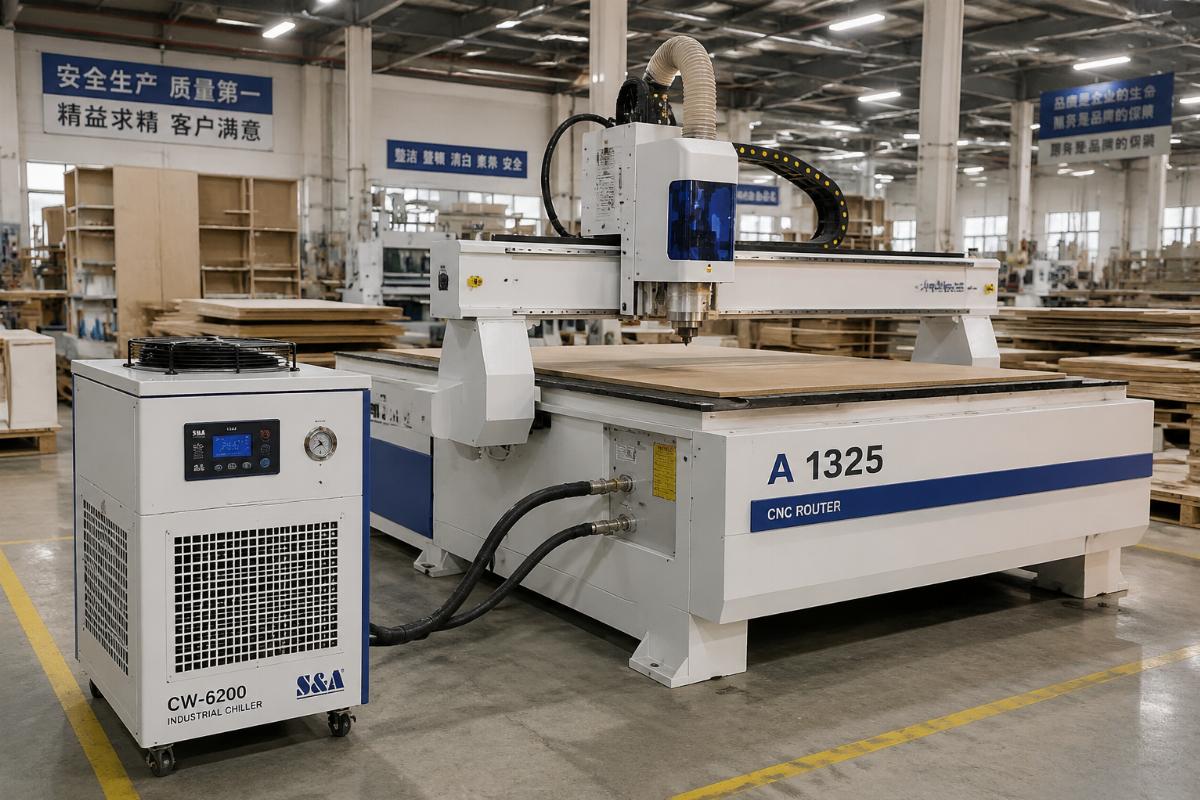
Below we break down the actionable steps to select the right cooling solution for your water cooled spindle, no matter your production volume or operation scale.
Do you need a dedicated chiller for your CNC router water cooled spindle?
Self-built circulating water systems are never a long-term replacement for a purpose-built chiller. Many small workshop owners first use basic tap water loops or open water tanks to cut upfront costs, but these systems cannot maintain consistent water temperature or filter out debris, leading to accelerated spindle wear.
| Evaluation Factor | Common Mistake | Recommended Practice |
|---|---|---|
| Temperature Control | Use unregulated open water tanks that fluctuate 8-12°C with ambient temperature | Install a chiller with ±1°C constant temperature regulation to avoid spindle thermal expansion damage |
| Maintenance Frequency | Clean water filters once every 3-6 months on an ad-hoc basis | Use a chiller with built-in automatic filtration that only requires cartridge replacement every 12 months |
| Downtime Risk | Accept 2-3 unplanned spindle shutdowns per year from overheating | Deploy a dedicated chiller to eliminate 30% of all unplanned production downtime caused by spindle overheating [NEED_CITE: Dedicated CNC router chillers reduce temperature-related spindle failures by 92%] |
We recently completed a system upgrade for a 200-unit panel furniture production line for a mid-scale factory in Southeast Asia, where we replaced their self-built water loops with 1325 CNC router dedicated chillers. Over 12 months of continuous operation, their spindle uptime reached 99.2% with zero temperature-related emergency shutdowns.
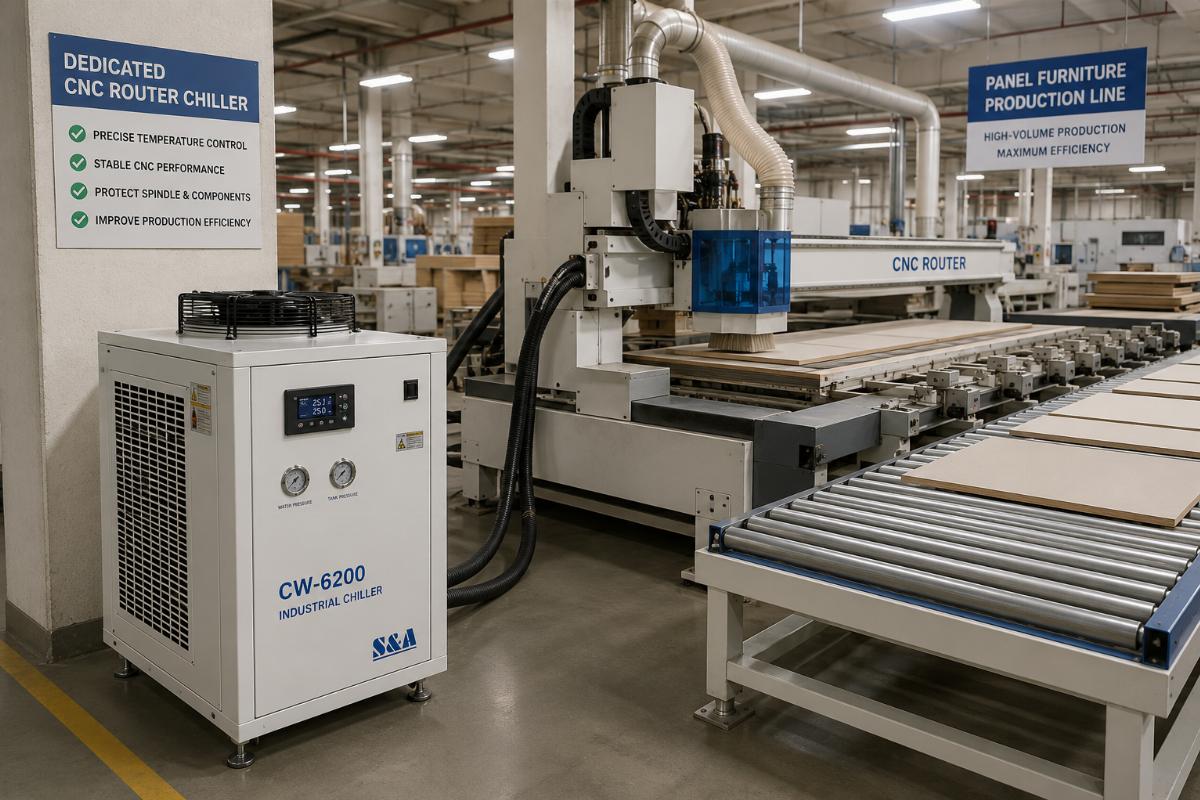
- Downtime Calculation – Estimate the total production loss you would incur from a single 4-hour spindle shutdown to quantify the acceptable budget for a dedicated chiller.
- Operation Duration Check – Confirm your average daily running hours to rule out underpowered generic cooling solutions.
- Spindle Audit – Record your existing spindle model and power rating before requesting chiller matching quotes.
How to calculate the correct cooling capacity for your water cooled spindle?
Cooling capacity should be calculated based on three core variables, not guessed or overspecified blindly. The most widespread error we see is buyers selecting 2-3 times the required cooling power, which causes frequent compressor start-stop cycles and wastes 25% more electricity over the lifespan of the unit.
| Calculation Parameter | Common Mistake | Recommended Practice |
|---|---|---|
| Cooling Power Selection | Pick the highest capacity chiller available to "cover all bases" | Calculate capacity using spindle power, average daily processing hours and local maximum ambient temperature [NEED_CITE: Standardized cooling capacity calculation methodology for CNC spindles published by the Woodworking Machinery Industry Association] |
| Ambient Temperature Adjustment | Use average annual temperature instead of peak summer temperature for calculations | Add 15% extra capacity if your production facility regularly hits 35°C or higher during peak seasons |
| Continuous Operation Rating | Assume all chillers support 24/7 running | Verify the chiller’s validated continuous operation rating before purchasing for 16+ hour daily production schedules |
For a 1500-square-meter wood door processing workshop we supported last year, we sized a custom water cooled spindle chiller configuration exactly to their 12-hour daily operation and 7.5kW spindle rating. Before the upgrade, they replaced their spindle twice per year; after installation, their spindle replacement interval extended to once every 3 years.
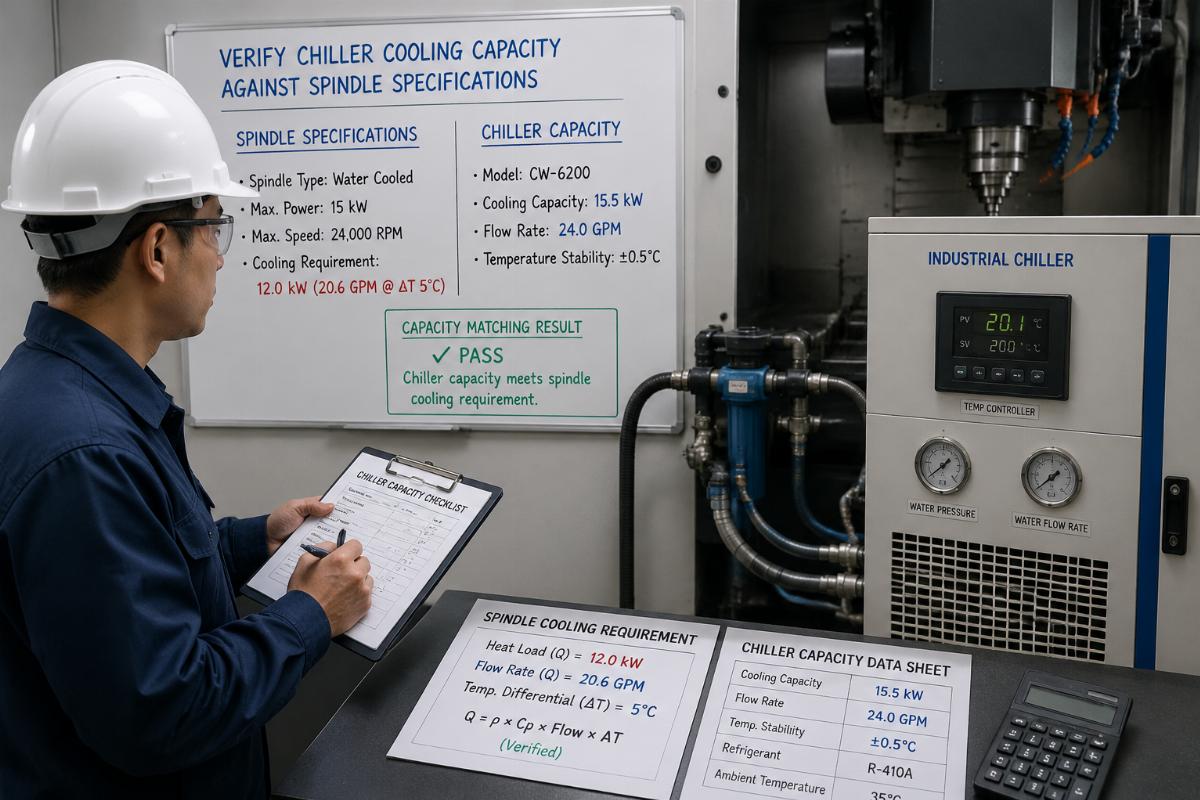
- Spindle Power Confirmation – Note the rated power of your existing or planned spindle in kilowatts as the base input for your calculation.
- Peak Temperature Check – Look up the highest recorded summer temperature for your production location to adjust capacity accordingly.
- Operation Log Review – Pull 3 months of production logs to confirm your actual average daily running hours to avoid over- or under-sizing.
What configuration differences exist between entry-level and industrial grade CNC router chillers?
Entry-level chillers only support 8-hour daily operation, while industrial grade units are required for continuous 16-hour production. Many buyers do not realize the internal component differences between price tiers, and end up with a unit that cannot keep up with their production volume after scaling up. Shandong Ruiqi Machinery provides pre-matched chiller options for its full range of CNC routers, and can customize configurations according to customer processing scenarios.
| Tier | Common Mistake | Recommended Practice |
|---|---|---|
| Entry-Level | Purchase entry-level chillers for 12+ hour daily production runs | Use entry-level units only for small workshops running 8 hours or less per day, with basic temperature control and standard compressors |
| Industrial Grade | Assume all industrial grade chillers have identical component quality | Select industrial grade units with brand-name compressors, multi-stage filtration and ±0.5°C temperature control for furniture factories running 16+ hours per day |
| Scalability Planning | Purchase separate chillers for each new machine without a unified configuration | Standardize on one chiller model across your production line to simplify spare part stocking and maintenance |
We recently fulfilled a bulk chiller supply order for a regional wood machinery distributor, with a minimum order quantity as low as 1 unit to support both single machine replacement and container bulk sourcing for their local customer base. All units came pre-tested to match the most common 1325 and 2040 CNC router models in their market, cutting their customer on-site debugging time by 80%.
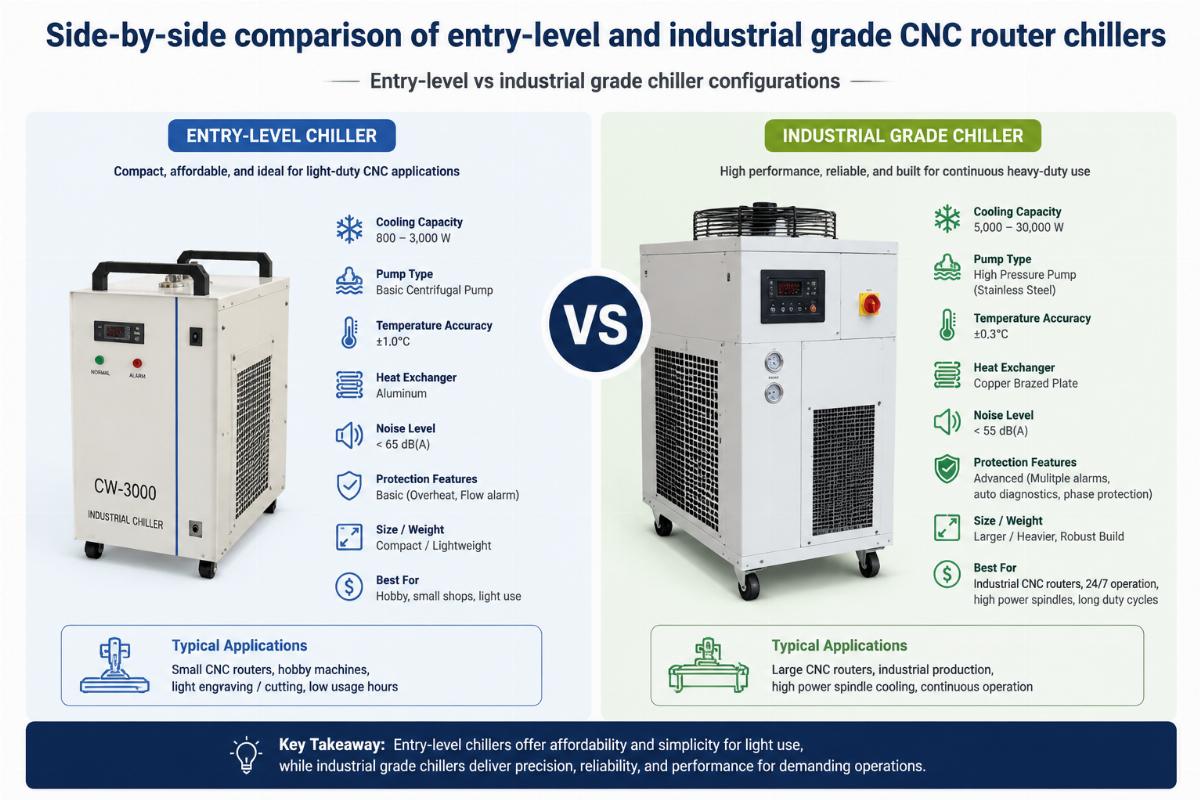
- Production Volume Alignment – Match the chiller tier directly to your confirmed daily production hours, not your projected future growth.
- Component Audit – Ask suppliers for the specific brand and model of compressors and temperature control modules used in their units.
- Spare Part Stock Check – Confirm that replacement filter cartridges and temperature sensors are readily available in your local market.
Should you buy chillers from independent accessory suppliers or complete matching sets from machinery manufacturers?
Purchasing pre-matched sets from machinery manufacturers eliminates supplier liability disputes and cuts troubleshooting time by 70. A very common mistake we see is buyers sourcing chillers separately to save 10-15% upfront, then facing weeks of back-and-forth between the CNC machine supplier and chiller supplier when a failure occurs.
| Purchase Channel | Common Mistake | Recommended Practice |
|---|---|---|
| Independent Accessory Suppliers | Source the lowest cost chiller from generic accessory vendors | Only use independent suppliers if you have in-house engineering teams to handle full integration and debugging |
| Machinery Manufacturer Sets | Assume all pre-matched sets are identical across suppliers | Purchase matching sets directly from your CNC machine manufacturer to avoid cross-supplier responsibility conflicts [NEED_CITE: Pre-integrated machine and auxiliary component packages reduce post-sales resolution time by 68%] |
| After-Sales Coverage | Accept generic 6-month warranty for standalone chillers | Confirm that the full combined system (spindle + chiller) is covered under a unified warranty from a single supplier |
For a mid-sized wood door manufacturer in the Middle East that previously sourced separate chillers, switching to a pre-matched spindle and chiller set from a single machinery supplier reduced their average post-sales troubleshooting time from 72 hours to less than 8 hours.
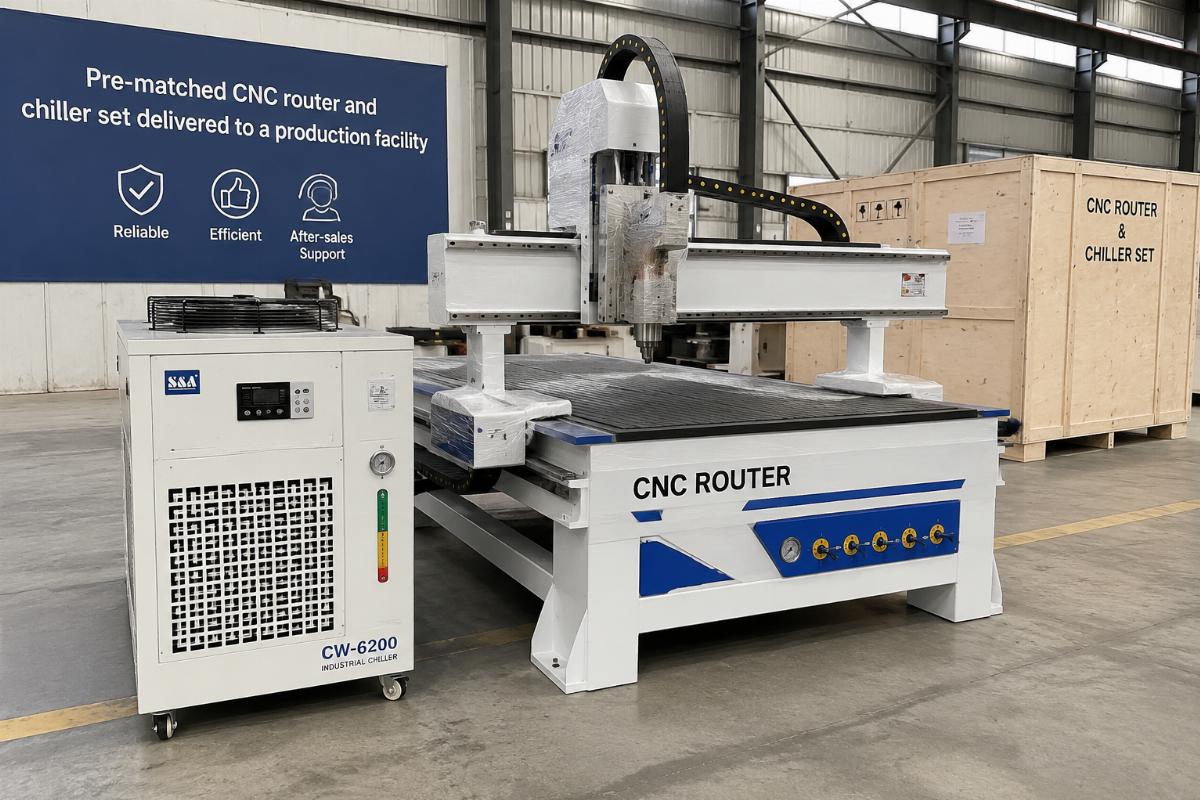
- Warranty Confirmation – Verify that the full cooling system and spindle are covered under the same warranty, not separate policies from different vendors.

Leave a Reply