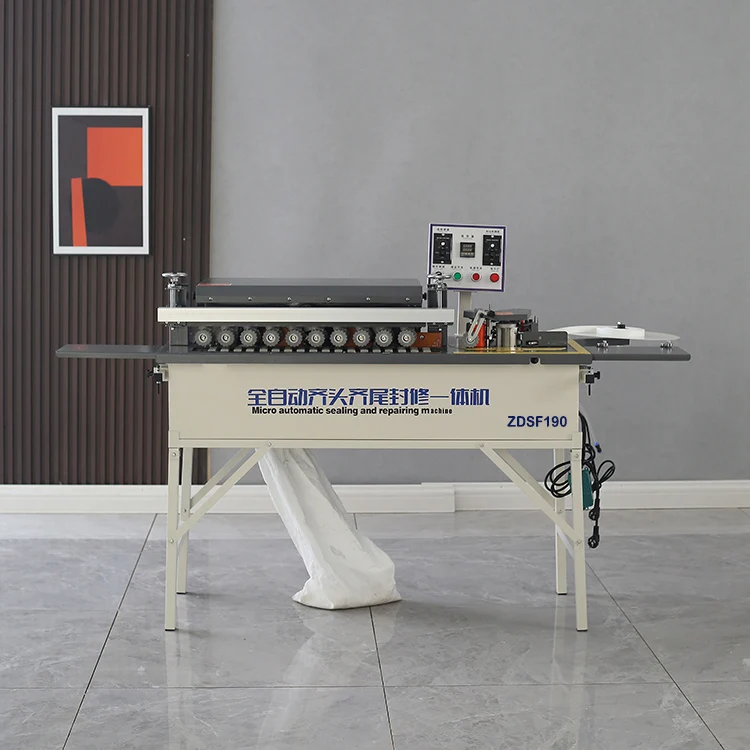
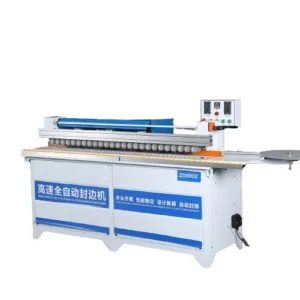
Specification Verification — every ZDSF190 parameter from motor output to panel thickness range is documented against actual workshop utility requirements before dispatch.
Technical Specifications
| Parameter |
Value |
| Model |
ZDSF190 |
| Product Type |
Automatic Curved and Straight Edge Banding Machine |
| Function |
Automatic plate feeding, belt breaking, double-sided gluing, upper/lower trimming and polishing, curved/straight edge banding, large-diameter surrounding vacuum |
| Edge Type |
Both curved and straight lines |
| Voltage & Frequency |
220V 50Hz |
| Rated Power |
4 kW |
| Rated Air Pressure |
0.4–0.6 MPa |
| Suction Power |
1200 W |
| Belt Power |
25 W |
| Transmission Power |
120 W |
| Heating Power |
800 W |
| Polishing Power |
180 W × 2 |
| Trimming Power |
800 W × 2 |
| Conveyor Belt / Feed Speed |
0–14 m/min |
| Sheet Thickness Range |
10–50 mm |
| Strip Thickness Range |
0.5–2.5 mm |
| Glue Pot Capacity |
1000 ml |
| Cutter Type |
4-edge arc-shaped alloy cutter head |
| Trimming Stations |
Upper and lower |
| Control Panel |
Multi-function button operation |
| Pressure Beam |
Adjustable aluminum alloy |
| Overall Dimensions (L×W×H) |
1900×560×1300 mm |
| Net Weight |
120 kg |
Application Suitability
| Application |
Material or Output |
| Curved cabinet door edge banding |
MDF and plywood with PVC or veneer strip |
| Straight shelving and carcass panels |
Particleboard and MDF up to 50 mm thick |
| Mixed batch joinery production |
Solid wood panels requiring arc and linear profiling |
| Small custom furniture runs |
Board stock between 10 mm and 50 mm with 0.5–2.5 mm edging |
Why the Voltage Question Must Come Before the Price Quote
Confirming 220V 50Hz compatibility with your local supply avoids a three-week production standstill.
I once watched a furniture factory receive an Automatic Edge Banding Machine that matched every spec they asked for — except frequency. The local grid ran 60 Hz. They spent three weeks sourcing a custom transformer while their cabinet line sat idle. That memory now drives every electrical schematic review I do before finalizing a configuration. The ZDSF190 Automatic Edge Banding Machine specifications listed here are a starting point, not a purchase order. Cross-checking these figures against your workshop utilities is the step that separates a smooth installation from a costly delay. [NEED_CITE: voltage and frequency standards by export market]

Reading Feed Speed Against Panel Thickness Mix
The 0–14 m/min variable feed speed on this dual-purpose bander covers a wide spectrum of board stock, but throughput depends heavily on the thickness profile you run most often. Panels at the upper end of the 10–50 mm range demand slower feed rates to let the 800 W trimming motors maintain clean cuts without chatter. Running thin MDF shelving stock allows you to push toward the upper speed boundary. Understanding where your daily panel mix falls within that range determines whether this unit meets your output expectations or whether a higher-capacity model is warranted.
Dual-Mode Footprint and Workshop Layout
Combining curved and straight edge banding in a single 1900×560×1300 mm footprint eliminates the need for two separate stations. For joinery workshops moving from manual banding to mechanized production, this consolidation frees floor space for material staging or an additional saw. The adjustable aluminum alloy pressure beam accommodates the full 10–50 mm sheet thickness range without tooling changeover, which matters when a single shift might include both arched cabinet doors and flat shelf panels. [NEED_CITE: workshop floor space planning for small furniture factories]
How Trimming and Gluing Specs Shape Edge Quality
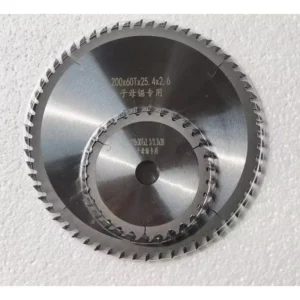
The 4-edge arc-shaped alloy cutter head is designed to follow curved profiles while maintaining consistent contact pressure on the strip. Upper and lower trimming stations, each powered at 800 W, remove excess banding material in a single pass. The 1000 ml glue pot with double-sided gluing ensures adhesive coverage on both the panel edge and the strip back, which is particularly relevant when bonding PVC to porous particleboard substrates. If your downstream assembly relies on tight panel-to-panel joints, the trimming tolerance achieved here directly affects whether those joints close without visible gaps. The Automatic Edge Banding Machine specifications for trimming power and cutter geometry should be weighed against the edge finish requirements your assembly line demands.
The Cost of Overlooking Air Pressure and Extraction
A rated air pressure requirement of 0.4–0.6 MPa means the ZDSF190 depends on a stable compressed air supply to maintain consistent pressure beam force and strip feed. Workshops that share a single compressor across multiple machines often experience pressure drops during simultaneous operation, leading to uneven glue transfer or strip slippage on curved sections. The 1200 W suction system is sized to capture trimming waste at the source, but if your existing dust extraction ducting is already near capacity, adding another suction point can reduce overall collection efficiency. These utility conflicts rarely appear in a specification comparison — they surface only after installation, when the operator notices inconsistent edge adhesion on the first batch of curved panels. [NEED_CITE: compressed air system sizing for woodworking machinery]
Why Technical Buyers Choose This Configuration
In-house manufacturing with patented cutting mechanisms means the 4-edge arc-shaped cutter head is produced and inspected under one roof, not outsourced and relabeled. Four-stage quality control — incoming material, in-process, finished product, and pre-shipment verification — applies to every ZDSF190 before it leaves the facility. Voltage and control panel language are confirmed against your installation site before production begins, so the operator reads instructions in a familiar language on day one. Engineer-led configuration recommendations are delivered as a formal quotation, ensuring every Automatic Edge Banding Machine specification is matched to your actual panel mix and utility conditions rather than a generic catalog entry.
Documentation & Verification
- CE declaration of conformity for the ZDSF190 dual-purpose bander
- Factory test record run on your specified panel thickness and strip material
- Electrical schematic confirming 220V 50Hz or adjusted to your local supply
- Operation and maintenance manual in your operator's working language
- Spare parts list identifying wear items for trimming and polishing stations
Installation, Commissioning & Support
- Requires a dedicated 220V circuit rated for at least 4 kW continuous draw
- Compressed air line must sustain 0.4–0.6 MPa at the machine inlet during operation
- Overall 1900×560 mm footprint fits standard workshop aisles with rear access clearance
- First-run parameter setting covers glue pot temperature, feed speed, and trimming depth
- Multi-function button panel walkthrough provided in agreed language at commissioning
- Spare cutter heads and polishing wheels shipped with initial order for early-stage replacement
Preparing Your Configuration Request
Share the panel materials you process most frequently — MDF, particleboard, plywood, or solid wood — along with the thickness range and edge strip type. Confirm your workshop voltage, frequency, and available compressed air capacity so the electrical and pneumatic configuration can be locked before production. If your production includes both curved and straight profiles, indicate the approximate ratio so feed speed and cutter head wear expectations are realistic.
Frequently Asked Questions
Q: How can I verify actual trimming tolerance on my panel material before placing an order?
A: Request a sample processing test using your own substrate and edge strip. The factory runs the ZDSF190 on your material, documents trimming results, and shares the test record. This confirms edge finish quality on both curved and straight profiles before you commit to a purchase.
Q: Will the ZDSF190 voltage and frequency match my local power supply?
A: The standard configuration is 220V 50Hz, but voltage and frequency are confirmed against your installation site before production. Share your local supply details during inquiry so the electrical schematic and motor winding are adjusted accordingly, avoiding transformer delays on arrival.
Q: How does the 0–14 m/min feed speed affect throughput for my panel thickness mix?
A: Thicker panels near 50 mm require slower feed rates for clean trimming, while 10 mm stock allows higher speeds. Mapping your daily panel mix against this range helps determine realistic cycle times and whether the ZDSF190 output aligns with your production targets.
Q: What edge finish difference should I expect between curved and straight mode?
A: The 4-edge arc-shaped cutter head follows curved profiles with consistent contact, while straight mode relies on linear feed stability. Both modes pass through the same upper and lower trimming and polishing stations, so finish quality depends primarily on strip material and feed speed selection.
Q: Which spare parts are replaced most often on the trimming and polishing stations?
A: The arc-shaped alloy cutter heads and polishing wheels experience regular wear. A spare parts list is included with every shipment, identifying these consumables and recommended replacement intervals based on your daily operating hours and strip material hardness.