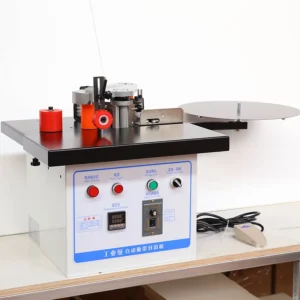
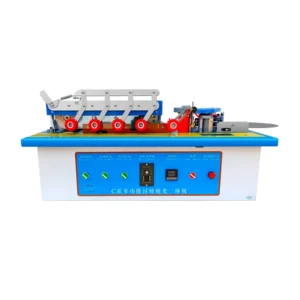
Verified Configuration — Engineer-led specification matching ensures this automatic edge banding machine is configured to your exact panel thickness and local voltage before production begins.
Technical Specifications
| Parameter |
Value |
| Model |
802 |
| Product Type |
Automatic Edge Banding Machine |
| Function Sequence |
Plate feeding, end cutting, trimming, polishing, dust collection |
| Edge Type |
Straight line |
| Rated Voltage |
220V (frequency and phase subject to confirmation) |
| Strip Thickness Range |
0.5–2.5 mm |
| Sheet Thickness Range |
10–50 mm |
| Trimming Power |
800W × 2 |
| Polishing Power |
180W × 2 |
| Suction Power |
1200W |
| Rated Power |
4kW |
| Rated Air Pressure |
0.4–0.6 MPa |
| Feed Speed |
0–10 m/min |
| Glue Pot Capacity |
4000 ml |
| Heating Power |
1000W (5–10 min heat-up) |
| Overall Dimensions |
1300 × 650 × 750 mm |
| Machine Weight |
150 kg |
| Control Panel |
Digital display, independent switch |
| Pressure Beam |
One-piece integrated, double rows of pressure wheels |
| Conveyor Belt Material |
Silicone |
Application Suitability
| Application |
Material or Output |
| Custom cabinet door edging |
MDF and particleboard panels 10–50 mm thick |
| Small workshop joinery |
Plywood and blockboard straight-line components |
| Furniture component finishing |
PVC and wood veneer strip 0.5–2.5 mm thick |
| Panel sizing and edge sealing |
Melamine-faced chipboard for shelving and carcasses |
Why Voltage Must Be Settled Before the Automatic Edge Banding Machine Specifications Are Finalized
A machine rated for 220V will not start on a 380V three-phase supply, and rewinding motors after arrival is rarely economical.
I once saw a workshop in Southeast Asia receive an edge bander wired for a voltage standard that did not match their local grid. The main contactor tripped immediately, and the glue pot heating element burned out within minutes. The buyer had focused entirely on feed speed and trimming power during negotiation, leaving electrical compatibility as an afterthought. Confirming frequency and phase with the manufacturer prevents this category of failure [NEED_CITE: voltage and frequency standards by export market].
Matching Feed Speed to Panel Substrate Behavior
The 0–10 m/min feed speed range on this Automatic Edge Banding Machine allows operators to slow the conveyor when running low-density particleboard. Softer substrates tend to chip at higher feed rates if the end-cutting saw is not perfectly synchronized with the panel edge. Running at the lower end of the speed range gives the trimming motors more time per linear meter, which generally produces a cleaner edge on fragile core materials.
Pressure Beam Design and Panel Stability
The one-piece integrated pressure beam with double rows of pressure wheels addresses a specific problem in compact edge banders: panel drift. When a 50 mm thick shelf panel enters the trimming zone, lateral movement of even a fraction of a millimeter causes uneven trimming depth. The dual-row wheel configuration constrains the panel from both sides of the feed path, maintaining alignment through the end-cutting and polishing stations [NEED_CITE: mechanical alignment tolerances in panel processing].
Interpreting Core Specifications for Production Planning
The 10–50 mm sheet thickness range defines which components this machine can process. Standard 18 mm cabinet sides and 25 mm desk panels fall well within this window, but thicker solid wood worktops require a different class of equipment. The 800W × 2 trimming motors provide adequate torque for PVC and thin veneer removal, yet they are not sized for heavy pre-milling of damaged panel edges. The 4000 ml glue pot capacity supports continuous runs of moderate length; operators processing high volumes will note the digital temperature display helps maintain consistent viscosity, but the pot will need refilling more often than on larger industrial models. The silicone conveyor belt surface grips laminated panels without marking high-gloss finishes, which matters when edging pre-finished MDF for visible cabinet fronts.

The Cost of Overlooking Substrate-Specific Parameters
When a buyer selects an edge bander without testing it on their actual panel stock, the most common consequence is glue squeeze-out on porous particleboard or insufficient adhesion on sealed melamine surfaces. The glue pot temperature, feed speed, and pressure wheel tension must all be tuned to the specific substrate density and edge band material. Skipping a factory sample run often means the first week of production is spent troubleshooting rather than shipping finished goods [NEED_CITE: adhesion variables in thermoplastic edge banding].
Why Source This Configuration Here
In-house manufacturing with patented cutting mechanisms means the trimming stations on this Automatic Edge Banding Machine are built to documented tolerances rather than assembled from generic components. The four-stage QC process covers incoming material inspection through pre-shipment verification, so the unit you receive matches the tested specification. Voltage customization from 110V to 440V is handled as a standard configuration step, not a special request. Multilingual control panels are available so your operators can read the digital display and switch labels without translation. Engineer-led configuration recommendation ensures the machine is matched to your actual panel range and daily volume before an order is placed.
Documentation & Verification
- Machine specification sheet with confirmed tolerance values for your panel thickness
- Electrical schematic showing voltage and phase as configured for your facility
- Factory test record using your supplied panel samples and edge band material
- Operation and maintenance manual in your operator's preferred language
- Pre-shipment photographs of the assembled and tested unit before crating
Installation, Commissioning & Support
- Verify workshop floor can support 150 kg concentrated load across the 1300 × 650 mm footprint
- Install a dedicated 220V circuit with appropriate breaker rating for the 4kW total draw
- Confirm 0.4–0.6 MPa compressed air supply is plumbed to the machine inlet before first run
- Allow 5–10 minutes for the 1000W glue pot to reach operating temperature before feeding panels
- Check silicone conveyor belt tension and pressure wheel alignment after transport and assembly
- Review spare parts list for trimming cutters and polishing wheels to establish reorder intervals
Preparing Your Inquiry
To receive an accurate configuration proposal, provide the specific panel materials you process along with their thickness range and the edge band type you intend to use. State your local voltage, frequency, and phase so the electrical system is built correctly. If you have existing upstream saws or downstream boring machines, note their feed heights so the conveyor transfer can be coordinated.
Frequently Asked Questions
Q: How do I confirm this machine will hold tolerance on my specific panel material?
A: Request a factory test run using samples of your actual panel stock and edge band. The test record documents trimming accuracy and edge adhesion on your substrate, giving you verifiable data rather than a general specification claim. This step is especially important for low-density particleboard.
Q: What voltage options are available beyond the standard 220V rating?
A: Voltage is configurable from 110V to 440V during the order process. You must confirm your local frequency and phase before production begins, as motor winding and control transformer specifications depend on these values. The electrical schematic provided with the machine reflects your confirmed supply.
Q: When should I consider a full-function pre-milling model instead of this one?
A: If your panels arrive from the saw with visible edge damage or chipping, a pre-milling station removes that defect layer before edge banding. This model handles clean-cut panels effectively. For workshops cutting panels in-house with a well-maintained beam saw, the standard trimming configuration is typically sufficient.
Q: How does the dust extraction system connect to my existing collection setup?
A: The integrated 1200W suction unit handles trim and polishing waste internally. Confirm the dust extraction port diameter with the manufacturer to ensure compatibility with your central collection system if you plan to duct it externally rather than using the standalone configuration.