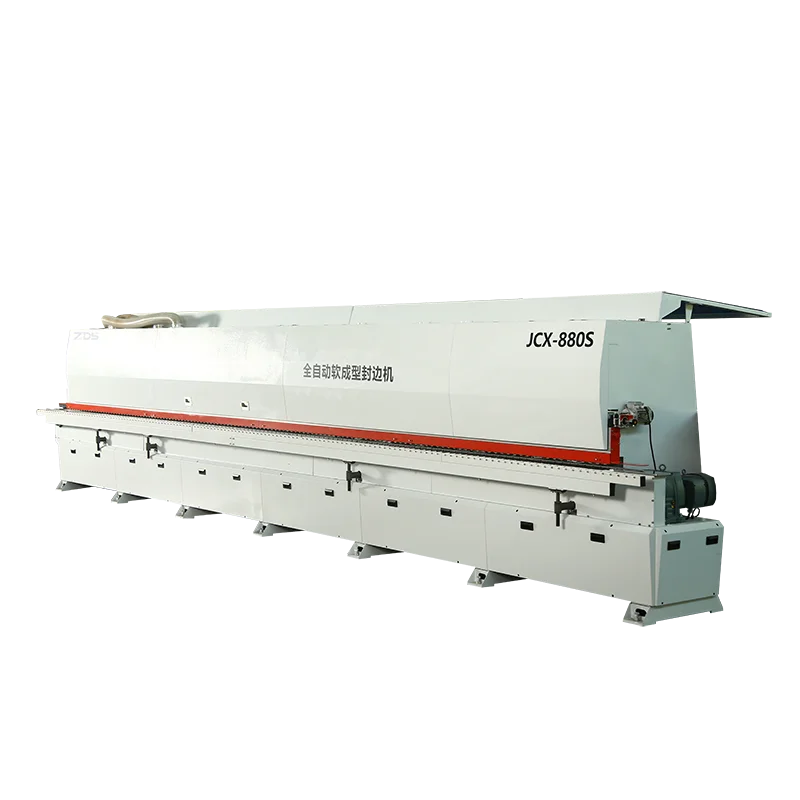
Precision Verification — Every tolerance claim on the ZDSJCX-880S is backed by four-stage QC inspection records, so you can confirm edge alignment and trim finish before the machine leaves the factory floor.
Technical Specifications
| Parameter |
Value |
| Model |
ZDSJCX-880S |
| Product Type |
Automatic Edge Banding Machine |
| Equipment Model |
ZDSJCX-880S |
| Panel Thickness Range |
18–22 mm (source value — verify against manufacturer catalog, unusually narrow for general edge banders) |
| Edge Banding Thickness |
0.5–0.8 mm (source value — verify against manufacturer catalog, unusually narrow for PVC/ABS banding) |
| Edge Banding Width |
58 mm |
| Minimum Sheet Width |
150 mm |
| Minimum Sheet Length |
300 mm |
| Conveying Speed |
6–8 m/min (basis not stated in source — confirm board size / material) |
| Overall Dimensions (L×W×H) |
8.82 × 1.07 × 1.85 m |
| Total Weight |
3200 kg |
| Total Power |
47.1 kW (rated or peak not specified in source) |
| Voltage |
380 V (frequency not stated in source — confirm 50 Hz / 60 Hz) |
| Air Pressure Requirement |
0.6–0.8 MPa |
| Vacuum Opening Size |
Ф100 × 6 |
| Machining Shape |
J type, C type, oblique straight, left and right semi-pass, water drop, rhombus, triangle and 15+ more types |
| Assembly State |
Assembled (KD packing for spare parts only) |
| Warranty |
1 year |
Application Suitability
| Application |
Material or Output |
| Custom furniture panel edge banding |
MDF, melamine board, plywood, particleboard |
| Cabinet and wardrobe production |
PVC and ABS edge banding materials |
| Straight and shaped edge contour banding |
J type, C type, water drop, rhombus, triangle profiles |
| Small-part processing |
Sheets down to 150 × 300 mm minimum dimensions |
Why Voltage Confirmation Must Precede Your Automatic Edge Banding Machine Specifications
A 380 V machine wired into a 440 V supply will burn out the feed motor within the first production shift.
I have seen workshops in the Pearl River Delta receive edge banders quoted purely on throughput numbers, only to discover the local transformer outputs a different voltage tier entirely. The control panel boots, but the conveyor runs at the wrong speed, the glue pot overshoots temperature, and the trimming unit chatters against the panel edge. The ZDSJCX-880S ships configured for 380 V as standard, but frequency matters just as much as voltage — a 50 Hz motor on a 60 Hz grid runs faster and hotter than its bearings were designed for. [NEED_CITE: voltage and frequency standards by export market]
Feed Speed, Panel Throughput, and the Numbers That Actually Matter
The ZDSJCX-880S Automatic Edge Banding Machine runs at a conveying speed of 6–8 m/min. Translating that into daily output requires knowing your average panel perimeter and the number of edges per sheet. A standard 600 × 400 mm cabinet side panel has roughly 2 m of edging; at 8 m/min you process four edges per minute in theory, but loading time, trimming cycles, and part rotation between passes all reduce actual throughput. The specification sheet gives you the belt speed — your production engineer must calculate the real cycle time against your specific board mix.
Shaped Edge Profiles and the Tooling Question
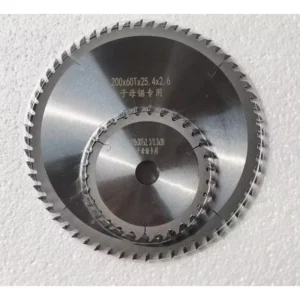
The machine covers J type, C type, oblique straight, semi-pass, water drop, rhombus, and triangle profiles among more than 15 contour options. Each shape requires a dedicated trimming and scraping tool setup. When your workshop switches from a standard straight PVC edge to a water drop profile on solid wood banding, the tooling changeover time and scraper adjustment directly affect whether you maintain the stated tolerance across the run. [NEED_CITE: CE machinery directive requirements for industrial equipment]
Reading the Specification Sheet Against Your Production Reality
The 18–22 mm panel thickness range is narrow compared to general-purpose edge banders that handle 10–60 mm. If your furniture line uses 16 mm or 25 mm stock for certain components, this model will not process them without modification or a secondary machine. The 0.5–0.8 mm edge banding thickness similarly constrains your material choices — standard PVC banding for cabinet work often runs 0.4–2.0 mm, and thicker ABS or veneer strips fall outside this range. The 47.1 kW total power draw and Ф100 × 6 vacuum ports dictate your electrical panel capacity and dust extraction duct sizing. An undersized vacuum system leaves adhesive dust on the panel surface, visible under the final lacquer coat.

What Happens When Upstream and Downstream Dimensions Do Not Align
A mismatched feed height between the Automatic Edge Banding Machine specifications and your panel saw output causes boards to jam at the transfer point. I once watched a furniture factory lose three full production days because the edge bander infeed sat two centimeters higher than the precision saw outfeed roller, and panels caught on the lip every fifth cycle. The ZDSJCX-880S overall height of 1.85 m and conveyor bed position must be cross-referenced against your existing saws, drills, and boring machines before the line layout is finalized. [NEED_CITE: production line integration tolerances for woodworking equipment]
Why Technical Buyers Source This Model Here
In-house manufacturing with patented cutting mechanisms means the trimming units on the ZDSJCX-880S are built and tested on the same floor where final assembly happens, not outsourced and bolted on. The four-stage QC process — incoming material, in-process, finished product, and pre-shipment verification — generates a factory test record you can review before dispatch. Voltage customization from 110 V to 440 V and multilingual control panels are configured as standard options, not afterthought add-ons. An engineer-led configuration recommendation arrives within 24 hours of your inquiry, matched to your specific substrate and edge material matrix. The full product family, from entry-level to full-function pre-milling models, lets you scale your workshop capacity without switching suppliers.
Documentation & Verification
- Machine specification sheet confirming ZDSJCX-880S dimensional and electrical data
- Electrical schematic with voltage and frequency matched to your local grid
- Factory test record on your panel thickness and banding material before dispatch
- CE declaration of conformity for the ZDSJCX-880S edge banding unit
- Operation and maintenance manual in your operator's agreed language
- Spare parts list with part numbers for trimming, scraping, and buffing consumables
Installation, Commissioning & Support
- Foundation must support 3200 kg static load across the 8.82 m machine length
- Dedicated 380 V circuit sized for 47.1 kW total draw with appropriate breaker rating
- Machine ships assembled; confirm workshop door width exceeds 1.07 m for entry
- Six Ф100 vacuum ports require dust extraction system matched to volume and static pressure
- First-run commissioning includes conveyor speed calibration and trimming tool alignment
- Operator training covers tooling changeover across J type, C type, and shaped profiles
Preparing Your Inquiry
Provide your standard panel dimensions, substrate types, and the PVC or ABS banding thicknesses you run most frequently. Include your workshop's available voltage, phase configuration, and frequency so the electrical system can be confirmed before quotation. If you operate upstream saws or downstream boring machines, share their infeed and outfeed heights to verify line compatibility.
Frequently Asked Questions
Q: How do I confirm the 18–22 mm panel thickness range fits my board stock?
A: Request a sample processing test using your actual panel material. Send a batch of your most common boards to the factory, and the pre-shipment test will run them through the ZDSJCX-880S under production conditions. You receive the finished samples and a test record showing edge adhesion quality and trim finish at your specific thickness.
Q: Can the 380 V configuration be changed for my local power supply?
A: The machine supports voltage customization from 110 V to 440 V and can be wired for either 50 Hz or 60 Hz. State your local grid specification during the inquiry stage so the motor, control transformer, and heating elements are all matched to your supply before the unit enters production.
Q: Does the 0.5–0.8 mm banding thickness cover thicker PVC or ABS stock?
A: This range suits thinner PVC and ABS banding commonly used in cabinet and wardrobe production. If your product line requires thicker veneer strips or wide ABS edges, discuss alternative models within the same product family that accommodate a broader banding thickness range during the configuration phase.
Q: How does the 6–8 m/min speed convert to actual daily panel output?
A: Real throughput depends on your average panel perimeter, number of edges per sheet, and loading cycle time. Share your typical board dimensions and daily volume target so the configuration engineer can calculate realistic output and recommend whether this speed range meets your production requirement or if a higher-feed model is needed.
Q: What edge alignment tolerance can I verify before committing to the order?
A: The pre-shipment factory test processes your specified substrate and banding material through all machining stations. You receive the finished test panels and inspection record, allowing you to measure edge alignment, glue line visibility, and trim quality against your own assembly standards before the machine ships.