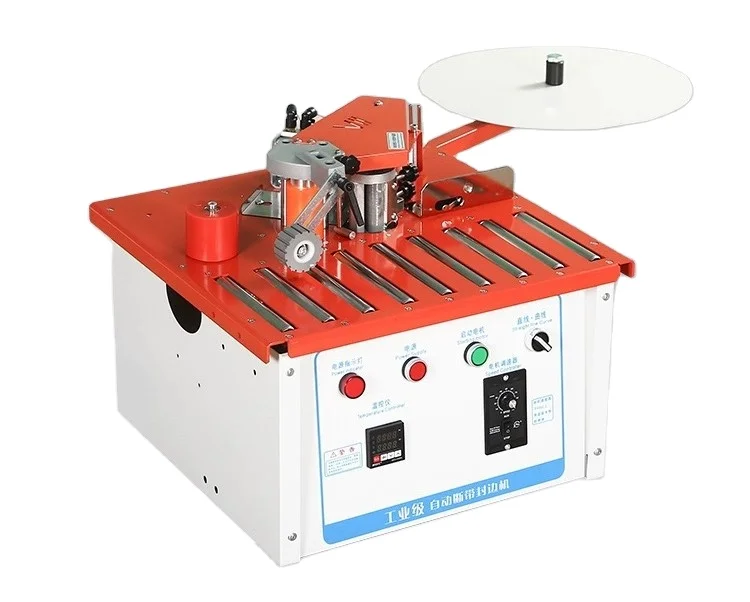
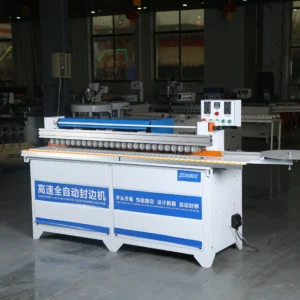
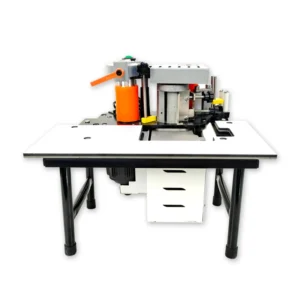
Voltage-Verified Desktop Configuration — every ZDSF50 unit is checked against your local single-phase supply before dispatch, preventing the three-week rewiring delays that strand small edge banders on workshop floors.
Technical Specifications
| Parameter |
Value |
| Model |
ZDSF50 |
| Product Type |
Mini Edge Banding Machine |
| Rated Voltage |
220V Single-Phase |
| Rated Power |
1.2 kW |
| Function |
Double side gluing for Straight, Curved & Shaped Edge |
| Rated Air Pressure |
0.4–0.6 MPa |
| Strip Thickness Range |
0.5–1.5 mm |
| Sheet Thickness Range |
10–60 mm |
| Glue Pot Capacity |
1000 ml |
| Heating Time |
5–10 min |
| Feed Speed |
0–6 m/min |
| Overall Dimensions (L×W×H) |
54×54×56 cm |
| Net Weight |
26 kg |
| Glue Application |
Double-sided via glue-coated rollers |
| Edge Strip Breaking |
Pneumatic with foot switch (curved) and travel switch (auto straight) |
| Pressure Rollers |
Adjustable, rubber material |
| Heating Elements |
4 heating tubes |
| Assembly State |
Portable / Desktop |
Application Suitability
| Application |
Material or Output |
| Small joinery workshop edge finishing |
MDF, plywood and particleboard panels with PVC or veneer banding |
| Custom furniture low-volume runs |
Shaped cabinet doors and curved drawer fronts up to 60 mm thick |
| On-site installation and repair work |
Solid wood panels requiring portable 220V single-phase edge banding |
| Prototype and sample preparation |
Short-run straight and curved edge profiles before full-line production |
Why the Voltage Question Should Come Before the Price on Mini Edge Banding Machine Specifications
Confirm your workshop supply matches 220V single-phase before evaluating any other parameter.
I once watched a customer receive a compact edge bander at their shop, only to discover the local supply was 380V three-phase with no single-phase circuit available. The machine sat idle for weeks while an electrician installed a step-down transformer and dedicated breaker. That delay cost more in lost production than the machine itself. When reviewing Mini Edge Banding Machine specifications, voltage compatibility is the first gate — everything else is irrelevant if the motor cannot energize [NEED_CITE: voltage and frequency standards by export market].
Matching Feed Speed to Small-Batch Reality
The ZDSF50 runs at 0–6 m/min, which suits workshops processing dozens of panels per day rather than hundreds. At this feed rate, an operator can visually track glue coverage and adjust the workpiece by hand through curved sections. The variable speed lets you slow down for tight radii on shaped cabinet components and open up for long straight runs on shelving stock, keeping the Mini Edge Banding Machine specifications aligned with actual operator pace rather than theoretical maximums.
Pneumatic Strip Breaking for Mixed Edge Profiles
Straight edges trigger the travel switch for automatic breaking, while curved and shaped profiles rely on the foot pedal for operator-controlled cuts. This dual arrangement means the same machine handles a flat wardrobe side panel and a radiused door stile without tooling changes. The pneumatic system requires a stable 0.4–0.6 MPa air supply — verify your compressor can sustain that pressure through continuous cycling before scheduling production [NEED_CITE: compressed air sizing for small pneumatic woodworking tools].
What the Glue Pot and Heating System Mean for Daily Output
The 1000 ml glue pot with four heating tubes reaches working temperature in 5–10 minutes. For a small shop running two or three batches per day, this means the machine is ready before the operator finishes laying out panels. Double-sided glue application through coated rollers ensures adhesion on both the strip and the panel edge, which matters when bonding veneer to end grain on MDF where single-sided application often leaves visible starved joints. The pot capacity supports continuous small-batch operation without mid-run refills interrupting the feed sequence.

The Cost of Skipping Specification Verification
When a buyer selects a mini edge bander on price alone and skips the parameter check, the failures appear in sequence. First the voltage mismatch surfaces on delivery day. Then the panel thickness falls outside the 10–60 mm range, causing the pressure rollers to leave marks on thin stock or fail to contact thick sections. The strip thickness may exceed 1.5 mm, and the breaker jams mid-cycle. Each of these is preventable with a thirty-minute review of the machine sheet against the actual materials on the shop floor [NEED_CITE: common causes of edge banding adhesion failure on composite panels].
Why Source This Configuration Here
The ZDSF50 sits within a full edge banding product family, so a workshop starting with this desktop unit can move to a full-function pre-milling model from the same supplier as volume grows. Voltage is confirmed against your local standard before production begins — not assumed. The machine ships with an operation manual in your operator's language and a spare parts list matching the exact configuration dispatched. Factory test records verify glue heating, feed speed and pneumatic breaking function on your specified panel thickness range before the crate closes.
Documentation & Verification
- Electrical schematic confirming 220V single-phase wiring and breaker rating for your site
- Factory test record on your panel thickness range verifying feed and breaking function
- Operation and maintenance manual translated into the agreed language before shipment
- Spare parts list matched to the ZDSF50 pneumatic and heating components actually installed
Installation, Commissioning & Support
- Bench must support 26 kg with clearance around the 54×54×56 cm footprint for panel feed access
- Dedicated 220V single-phase circuit rated for 1.2 kW continuous draw with earth protection
- Connect to compressor delivering stable 0.4–0.6 MPa before first glue pot heat cycle
- First run verifies all four heating tubes reach temperature within the 5–10 min window
- Adjustable rubber pressure rollers calibrated to your specific sheet thickness during commissioning
Preparing Your Inquiry
Send the panel materials you process — MDF, plywood, particleboard or solid wood — along with typical sheet dimensions and the edge strip type and thickness you run. Confirm your workshop voltage and frequency so the electrical configuration is locked before production. If your operation includes curved or shaped edges, note the minimum radius so the feed path and pressure roller travel can be verified against your actual workpiece geometry.
Frequently Asked Questions
Q: How do I confirm the ZDSF50 feed speed matches my daily panel volume?
A: Calculate your average panels per hour and the linear edge length per panel. At 0–6 m/min, the machine processes shorter runs comfortably with operator-paced feeding. If your volume requires sustained throughput above what a single operator can feed manually through curved sections, a higher-tier automatic edge bander may be the appropriate next step.
Q: Is 220V single-phase sufficient or do I need a transformer on site?
A: The ZDSF50 is designed for 220V single-phase supply. Verify your workshop outlet matches this voltage and that your local frequency is compatible. If your facility only provides three-phase or a different voltage, a correctly rated transformer and dedicated circuit must be installed before delivery to avoid commissioning delays.
Q: Which edge banding materials work within the 0.5–1.5 mm strip range?
A: PVC, melamine and thin veneer strips within 0.5–1.5 mm are compatible with the double-sided glue roller system. Thicker solid wood lipping exceeds this range and requires a heavier machine. Confirm your strip supplier's specification sheet falls within the stated thickness before scheduling production runs.
Q: What maintenance intervals apply to the glue pot and heating tubes?
A: The 1000 ml glue pot should be cleaned of cured adhesive residue at the end of each production day to prevent buildup on the four heating tubes. Roller surfaces need wiping after each session. Heating tube replacement intervals depend on daily operating hours and glue type — your maintenance manual covers the schedule for your specific usage pattern.