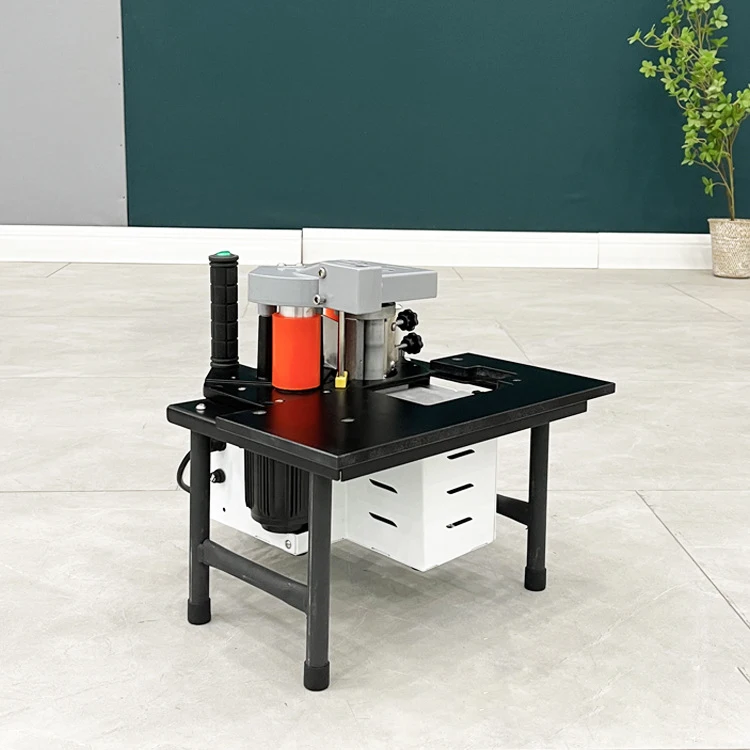
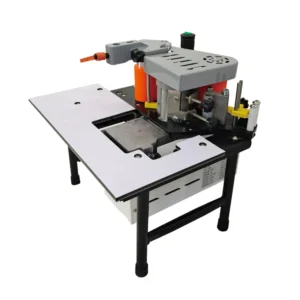
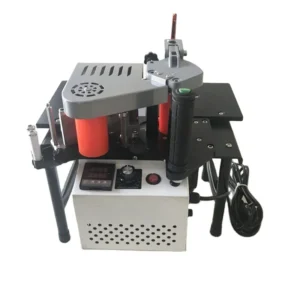
Specification-first selection — every parameter verified against your actual panel stock and edge material before configuration, ensuring the portable edge banding machine specifications align with your workshop's daily output mix.
Technical Specifications
| Parameter |
Value |
| Product Type |
Portable Edge Banding Machine |
| Shape of Edge-banding Plates |
Curved, Straight and Special-shaped Sheet |
| Edge Thickness Range |
0.3–3mm |
| Edge Sealing Speed |
0–6m/min |
| Panel Thickness Range |
7–60mm |
| Gluing Method |
Double-sided gluing |
| Glue Pot Volume |
1000ml |
| Machine Weight |
14kg |
| Assembly State |
Portable / Handheld |
| Plug Options |
EU / AU / UK / USA / CN |
| Logo Customization |
Available |
| Output Capacity |
basis not stated in source — confirm material type, edge thickness and operator skill level |
Application Suitability
| Application |
Material or Output |
| Small-batch custom furniture edge banding |
MDF and particleboard with PVC or melamine edging |
| On-site carpentry and installation touch-ups |
Plywood and solid wood panels on curved edges |
| Repair and rework of damaged cabinet edges |
Veneer and PVC banding on special-shaped profiles |
| Joinery workshop scale-up from manual trimming |
Mixed panel substrates across low-volume runs |
Why Voltage Compatibility Matters Before You Compare Portable Edge Banding Machine Specifications
Confirming your local voltage and frequency against the plug configuration avoids a machine that arrives dead on the dock.
I once watched a carpentry crew unbox a handheld unit only to find the motor hummed but never reached operating temperature on their single-phase supply. The glue stayed tacky, the PVC banding peeled off within hours, and three days of scheduled installs stalled. The supplier had shipped a 220V unit to a 110V region without asking [NEED_CITE: voltage and frequency standards by export market]. Portable edge banding machine specifications mean nothing when the plug does not match the outlet on the wall.

Panel Thickness Coverage and What It Means for Mixed Stock
A 7–60mm panel thickness range covers most MDF, particleboard and plywood sheets a small cabinet shop processes. When you work with 18mm melamine board one morning and 45mm solid wood shelving the next, the unit must accommodate both without swapping fixtures. The double-sided gluing method applies adhesive to the panel edge and the banding simultaneously, which improves bonding on porous substrates where single-sided gluing often leaves dry spots along the glue line.
Edge Speed Versus Your Actual Workflow
The 0–6m/min edge sealing speed sits well below full-automatic line speeds, and that is deliberate. Handheld operation demands operator control over feed rate, especially on curved and special-shaped profiles where a constant motor feed would push the banding off the contour. For a joinery workshop running twenty to fifty edged panels per day, this speed range lets the operator slow down on tight radii and open up on long straight runs without sacrificing adhesion quality.
Reading the Specs That Actually Affect Edge Quality
Edge thickness range of 0.3–3mm determines which banding materials you can process without changing pressure rollers. Thin 0.4mm PVC requires lighter contact pressure to avoid squeezing glue out past the edge, while 2mm veneer demands firm pressure and adequate heat to activate the adhesive fully. The 1000ml glue pot volume supports continuous banding across multiple panels before a refill is needed, though pot temperature recovery time between batches should be verified against your specific glue type [NEED_CITE: hot melt adhesive temperature ranges for PVC and veneer banding]. A 14kg machine weight keeps the unit movable around the workshop but requires the operator to brace the workpiece independently, unlike a stationary feed-table machine.
The Cost of Skipping the Specification Check
Ordering a portable unit without matching edge thickness to your most common banding material leads to mismatched pressure settings and visible glue lines on finished panels. Operators then compensate by slowing feed speed further, which drops daily output and increases glue consumption as the adhesive cools prematurely on the banding surface. One workshop I visited ran 3mm PVC on a machine configured for 0.5mm veneer, and the excess adhesive bled onto every visible face, requiring manual solvent cleanup on each piece [NEED_CITE: common edge banding defects from incorrect material-machine pairing]. The rework hours quietly erased any time saved by going portable.
What Makes Sourcing This Unit Different
Every configuration ships with electrical schematics confirming voltage and plug type matched to your region, so the unit arrives ready to run. A factory test record is generated using your specified panel thickness and edge material before dispatch, providing documented verification rather than untested claims. The patented cutting mechanism maintains trimming accuracy across curved profiles where conventional guillotine trimmers leave stepped edges. Specification sheets and operation manuals are supplied in the language your operators actually read, preventing commissioning delays. Engineer-led configuration review ensures the portable edge banding machine specifications you select fit your production volume without oversizing or undersizing the unit.
Documentation & Verification
- CE declaration of conformity covering portable woodworking machinery classification
- Electrical schematic confirming voltage, frequency and plug type for your facility
- Factory test record on your specified panel thickness and edge material before dispatch
- Operation and maintenance manual supplied in the agreed operator language
- Spare parts list with part numbers for glue pot, trimming blades and pressure rollers
Installation, Commissioning & Support
- Verify single-phase circuit capacity matches the unit's power draw before first use
- Allow glue pot warm-up time per manual before feeding first panel edge
- Calibrate pressure roller gap against your thinnest and thickest banding stock
- Schedule trimming blade replacement based on edge material abrasiveness
- Store the 14kg unit on a dedicated bench bracket to prevent motor shaft misalignment
- Review bilingual control labels with operators during initial commissioning session
Before You Request a Quote
Tell us the panel substrates you run most often — MDF, particleboard, plywood or solid wood — along with the edge banding material and thickness you intend to apply. Confirm your workshop voltage, frequency and plug type so the electrical configuration is built correctly from the start. If your production mix includes curved or special-shaped profiles, share a sample drawing or photo so we can verify the portable edge banding machine specifications cover your contour requirements and recommend a sample processing test.
Frequently Asked Questions
Q: How do I match edge sealing speed to my daily panel volume?
A: The 0–6m/min range suits low-volume and repair workflows where an operator feeds panels manually. Calculate your average panel perimeter, multiply by daily panel count, then divide by feed speed to estimate total banding time. If the result exceeds your available shift hours, a stationary automatic machine may better match your throughput requirement.
Q: Which voltage and plug configurations can I order?
A: The unit ships with EU, AU, UK, USA or CN plug options. Provide your local voltage and frequency — for example 220V 50Hz or 110V 60Hz — so the motor winding and glue pot heater are configured correctly. We confirm the electrical schematic matches before production begins.
Q: Should I choose this portable unit or a full-automatic edge bander?
A: Portable machines serve workshops with mixed panel shapes, low daily volume or on-site installation needs. Full-automatic edge banders handle high-volume straight-edge production with integrated trimming and buffing stations. Your decision depends on daily panel count, edge complexity and whether curved profiles are part of your regular output.
Q: What sample test should I run before committing to an order?
A: Send us offcuts of your most common panel substrate along with the exact PVC, melamine or veneer banding you plan to use. We run a banding test at your specified thickness, document glue adhesion and edge trimming quality, and share the factory test record with photographs for your review.
Q: Which spare parts should I include with my first order?
A: We recommend ordering replacement trimming blades, a spare glue pot liner and extra pressure roller covers. These consumables wear at rates that depend on your edge material — veneer dulls blades faster than PVC — and having spares on hand prevents unplanned downtime during busy production periods.