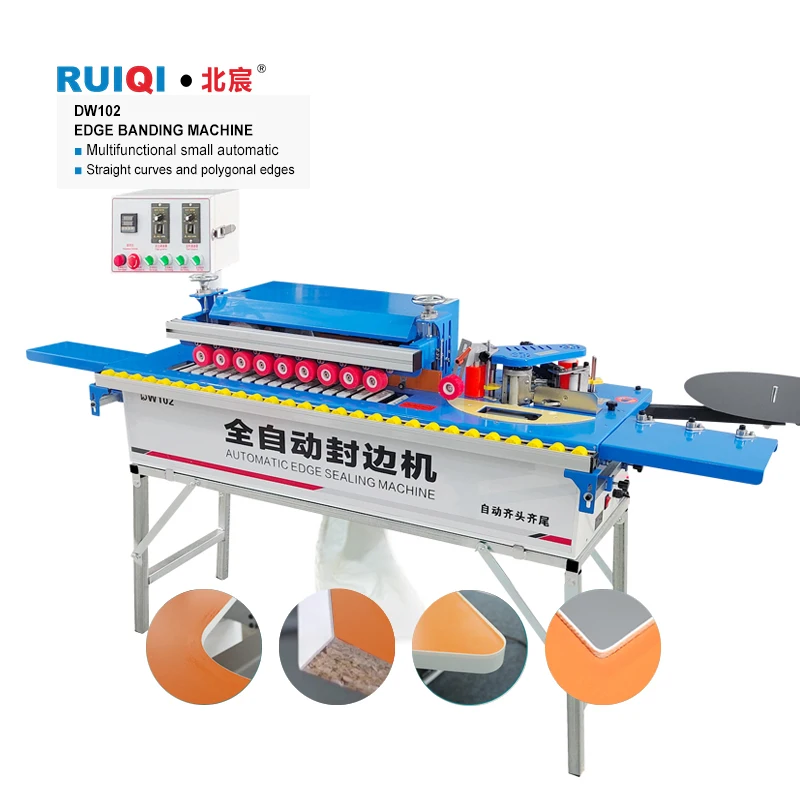
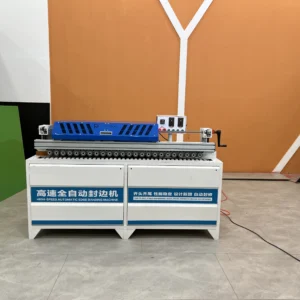
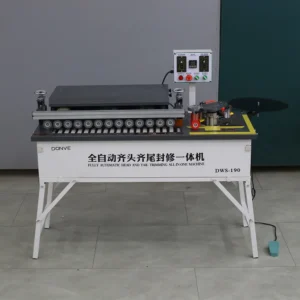
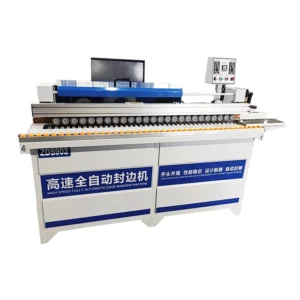
Voltage-ready configuration — DW102 units ship with confirmed electrical schematics matching your local supply before production begins, avoiding the common failure of machines arriving unusable on the shop floor.
Technical Specifications
| Parameter |
Value |
| Model |
DW102 |
| Product Type |
Mini Automatic Edge Banding Machine |
| Total Power |
3800W |
| Voltage |
220V / 380V / customization |
| Edge Banding Thickness |
0.3–3MM |
| Edge Banding Height |
0–50MM |
| Minimum Sheet Length |
25CM |
| Minimum Sheet Width |
5CM |
| Glue Pot Capacity |
1000ml |
| Trimming Power |
650W × 2 |
| Polishing Power |
180W × 2 |
| Vacuum Power |
1200W |
| Transmission Power |
60W |
| Edge Power |
20W |
| Air Source Pressure |
0.5–0.8MPa |
| Product Size |
128 × 47 × 69CM |
| Product Weight |
75KG |
| Assembly State |
Fully assembled |
| Standard Features |
Curved and straight edge banding, edge trimming, polishing, automatic head and tail cutting, vacuum feed |
| Plug Options |
EU, USA, AU, UK |
| Language Options |
Chinese, English, customizable (Spanish, French, others) |
Application Suitability
| Application |
Material or Output |
| Cabinet door and drawer front edge finishing |
MDF, particleboard, plywood with PVC or veneer banding |
| Small-batch custom furniture panel trimming |
Medium density fiberboard and blockboard up to 50MM height |
| Joinery workshop curved and straight edge work |
Polymer door components and solid wood panel stock |
| Sample room and prototype shop panel edging |
Mixed substrates requiring quick changeover between thicknesses |
Why Mini Automatic Edge Banding Machine Specifications Must Be Verified Against Your Actual Stock
Tolerance claims only matter when tested on the exact panel material and edge band you run daily.
Technical buyers comparing models on paper often miss the gap between a spec sheet tested on standard PVC and the reality of dense veneer strips or high-gloss acrylic banding. I once configured an entry-level unit for a Middle East cabinet maker using the factory's standard PVC test sample. When the client ran high-density veneer strips on their own stock, parameters needed full recalibration and first-month scrap rates climbed sharply. That is why I now insist on seeing the buyer's actual material samples before confirming any configuration [NEED_CITE: substrate and banding material compatibility in edge banding operations].

Matching Panel Dimensions to the DW102 Working Envelope
The DW102 accepts sheets as small as 25CM long and 5CM wide, which positions this mini automatic edge banding machine for workshops handling a mix of full panels and narrow offcuts. Many compact edge banders struggle below 30CM because the feed chain cannot grip short stock securely. If your operation frequently processes drawer sides, shelf cleats, or small cabinet components, verifying minimum sheet dimensions against your cut list prevents feeding jams and edge skips mid-production.
Voltage and Frequency as a Pre-Quotation Gate
Confirming local voltage and frequency before the order is placed — not after the machine ships — eliminates the most costly mismatch in woodworking equipment imports. The DW102 is configurable at 220V or 380V with region-specific plug options covering EU, USA, AU, and UK standards. An electrical schematic confirming your exact supply should accompany the formal quotation, because rewiring a 3800W unit on arrival is both expensive and potentially voids the CE compliance [NEED_CITE: voltage and frequency standards by export market].
Reading the Power Allocation Across Stations
The 3800W total power is distributed across trimming (650W × 2), polishing (180W × 2), vacuum (1200W), transmission (60W), and edge feed (20W). For MDF and particleboard, dual 650W trimming motors provide sufficient torque for clean flush cuts without tear-out on the substrate face. The 1200W vacuum unit handles chip extraction at the trimming zone, which matters when fine MDF dust accumulates on the polishing wheels and degrades the final edge finish. Operators working plywood with harder glue lines may need to reduce feed speed to let the trimmers keep pace.
The Cost of Skipping Material Compatibility Verification
Buyers who approve specifications based solely on the factory's standard test material often discover problems only after installation. High-density veneer strips demand different glue pot temperatures and feed pressures than the PVC used in routine factory tests. Control panels delivered in an unreadable language stall commissioning while operators guess at parameter adjustments. These are not warranty issues — they are configuration oversights that delay production by weeks [NEED_CITE: edge banding commissioning failures from material mismatch].
Why Technical Buyers Source This Configuration Here
In-house manufacturing with patented cutting mechanisms means the trimming stations on the DW102 are built and tested under one roof, not assembled from third-party sub-assemblies. Four-stage quality control covers incoming material inspection through pre-shipment verification, so tolerance claims on paper match what you measure on arrival. Voltage, plug type, and control panel language are confirmed as standard line items on every quotation, not treated as optional extras. Factory test records using your own panel samples ship with the documentation package. Engineer-led configuration recommendations are delivered as formal quotations within 24 hours, giving you spec-for-spec comparison data before you commit.
Documentation & Verification
- CE declaration of conformity matching DW102 configuration as shipped
- ISO 9001 certificate covering edge banding machine manufacturing processes
- Electrical schematic confirming your specified voltage, frequency, and plug type
- Factory test record run on your supplied panel material and edge band stock
- Operation and maintenance manual in agreed operator language with spare parts list
Installation, Commissioning & Support
- Requires a dedicated circuit matching confirmed 220V or 380V supply for the 3800W total load
- Fully assembled delivery at 75KG — two operators can position the 128 × 47 × 69CM unit on a standard workbench
- Compressed air connection at 0.5–0.8MPa needed before first startup of glue pot and feed system
- Initial parameter calibration using your own MDF or particleboard samples and chosen banding material
- Multilingual control panel configured pre-shipment so operators read the interface on day one
- Glue pot and trimming cutter inspection scheduled at intervals matching your daily operating hours
What to Include in Your Technical Inquiry
Send your typical panel materials with thickness range, the edge banding strips you currently stock (PVC, veneer, or acrylic with thickness), and your local voltage and frequency. If you process curved components, specify the minimum radius you need to band. Include the control panel language your operators read and your preferred plug standard so the electrical configuration is locked before production begins.
Frequently Asked Questions
Q: How do I verify edge banding tolerance claims before committing to an order?
A: Request the factory test record run on your specific panel material and edge band thickness. This document shows measured edge overhang, trim quality, and polish finish under controlled conditions. Compare those results against your assembly tolerance requirements. If the test used standard PVC but you run veneer, ask for a second test with your actual stock before shipment.
Q: What happens if my local voltage does not match the machine configuration?
A: The DW102 is configurable at 220V or 380V, and your exact supply details must be confirmed before production. An electrical schematic is issued with the quotation so you can verify compatibility with your facility wiring. Mismatches discovered after shipment require costly transformer installations or rewiring that may affect certification compliance.
Q: Can the control panel be supplied in my operators' language?
A: Yes. Chinese and English are standard, with Spanish, French, and other languages available on request. The language must be specified during the quotation stage so the correct firmware is loaded before pre-shipment testing. This prevents commissioning delays caused by operators unable to read parameter menus.
Q: How do I match this unit to my daily panel throughput?
A: Share your average daily sheet count, typical panel dimensions, and whether you run mostly straight or curved edges. The DW102 minimum sheet size of 25CM × 5CM and 0.3–3MM banding thickness range define its working envelope. Your production manager can cross-reference these against your cut list to confirm suitability before ordering.
Q: What documentation confirms the machine matches my regional safety standards?
A: The CE declaration of conformity ships with every unit, along with a machine specification sheet and electrical schematic matching your confirmed voltage and plug type. Pre-shipment packing photographs and customs documentation support are included to streamline import clearance at your destination port.