
Wood Boring Machines
Single Head Hinge Boring Machine JL-1 | Specifications10100
JL-1 Single Head Hinge Boring Machine, 1.5KW, 35mm+3mm Drill — engineered for...
View Details<p><strong>Automatic Edge Banding Machine, 220V, 0–15 m/min Conveying Speed, 0.3–3 mm Edge Thickness</strong> — specified for wood-based panel processing in small cabinet workshops.</p> <p>Independent station ratings (800W×2 trimming, 180W×2 polishing) and a 10–60 mm edge height range allow direct comparison against your substrate profile and daily throughput. The 180° rotatable gluing device covers both straight and curved edge applications within one compact footprint.</p> <p>Engineer-led configuration and formal quotation delivered within 24 hours.</p>
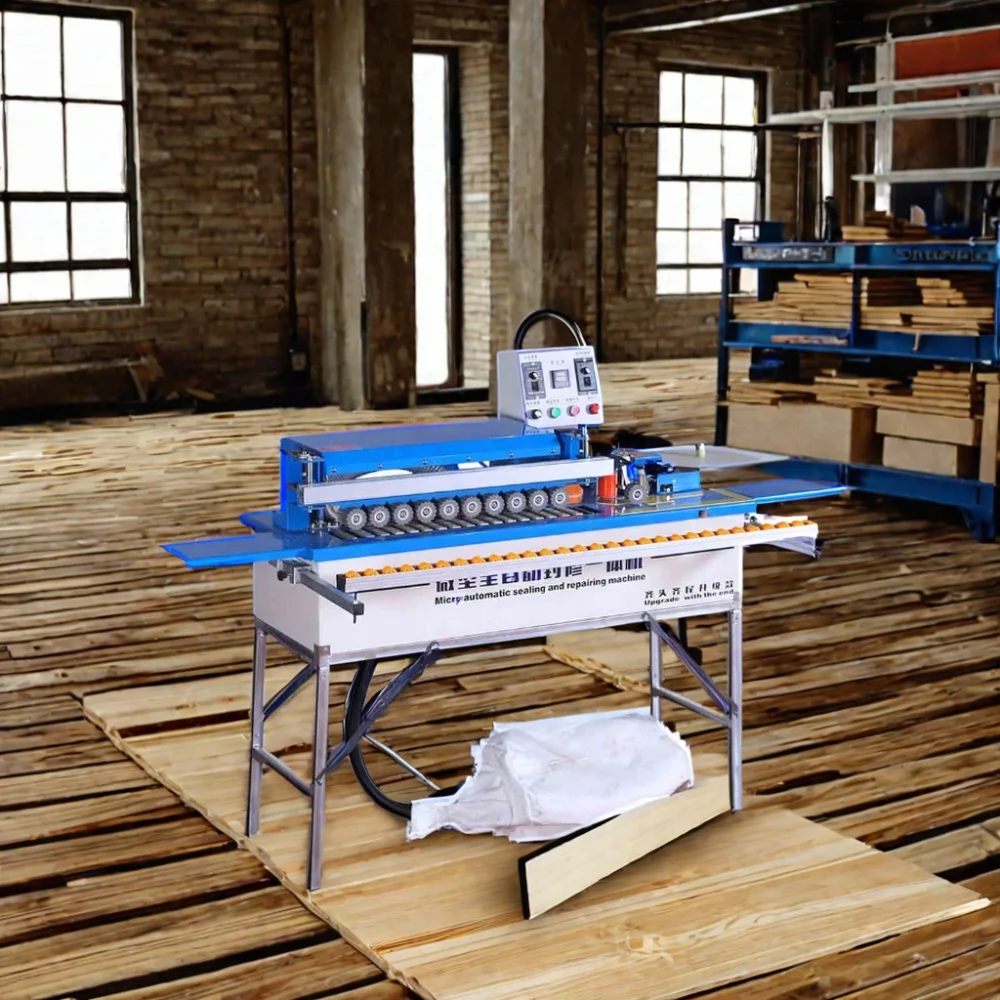
<p><strong>Automatic Edge Banding Machine, 220V, 0–15 m/min Conveying Speed, 0.3–3 mm Edge Thickness</strong> — specified for wood-based panel processing in small cabinet workshops.</p> <p>Independent station ratings (800W×2 trimming, 180W×2 polishing) and a 10–60 mm edge height range allow direct comparison against your substrate profile and daily throughput. The 180° rotatable gluing device covers both straight and curved edge applications within one compact footprint.</p> <p>Engineer-led configuration and formal quotation delivered within 24 hours.</p>
Quality Assured
Multi-stage QC inspection
Custom Config
Voltage, logo, language
Global Shipping
100+ countries served
After-Sales Support
Remote & spare parts
Verified Tolerance Claims — Independent station power ratings and documented test records let you verify ±0.02mm edge quality before the machine leaves the factory.
| Parameter | Value |
|---|---|
| Product Type | Automatic Edge Banding Machine |
| Voltage | 220V |
| Suction Power | 1200W |
| Belt Power | 25W |
| Transmission Power | 60W |
| Polishing Power | 180W × 2 |
| Trimming Power | 800W × 2 |
| Conveying Speed | 0–15 m/min |
| Edging Speed | 0–6 m/min |
| Edge Height Range | 10–60 mm |
| Edge Thickness Range | 0.3–3 mm |
| Overall Dimensions | 120 × 54 × 72 cm |
| Net Weight | 81 kg (source value — verify against manufacturer catalog) |
| Control Panel | Independent function controls |
| Gluing Method | Double-sided adhesive |
| Curved Edge Capability | Gluing device rotates 180° |
| Dust Extraction | Integrated dust suction device |
| Feed Mechanism | Double-row rubber pressure wheels |
| Assembly State | Partially assembled — some items require user assembly |
| Application | Material or Output |
|---|---|
| Small cabinet workshop edge finishing | Melamine-faced MDF and particleboard panels |
| Custom joinery with curved profiles | PVC and veneer banding on plywood substrates |
| Low-volume furniture production | Wood-based panels from 10–60 mm edge height |
| Startup workshop upgrading from manual banding | Straight and curved panel edges up to 3 mm thickness |
Confirming local voltage and frequency before reviewing edge banding machine specifications prevents weeks of idle equipment on the shop floor.
I once saw a fully automatic edge bander sit untouched in a Middle East workshop for three weeks because the motor was configured for 380V while the facility ran on 415V/60Hz. The production line stopped. The cabinet maker lost contracts. Nobody had asked the right question during the quotation stage [NEED_CITE: voltage and frequency standards by export market]. When comparing edge banding machine specifications across suppliers, the electrical configuration should be the first line you verify — not the last.
The trimming stations on this edge bander use 800W motors at both upper and lower positions. For a technical buyer evaluating edge banding machine specifications, this rating defines the cutting capacity available for removing excess PVC or melamine banding after the glue station. When processing 3mm PVC on dense particleboard, the trimming motors must sustain consistent torque without chatter marks on the panel edge. Independent power ratings per station allow direct cross-model comparison rather than relying on a single total power figure that hides how capability is distributed across the machine.
This machine lists a conveying speed of 0–15 m/min and an edging speed of 0–6 m/min. The distinction matters. Conveying speed describes how fast panels move through the machine when no banding is applied. Edging speed reflects the actual throughput during banding operations, accounting for glue application, trimming, and polishing contact time. A technical buyer should match the 0–6 m/min edging speed against daily panel volume to determine whether this unit meets production targets or whether a higher-throughput model is needed [NEED_CITE: CE machinery directive requirements for industrial equipment].
The 0.3–3 mm edge thickness range covers standard PVC, melamine, and veneer banding materials used in cabinet and furniture production. Thinner veneer at 0.3 mm demands precise trimming pressure to avoid tearing, while 3 mm PVC requires sufficient trimming motor torque for clean removal. The 10–60 mm edge height range accommodates most standard panel thicknesses encountered in small workshop environments. These two parameters together define the material envelope — any banding material or panel dimension outside this range requires a different machine class. The 180° rotatable gluing device adds curved profile capability within the same footprint, eliminating the need for a separate curved-edge unit.
When a buyer selects an edge bander based on price alone without verifying station power, feed speed, or voltage compatibility, the consequences surface during commissioning. Undersized trimming motors leave chatter marks on 3mm PVC. Incorrect voltage configuration halts the entire line. Control panels in an unfamiliar language stall operator training. These are not theoretical risks — they appear repeatedly in field reports from workshops that skipped the specification verification stage [NEED_CITE: common commissioning failures in exported woodworking machinery]. Each issue adds days or weeks of downtime that no quotation discount can offset.
Every quotation includes a machine specification sheet with verified motor ratings per station, so you can cross-check the configuration against your production requirements before committing. Electrical schematics confirm voltage and frequency match your facility supply, eliminating the mismatch risk that stalls commissioning. Factory test records document edge quality on your actual panel material and banding type, providing verifiable evidence rather than catalog claims. The four-stage quality control process covers incoming material inspection through pre-shipment verification. Engineer-led configuration recommendations ensure the machine matches your throughput and material profile rather than pushing a stocked model that may not fit.
Provide your primary panel substrate type and thickness range, the edge banding material and thickness you process most frequently, and your daily panel volume target. Include your local voltage and frequency so the electrical configuration is confirmed before production. Specify the control panel language your operators require and whether your workshop needs straight-only or combined straight and curved edge capability.
Q: How is actual edging throughput determined for this machine? A: The 0–6 m/min edging speed applies during active banding operations with standard PVC or melamine material. Actual throughput depends on panel length, edge banding thickness within the 0.3–3 mm range, and trimming requirements. Calculate daily output by multiplying edging speed by available production hours and average panel perimeter to determine if this unit meets your volume target.
Q: Is the 220V supply single-phase or three-phase, and are other voltages available? A: The standard configuration runs on 220V. Voltage can be configured from 110V to 440V for different target markets, with frequency confirmed to match your local supply. Always verify both voltage and frequency with the engineer before order confirmation to prevent commissioning delays.
Q: What language options exist for the control panel? A: The independent function controls are available in multiple languages based on your operator requirements. Specify the language during the quotation stage so the panel arrives configured correctly. This prevents the common situation where machines sit idle because operators cannot read the interface.
Q: How do I match station power to my specific banding material? A: The 800W × 2 trimming motors handle PVC up to 3 mm thickness, while the 180W × 2 polishing stations finish the edge surface. For dense substrates like high-density particleboard with thick PVC, verify trimming performance through a factory test on your actual material before confirming the order.
20+ Years Experience
Trusted by 100+ countries worldwide
Full OEM/ODM
Custom logo, voltage & panels
Lifetime After-Sales
12-month warranty + spare parts
25-45 Day Lead Time
Flexible MOQ, on-time delivery
Fill in your requirements and our team will respond with a formal quotation within 24 hours. We speak English and Spanish.
Response within 24 hours on business days
Or WhatsApp us for instant reply
Serving 100+ countries globally
JL-1 Single Head Hinge Boring Machine, 1.5KW, 35mm+3mm Drill — engineered for...
View DetailsFX-20 Small Mini Edge Banding Machine, 2500W, 0.3–3mm Edge Thickness, 220V/380V —...
View DetailsZDSF400 Automatic Edge Banding Machine, 220V, 3kW, 10–55mm Panel Range — straight-line...
View DetailsProducts DescriptionBeichen DW102 edge banding machine with auto gluing and trimming buffing...
View DetailsOur global sales team is ready to assist. Get a formal quotation, technical specs, and OEM/ODM options within 24 hours.