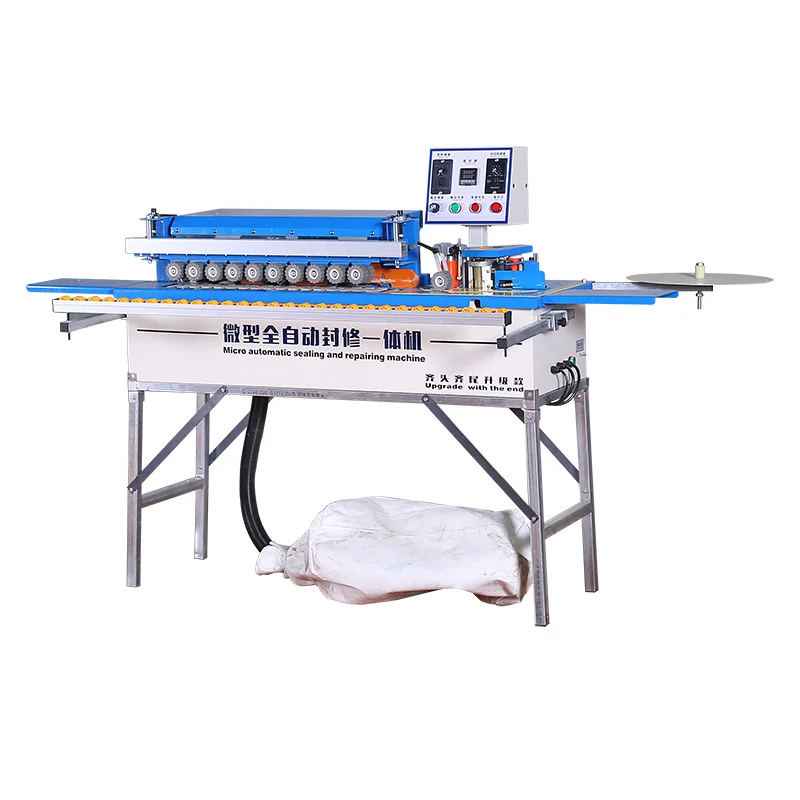
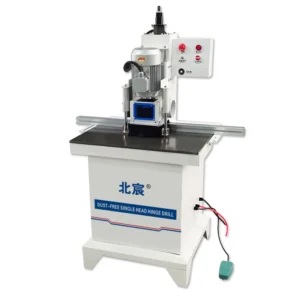
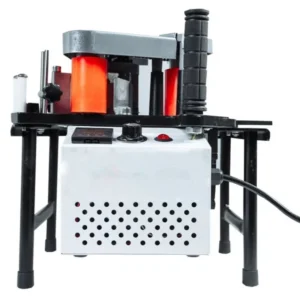
Verified Tolerance Mechanism — the ZDS160 portable handle edge bander uses a patented cutting mechanism to hold ±0.02mm accuracy across both straight and curved PVC banding runs, letting a technical buyer cross-check every motor rating and dimensional claim before purchase.
Technical Specifications
| Parameter |
Value |
| Model |
ZDS160 |
| Product Type |
Portable Edge Banding Machine |
| Voltage |
220V (configurable from 110V to 440V) |
| Suction Power |
1200W |
| Belt Power |
25W |
| Transmission Power |
60W |
| Polishing Power |
180W × 2 |
| Trimming Power |
800W × 2 |
| Conveying Speed |
0–15 m/min |
| Edging Speed |
0–6 m/min |
| Edge Banding Height Range |
10–60 mm |
| Edge Banding Thickness Range |
0.3–3 mm |
| Overall Dimensions |
120 × 54 × 72 cm |
| Gluing Method |
Double-sided adhesive |
| Gluing Device Rotation |
180° |
| Trimming Stations |
Up and down trimming |
| Polishing Stations |
Cross polishing up and down |
| Dust Extraction |
Integrated suction device |
| Control Panel |
Separate function controls |
| Feed Mechanism |
Double-row rubber pressure wheels |
| Operation Mode |
Curved and straight line dual purpose |
Application Suitability
| Application |
Material or Output |
| Straight cabinet panel edge banding |
MDF and particleboard with PVC edge banding |
| Curved countertop profile finishing |
Plywood and solid wood panels with veneer banding |
| On-site joinery edge finishing |
Pre-cut furniture panels in workshop or installation site |
| Small-batch custom furniture production |
Mixed substrates requiring both straight and contoured banding |
Why the Voltage Question Should Come Before the Price on a Portable Edge Banding Machine
Confirm your local supply voltage and frequency before the quote is finalized, not after the machine arrives.
I once watched a portable edge bander sit dead on a workshop floor for three weeks because the unit shipped at 220V while the site ran on a different supply. The production line stood idle while a transformer was sourced locally. That silence on the floor is something I do not want any buyer to repeat. When evaluating portable edge banding machine specifications, electrical compatibility is the first line item to verify — a 220V unit must be confirmed against your local grid before any production planning begins. [NEED_CITE: voltage and frequency standards by export market]
Dual-Purpose Geometry Without Tooling Changeovers
The 180° rotatable gluing device lets an operator transition from straight-run cabinet sides to curved countertop profiles on the same ZDS160 unit. This eliminates the need for a dedicated curved banding fixture, which matters when floor space is limited and the portable edge banding machine specifications must cover two edge geometries in one footprint. The double-sided adhesive gluing method keeps setup minimal between jobs.
Independent Station Control for Substrate-Specific Tuning
Each station — gluing, trimming, polishing, and suction — operates from a separate control on the panel. This means an operator can reduce polishing motor engagement when running thin veneer on plywood while keeping the full 800W trimming power engaged for dense MDF edges. The independent control architecture is a defining element of the ZDS160 portable edge banding machine specifications, allowing the operator to tune output per material rather than applying a single fixed cycle. [NEED_CITE: woodworking machinery control panel configuration standards]
Reading the Motor Ratings Against Your Production Reality
The dual 800W trimming motors deliver up-and-down cutting action that removes excess banding material from both faces of the panel in a single pass. For panels in the 0.3–3 mm thickness range, this power level handles PVC and veneer without chattering. The 180W × 2 polishing motors follow immediately, producing a flush edge finish. Feed speed spans 0–6 m/min for edging, giving the operator enough range to slow down on tight curves while maintaining pace on long straight runs. The double-row rubber pressure wheel feed mechanism stabilizes the panel through the trimming and polishing sequence, reducing the lateral drift that causes visible misalignment at the glue line.

The Cost of Skipping Specification Verification
A portable unit that arrives with the wrong voltage draws no power and produces no edges. Beyond the transformer wait, the downstream effect is missed delivery commitments and idle labor. Similarly, a control panel in a language the operator cannot read stalls commissioning until a manual is translated. These are not theoretical concerns — they are the most common reasons a compact edge bander underperforms in the field. [NEED_CITE: CE machinery directive requirements for industrial equipment]
Why Technical Buyers Source the ZDS160 Here
The patented cutting mechanism holds ±0.02mm tolerance, a figure verified through a four-stage QC process that includes a pre-shipment test run on your specified panel thickness range. Voltage configuration from 110V to 440V is handled before production starts, not as a field modification. The specification sheet and electrical schematic ship with every unit, so your maintenance team has full wiring documentation on day one. An engineer-led configuration review ensures the ZDS160 is matched to your actual substrate mix and edge profile requirements, not sold as a generic unit into an application it was never sized for.
Documentation & Verification
- Machine specification sheet with all ZDS160 motor ratings and dimensional data
- Electrical schematic confirming voltage and frequency for your local supply
- Factory test record documenting straight and curved banding cycles on your panel range
- Operation and maintenance manual supplied in the operator's agreed language
- Spare parts list with trimming cutter and polishing pad part numbers for the ZDS160
Installation, Commissioning & Support
- 120 × 54 × 72 cm footprint requires a stable bench or dedicated stand with level floor contact
- 220V supply must be on a dedicated circuit rated for the combined 1200W suction and motor draw
- Arrives assembled; operator mounts the integrated dust extraction hose to the workshop vacuum system
- First-run calibration covers feed wheel pressure adjustment and trimming depth setting for your banding thickness
- Spare trimming cutters and polishing pads included; reorder lead times confirmed at order placement
What to Include in Your Inquiry
Send your panel material type, edge banding thickness range, and whether you need primarily straight, curved, or mixed profiles. Include your local voltage and frequency so the ZDS160 portable edge banding machine specifications can be confirmed against your site supply before quotation. Note the control panel language your operators require.
Frequently Asked Questions
Q: How do I confirm the ZDS160 matches my local voltage and frequency?
A: Provide your site voltage and whether your grid runs at 50 Hz or 60 Hz. The ZDS160 is configurable from 110V to 440V, but the correct configuration must be set during manufacturing. We confirm the electrical specification in writing before production begins, so the unit arrives ready to connect without an external transformer.
Q: Can the control panel and manual be supplied in my operator's language?
A: Yes. Specify the required language at inquiry stage. The ZDS160 separate function controls can be labeled accordingly, and the operation manual is translated into the agreed language before shipment, preventing commissioning delays caused by unreadable instructions on the workshop floor.
Q: How do I match the 0.3–3 mm edge thickness range to PVC versus veneer banding?
A: PVC typically runs in the 0.4–2 mm portion of the range, while veneer sits toward the thinner end. The independent station controls allow trimming depth and polishing pressure to be adjusted per material. Confirm your primary banding material at inquiry so the factory test record covers the correct substrate combination.
Q: What are the installation requirements for integrating this unit into an existing workshop?
A: The ZDS160 measures 120 × 54 × 72 cm and requires a level surface plus a dedicated 220V circuit. The integrated dust extraction connects to your existing vacuum system via standard hose. No foundation work is needed. Power draw across all stations running simultaneously should be verified against your workshop panel capacity.
Q: Which consumables need regular replacement and how are they sourced?
A: Trimming cutters and polishing pads are the primary wear items on the ZDS160. A spare parts list with specific part numbers ships with the unit. Consumable availability and lead times are confirmed at order stage, so you can plan reorder intervals around your production schedule without unexpected downtime.