
Wood Based Panels Machinery
Model Selection Automatic Edge Banding Machine for PVC Veneer Melamine
Record ID: 10091
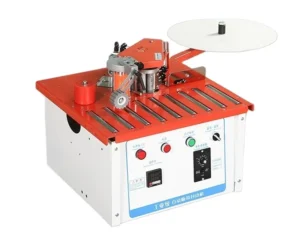
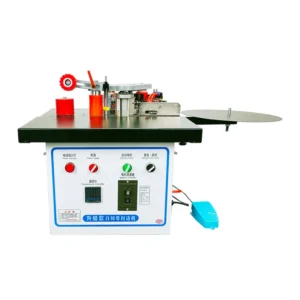
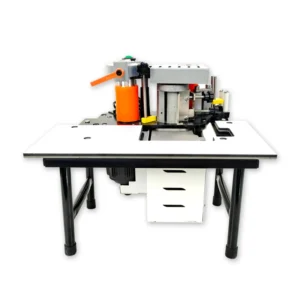
View Details<p><strong>DW902 Automatic Edge Banding Machine, 220V/380V, 0.3–3MM Banding Thickness</strong> — specified for MDF, plywood and particleboard panels down to 25×10CM with trimming at 24000r/min.</p> <ul> <li><strong>Voltage confirmed</strong> per target country frequency; double hot air and 4 oblique pressure groups keep glue spread consistent across substrates</li> <li>Selection on tolerance, feed rate and edge-finish quality against your actual panel mix and assembly requirement</li> </ul> <p>Supplied with factory test record, agreed-language manual, and pre-shipment verification under four-stage QC.</p>

<p><strong>DW902 Automatic Edge Banding Machine, 220V/380V, 0.3–3MM Banding Thickness</strong> — specified for MDF, plywood and particleboard panels down to 25×10CM with trimming at 24000r/min.</p> <ul> <li><strong>Voltage confirmed</strong> per target country frequency; double hot air and 4 oblique pressure groups keep glue spread consistent across substrates</li> <li>Selection on tolerance, feed rate and edge-finish quality against your actual panel mix and assembly requirement</li> </ul> <p>Supplied with factory test record, agreed-language manual, and pre-shipment verification under four-stage QC.</p>
Quality Assured
Multi-stage QC inspection
Custom Config
Voltage, logo, language
Global Shipping
100+ countries served
After-Sales Support
Remote & spare parts
Voltage-First Configuration — Every DW902 automatic edge banding machine ships with electrical schematics matched to your facility's verified power supply, eliminating the most common cause of commissioning delays in cross-border machinery procurement.
| Parameter | Value |
|---|---|
| Model | DW902 |
| Product Type | Automatic Edge Banding Machine |
| Total Power | 4000W |
| Voltage Options | 220V / 380V / Customizable |
| Trimming Motor Configuration | 800W × 2 at 24000 r/min |
| Polishing Power | 380W × 2 |
| Edge Feed Motor | 140W |
| Transmission Motor | 140W |
| Vacuum Motor | 550W |
| Glue Pot Capacity | 4000 ml |
| Edge Banding Thickness Range | 0.3 – 3 mm |
| Edge Banding Height | Up to 50 mm |
| Minimum Sheet Length | 250 mm |
| Minimum Sheet Width | 100 mm |
| Air Source Pressure | 0.5 – 0.8 MPa |
| Machine Dimensions | 1750 × 870 × 1120 mm |
| Machine Weight | 240 kg |
| Control Panel Language | Chinese, English, Spanish, other languages configurable |
| Plug Standards Available | EU, USA, AU, UK |
| Key Features | Oblique and straight dual-purpose edge banding, double hot air design, feeding auxiliary slide plate, 4 groups of oblique pressure wheels, double row pressing wheels, integrated trimming, scraping, polishing, and vacuuming |
| Application | Material or Output |
|---|---|
| Cabinet door and carcass edge finishing | MDF and particleboard with PVC or melamine edging |
| Custom furniture panel processing | Plywood and ecological board with veneer or PVC banding |
| Small-batch joinery production | Solid wood panels requiring 90-degree straight edge treatment |
| Decorative interior millwork | MDF substrates with 0.3–3 mm edge banding materials |
| Batch production for household manufacturers | Panels requiring consistent trimming, scraping, and polishing in a single pass |
When evaluating automatic edge banding machine specifications, the electrical configuration is the first parameter that must be locked — not an afterthought once the order is placed.
I once arranged shipment of a fully automatic edge bander to Lagos. The workshop ran on 415V/50Hz, but the inverter had been configured for 380V. The drive tripped on overvoltage the moment the operator switched it on, and the factory sat idle for weeks while a replacement module was shipped from China. That single oversight cost the customer more in lost production than the machine was worth. Since then, I ask every buyer to photograph the nameplate on their existing electrical cabinet before I finalize any quotation [NEED_CITE: voltage and frequency standards by export market]. The DW902 is built to accept voltage configurations from 220V to 380V and can be adapted to local frequency requirements, but only when the supply is confirmed before assembly begins.
The DW902 handles minimum sheet dimensions of 250 mm in length and 100 mm in width, which positions this automatic edge banding machine for workshops processing a mix of small cabinet components alongside full-size panels. The feeding auxiliary slide plate stabilizes narrower stock that would otherwise drift on the conveyor, maintaining alignment through the trimming and polishing stations. Four groups of oblique pressure wheels press the banding material against the panel edge at an angle, distributing force across the glue line rather than concentrating it at one point. This arrangement matters when you run 0.3 mm veneer on one batch and 3 mm PVC on the next, because the pressure distribution must adapt without manual recalibration between jobs.
Consistent adhesion across varying edge materials depends on maintaining the glue film at the correct viscosity from the pot to the panel edge. The double hot air design on the DW902 pre-warms both the panel edge and the banding material before they meet at the pressure zone. This reduces the thermal shock that causes premature glue skinning, particularly when the workshop ambient temperature drops below the range the glue chemistry expects [NEED_CITE: hot melt adhesive open time and ambient temperature correlation]. The 4000 ml glue pot provides enough capacity for sustained production runs without frequent refills, and the air source pressure requirement of 0.5–0.8 MPa is compatible with standard workshop compressors already installed in most furniture factories.
The trimming station runs two 800W motors at 24000 r/min, a speed range that produces a clean shear cut on PVC and melamine edging without chipping the substrate surface. Slower trimming speeds tend to tear rather than cut, leaving a visible step line at the panel face that shows up under lacquer or laminate. The polishing stage uses dual 380W motors to remove residual adhesive squeeze-out and buff the edge to a uniform finish, eliminating a manual cleanup step that adds labor cost to every panel. The 550W vacuum motor captures trimming waste at the source, keeping the conveyor and guide rails free of chip accumulation that would otherwise degrade feed accuracy over a production shift. For technical buyers comparing automatic edge banding machine specifications across suppliers, these motor ratings translate directly into the edge quality your downstream assembly or finishing department receives.
Machines that arrive with the wrong voltage or an unreadable control panel do not just delay commissioning — they erode operator confidence in the equipment. When a carpenter cannot read the error message on the screen, they revert to manual edge banding methods they already know, and the investment in automation sits idle [NEED_CITE: operator adoption rates for imported machinery with localized interfaces]. Incompatible feed height between a new edge bander and an existing panel saw creates a bottleneck that forces double-handling of every workpiece. These failures are not manufacturing defects; they are specification mismatches that a thorough pre-order review would have prevented.
The DW902 is produced on a dedicated line with proprietary cutting mechanisms covered by registered patents, and tolerance claims are verified through a four-stage QC process that includes incoming material inspection, in-process checks, finished product testing, and pre-shipment verification. Voltage, plug type, and control panel language are configured per order rather than selected from a fixed menu, so the machine that arrives in your workshop matches your electrical infrastructure and your operator's language from the first day. The product family spans entry-level through full-function models, meaning a workshop can add capacity later without switching suppliers or retraining staff on a different control philosophy. Configuration recommendations are prepared by engineers rather than sales templates, and a formal quotation with confirmed specifications is typically issued within 24 hours of receiving complete requirements [NEED_CITE: ISO 9001 quality management system requirements for manufacturing].
To configure the DW902 for your workshop, provide the panel materials and thickness range you process most frequently, the edge banding materials and thicknesses in your specification, and a photograph of your existing electrical cabinet nameplate showing voltage and frequency. If you operate upstream equipment such as a panel saw or downstream equipment like a boring machine, note the feed height and panel transfer dimensions so the line integration can be assessed before the machine is built.
Q: How is edge banding tolerance verified before the machine ships? A: The DW902 undergoes a factory test using panel stock and edge banding material matching your specification. Trim quality, edge adhesion, and surface finish are inspected and recorded. The test record is included in the shipping documentation so you can compare arrival condition against the baseline.
Q: What voltage and frequency options are available for different markets? A: The machine supports configurations from 220V to 380V, and frequency is confirmed based on your local grid standard. Before production begins, you provide a photograph of your electrical cabinet nameplate so the motor windings, inverter, and transformer are matched precisely to your supply.
Q: Can the control panel be set to a language my operators understand? A: The DW902 control interface is available in Chinese, English, and Spanish as standard options, with additional languages configurable per order. The selected language is loaded before dispatch and matches the operation manual provided with the machine.
Q: How do I match edge banding thickness to my panel materials? A: The DW902 accepts edge banding from 0.3 mm to 3 mm, covering thin veneer through standard PVC and melamine. Your specific combination of substrate and edging material determines the pressure wheel adjustment and hot air temperature settings, which are documented during commissioning.
Q: What documentation arrives with the machine for installation and compliance? A: You receive a CE declaration of conformity, electrical schematic confirming your voltage configuration, factory test record, operation manual in your chosen language, spare parts list, and packing photographs. Customs documentation support is provided to smooth the import clearance process.
20+ Years Experience
Trusted by 100+ countries worldwide
Full OEM/ODM
Custom logo, voltage & panels
Lifetime After-Sales
12-month warranty + spare parts
25-45 Day Lead Time
Flexible MOQ, on-time delivery
Fill in your requirements and our team will respond with a formal quotation within 24 hours. We speak English and Spanish.
Response within 24 hours on business days
Or WhatsApp us for instant reply
Serving 100+ countries globally
Record ID: 10091
View DetailsZDSF50 Mini Edge Banding Machine, 220V, 1.2 kW, 10–60 mm Panel Range...
View DetailsMachine specification sheet and electrical schematic confirmed within 24 hours of inquiry...
View DetailsProducts DescriptionPortable edge banding machine. light and portable. is a useful equipment...
View DetailsOur global sales team is ready to assist. Get a formal quotation, technical specs, and OEM/ODM options within 24 hours.