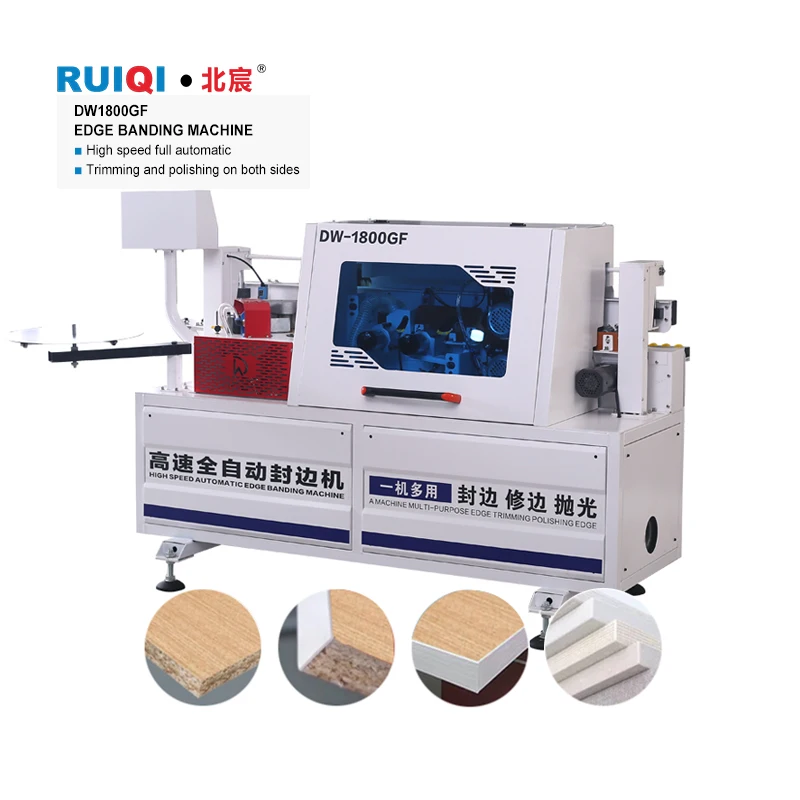
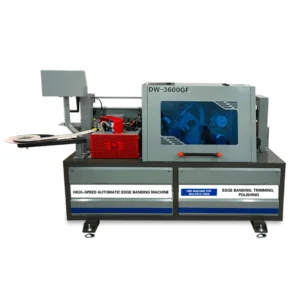
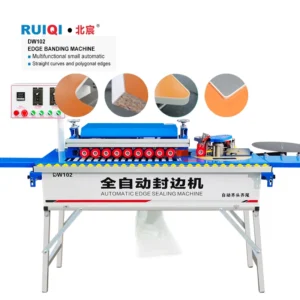
Precision-Verified Tolerance — The DW1800 Automatic Edge Banding Machine is built with precision-ground components and comes with a documented specification sheet you can audit before shipment.
Technical Specifications
| Parameter |
Value |
| Model |
DW1800 |
| Product Type |
Automatic Edge Banding Machine |
| Total Power |
4.9 kW |
| Voltage & Frequency |
380V / 220V / 415V (source value — verify against manufacturer catalog) |
| Feed Speed |
0–14 m/min |
| Edge Banding Height |
0–50 mm |
| Edge Banding Thickness |
0.3–3 mm |
| Minimum Sheet Length |
20 cm |
| Minimum Sheet Width |
10 cm |
| Glue Pot Capacity |
4,000 ml |
| Trimming Power & Speed |
800 W × 2, 24,000 r/min (rated or peak not specified in source) |
| Polishing Power |
380 W × 2 |
| Vacuum Power |
550 W |
| Air Source Pressure |
0.4–0.6 MPa |
| Standard Features |
Double-sided gluing, top and bottom trimming, top and bottom polishing, front and rear alignment, flexible edge scraping, dust extraction |
| Product Size |
220 × 65 × 125 cm |
| Product Weight |
320 kg |
| Control Panel Language |
Chinese and English (customizable to Spanish or other languages) |
| Plug Options |
EU, USA, AU, UK |
Application Suitability
| Application |
Material or Output |
| Cabinet door and carcass edge finishing |
MDF, particleboard with PVC and melamine edge banding |
| Custom furniture panel banding |
Plywood and ABB boards with veneer or PVC strips |
| Small-batch workshop production |
Solid wood panels and organic glass plates up to 50 mm height |
| Transitioning from manual to automated banding |
Mixed substrates in joinery and furniture startups |
Why the Voltage Question Should Come Before the Price on Any Automatic Edge Banding Machine
Confirm local voltage and frequency before the quotation stage — not after the crate arrives at your dock.
I once helped commission a full-function edgebander at a cabinet factory in Riyadh. The machine was wired for 50 Hz; the plant ran on 60 Hz. The feed motor overheated on the first day, edge banding peeled off every panel, and we waited three weeks for a replacement VFD. That is a mistake no production manager should have to absorb. The DW1800 is configurable across 380V, 220V, and 415V, but those options only matter if the correct one is locked in before the machine enters production. Every quote I send now includes a voltage and frequency confirmation line that the buyer signs off on. [NEED_CITE: voltage and frequency standards by export market]
Feed Speed Mapping to Panel Material and Edge Thickness
The DW1800's variable feed speed of 0–14 m/min gives operators room to adjust for different substrates. Running MDF at higher feed rates is generally workable because the substrate is uniform, but plywood with surface irregularities demands a slower pass to keep the adhesive bond consistent. Automatic Edge Banding Machine specifications like this feed range let you balance throughput against edge quality rather than locking into a single speed for every material.
Trimming Stations and Corner Profile Quality
With dual trimming heads running at 24,000 r/min, the DW1800 handles both top and bottom trimming in one pass. The front and rear alignment stations work alongside flexible edge scraping to produce rounded, smooth corners without manual touch-up. For a workshop processing cabinet components, this means panels move directly from the edgebander to the assembly bench without a secondary finishing step. [NEED_CITE: CE machinery directive requirements for edge banding equipment]
Understanding How Glue Pot Capacity and Pressure Affect Daily Output
The 4,000 ml glue pot on the DW1800 supports extended runs without frequent refills, which matters when you are banding a full batch of wardrobe carcass panels. Double-sided gluing ensures adhesive coverage on both the panel edge and the banding strip — critical for particleboard, where uneven glue spread leads to visible glue lines or delamination. Air source pressure between 0.4 and 0.6 MPa drives the pressure rollers, and maintaining that range is essential for consistent bonding across varying edge thicknesses from 0.3 to 3 mm.

The Hidden Cost of Specifying Without a Full Configuration Check
Buying an edgebander on feed speed alone is how workshops end up with machines that cannot handle their thickest stock. If your panels regularly sit near the 50 mm height ceiling, you need to confirm that the trimming and polishing stations are rated for sustained work at that limit. Likewise, a control panel in a language your operators cannot read stalls commissioning by days. These are not minor oversights — they are the difference between a machine that earns its floor space and one that becomes a bottleneck. [NEED_CITE: common commissioning failures in imported woodworking machinery]
Why Source the DW1800 Through This Configuration
In-house manufacturing with patented cutting mechanisms means the tolerance you see on paper is the tolerance measured on the machine you receive. Voltage, control language, and plug type are configured as part of the standard order process, not treated as optional extras. A four-stage quality control process covers incoming material through pre-shipment verification, so the test record you review reflects the actual unit in the crate. The full product family lets a workshop scale from the DW1800 to higher-throughput models without changing suppliers. Engineer-led configuration recommendations arrive as a formal quotation within 24 hours of your inquiry.
Documentation & Verification
- Machine specification sheet with verified tolerance data for your panel thickness range
- Electrical schematic confirming local voltage, frequency, and plug type
- Factory test record showing edge banding performance on your substrate before dispatch
- Operation and maintenance manual in the agreed control panel language
- Spare parts list with part numbers for trimming blades, pressure rollers, and glue pot seals
- CE declaration of conformity and ISO 9001 certificate for customs and compliance filing
Installation, Commissioning & Support
- The DW1800's 220 × 65 cm footprint requires a level concrete floor with clearance for infeed and outfeed tables
- A dedicated three-phase circuit matching your confirmed voltage is required before uncrating
- The 320 kg unit arrives partially assembled; trimming and polishing heads need on-site alignment
- First-run calibration covers feed speed, glue temperature, and pressure roller adjustment for your material
- Operators receive training on control panel functions and daily glue pot cleaning procedures
- Wear parts including trimming blades and scraper inserts ship with the initial spare parts package
What to Include in Your Inquiry
Send your primary panel materials and typical edge thickness range so the feed speed and glue settings can be preset. Confirm your workshop's voltage and frequency — single-phase or three-phase — along with the preferred control panel language. If you are integrating the DW1800 into an existing line, share the upstream saw and downstream drill station specifications so throughput can be matched.
Frequently Asked Questions
Q: How do I match the DW1800 feed speed to my production volume and material mix?
A: The 0–14 m/min range covers most workshop scenarios. For MDF and particleboard with standard PVC banding, running in the upper range is typical. Plywood and thicker veneer strips require slower feed to maintain glue adhesion. Share your material list and daily panel count so the configuration can be validated against your throughput requirement.
Q: How is voltage and frequency compatibility confirmed before the machine is built?
A: Voltage is confirmed during the quotation stage through a signed specification document. The DW1800 supports 380V, 220V, and 415V options. Your local frequency — 50 Hz or 60 Hz — determines motor and VFD selection. This is locked before production begins so the machine arrives ready to connect.
Q: What trimming and polishing stations does the DW1800 include?
A: The DW1800 includes top and bottom trimming at 24,000 r/min, front and rear alignment, flexible edge scraping, and dual polishing heads at 380 W each. These stations cover standard PVC and veneer edge banding. If your production involves specialty profiles or higher volumes, discuss upgrade options during configuration.
Q: What documentation verifies tolerance and electrical specifications on delivery?
A: You receive a factory test record documenting edge banding results on your panel material, an electrical schematic matching your confirmed voltage, and the machine specification sheet with tolerance data. These documents ship with the unit and are also provided digitally before dispatch for your review.
Q: Can I arrange a sample processing test before placing the order?
A: Yes. Send your panel samples and preferred edge banding material for a processing test on the DW1800. You will receive the finished samples along with a test record showing feed speed, glue temperature, and trimming results. Factory visits are also welcomed for buyers who prefer to inspect the machine in person.