Verified Tolerance Documentation — Every dust-free mother saw leaves our facility with a factory test record confirming cutting accuracy on your specified panel material and thickness.
Technical Specifications
| Parameter |
Value |
| Product Type |
Dust-Free Mother Saw (Beam Saw / Panel Saw) |
| Power Source |
Electric |
| Dust Extraction |
Integrated dust-free design at blade and guard level |
| Blade Configuration |
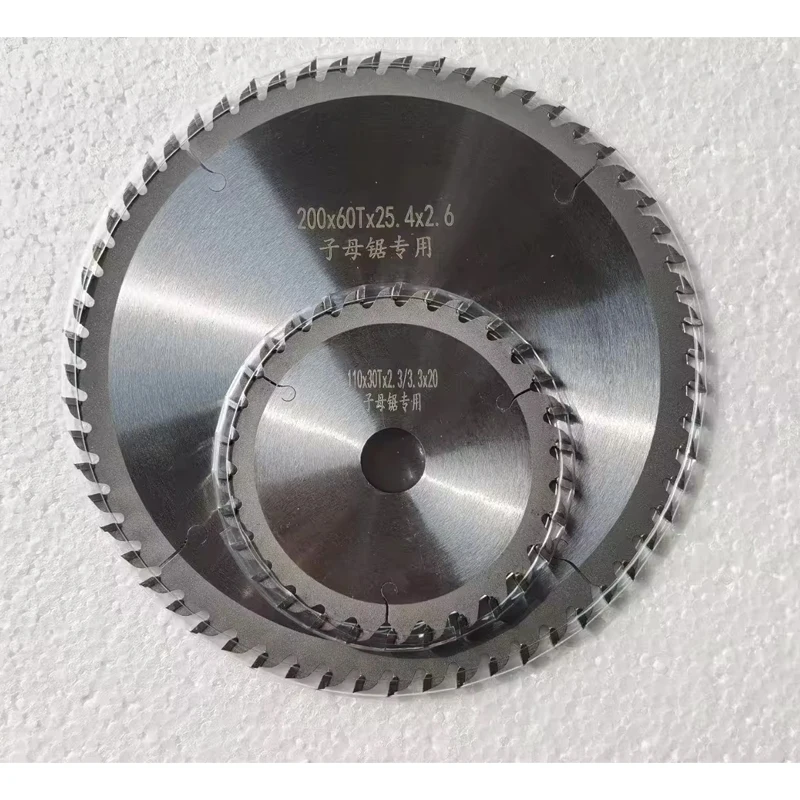
Mother saw blade with scoring option |
| Warranty |
1 Year |
| Voltage & Frequency |
Configurable (confirm local supply before order) |
| Panel Materials |
MDF, particleboard, plywood, solid wood panels |
| Standards |
CE declaration of conformity, ISO 9001 certified manufacturing |
Application Suitability
| Application |
Material or Output |
| Custom cabinet and furniture panel sizing |
MDF and particleboard up to standard sheet dimensions |
| Plywood cross-cutting for joinery assemblies |
Plywood panels requiring clean edge finishes |
| Upstream board sizing before edge banding |
Sized panels feeding downstream boring and banding stations |
| Small to mid-size workshop dust control |
Workshops transitioning from manual cutting to enclosed extraction |
Why Voltage Confirmation Must Precede the Purchase Order
A mismatched voltage rating destroys the motor within seconds of startup, and the damage is never covered by warranty.
I worked on a case last year where a custom furniture maker received a 380V panel saw at a facility running 440V three-phase. The motor burned out during the first test cut, and the production line sat idle for weeks while a replacement was shipped overseas. The cost of the motor was minor compared to the downtime across the entire workshop. This failure repeats more often than buyers expect, because specifications are sometimes confirmed after the order is placed rather than before [NEED_CITE: voltage and frequency standards by export market]. When evaluating dust-free mother saw specifications, the electrical configuration must be locked down as the first step, not an afterthought during shipping documentation.

Matching the Saw to Your Panel Thickness and Feed Rate Requirements
The relationship between panel thickness range and feed speed directly determines whether a mother saw can keep pace with downstream edge banding and boring stations. A saw that cuts cleanly at thinner gauges may struggle with feed consistency when processing 25mm particleboard, producing chip-out that propagates through subsequent operations. Reviewing dust-free mother saw specifications against your actual material schedule ensures the machine is rated for your heaviest daily workload, not just the lightest test piece.
Extraction Design and Workshop Air Quality Compliance
Integrated dust extraction at the blade and guard level captures particulate at the point of generation, reducing airborne dust concentration in the cutting zone. This design matters for workshops in regions enforcing occupational air quality standards, where open-cutting tables require costly secondary collection systems. The extraction port sizing and required CFM must align with your existing dust collection infrastructure or a new system must be specified alongside the saw [NEED_CITE: occupational dust exposure limits in woodworking facilities].
Reading the Numbers That Actually Matter
Cutting tolerance, panel thickness range, and feed speed are the three specifications that determine whether a mother saw will hold accuracy across a full production shift. A stated tolerance is only meaningful when accompanied by a documented test method and a pre-shipment verification record on your specific panel material. Motor power must be evaluated against the maximum panel thickness and feed speed combination you will run, because undersized motors overheat under sustained load. Dust extraction port dimensions dictate whether your existing collector can handle the CFM requirement or if a dedicated unit is needed. These parameters together define the operating envelope of the machine.
The Hidden Cost of Underspecifying the Upstream Cut
When a mother saw is selected without verifying its output against downstream station requirements, the consequences surface during assembly rather than during the cutting process itself. Panels that drift outside acceptable tolerance cause edge banding misalignment, hinge boring offset, and cabinet box squaring issues that require manual correction. These defects accumulate across hundreds of boards per shift, consuming labor that was supposed to be eliminated by mechanization. Buyers who skip the specification comparison phase often discover the problem only when finished furniture fails quality inspection [NEED_CITE: tolerance stack-up effects in panel furniture assembly].
Why Source This Machine Through Ruiqi
In-house manufacturing with patented cutting mechanisms means tolerance claims are backed by verifiable production records, not third-party assembly of bought-in components. The full product family spans entry-level to full-function models, allowing a workshop to add capacity later without introducing a second supplier's learning curve. Voltage, control panel language, and electrical frequency are confirmed during the quotation stage, eliminating the motor-burn scenario described above. Four-stage quality control with pre-shipment verification ensures every unit is tested under load before crating. Engineer-led configuration recommendations are delivered as a formal quotation within 24 hours, matching your panel schedule and throughput requirement rather than pushing a stock model.
Documentation & Verification
- Machine specification sheet confirming cutting tolerance on your panel material
- Electrical schematic with voltage and frequency matched to your local supply
- Factory test record documenting performance on your specified thickness range
- Operation and maintenance manual in your agreed language
- CE declaration of conformity for market entry compliance
- Spare parts list with part numbers for consumable blades and extraction components
Installation, Commissioning & Support
- Dedicated circuit required matching the confirmed voltage and frequency configuration
- Dust extraction ducting sized to the machine port CFM requirement before arrival
- Blade alignment and scoring adjustment calibrated on your panel stock during commissioning
- Operator training covering feed rate settings across your panel thickness range
- Replacement blade and extraction filter schedule documented in the maintenance manual
- Remote technical support available for fault diagnosis using the electrical schematic
What to Include in Your Inquiry
To configure a mother saw that matches your workshop, provide the panel materials and maximum thickness you process daily, your local voltage and frequency supply, and the language required for the control interface. If you are integrating the saw into an existing line, note the downstream edge bander and boring machine feed rates so throughput can be balanced across stations. Sample processing tests can be arranged on your material before order confirmation.
Frequently Asked Questions
Q: How is cutting tolerance verified and what test record is provided before shipment?
A: Each machine undergoes a pre-shipment test run using panel material and thickness matching your order specification. A signed factory test record documenting measured cutting deviation accompanies the shipment. The test method and acceptable tolerance band are stated on the machine specification sheet provided during the quotation stage, so you know exactly what standard is being applied.
Q: What voltage and frequency configurations are available for the destination market?
A: The electrical system is configurable across common industrial voltage and frequency combinations. Your local supply must be confirmed during the quotation stage, and the electrical schematic is reviewed with you before production begins. This prevents the motor failure scenario that occurs when voltage is assumed rather than verified against the destination facility.
Q: How does panel thickness range affect feed speed and blade selection?
A: Thicker panels require reduced feed speed and specific blade tooth geometry to maintain cut quality and prevent motor overload. The machine specification sheet maps recommended feed rates to thickness ranges for MDF, particleboard, and plywood. Blade selection is confirmed during the configuration stage based on your primary material to ensure consistent edge quality.
Q: What is included in the 1 Year Warranty and which components are excluded?
A: The warranty covers manufacturing defects in mechanical and electrical components under normal operating conditions. Consumable items such as saw blades, scoring blades, and dust extraction filters are excluded. The full warranty scope and claim procedure are documented in the operation manual provided with the machine.
Q: How do I match the mother saw output to downstream edge banding and boring throughput?
A: Provide the feed rates and cycle times of your existing or planned edge bander and boring machines. We calculate the required cutting output per shift and recommend a feed speed and panel handling configuration that balances the line. This prevents bottlenecks where the saw either starves or overwhelms downstream stations.