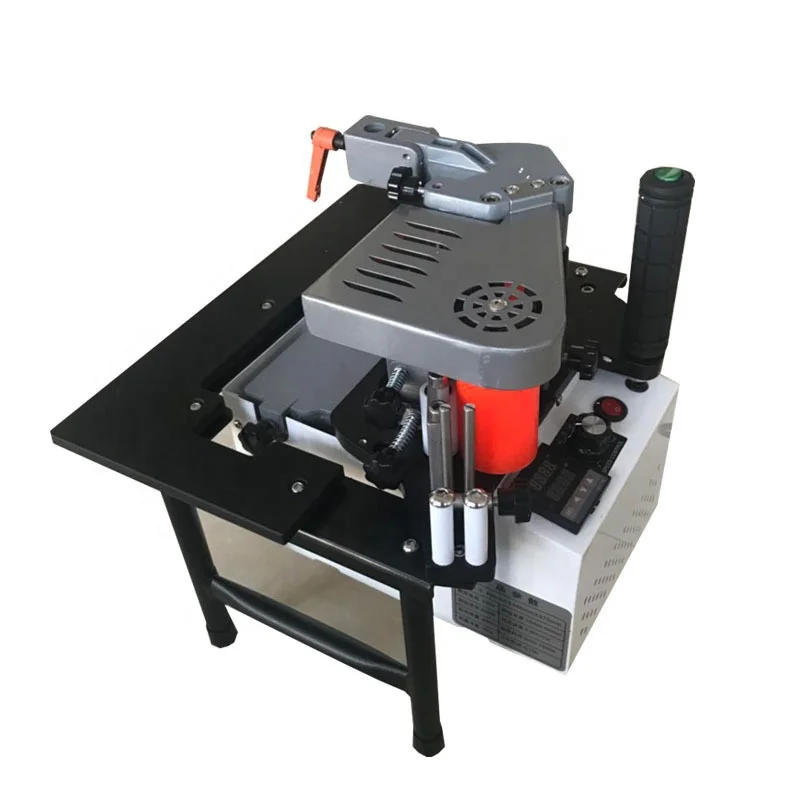
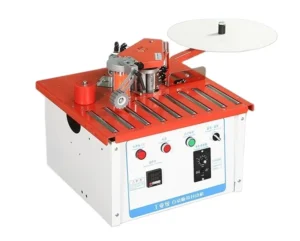
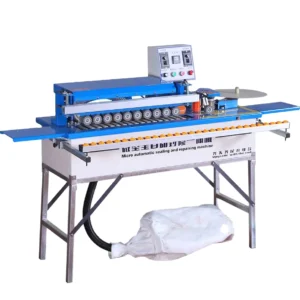
Verified Tolerance on Site — Portable edge banding machines must hold tolerance on the actual curved and straight panels in your workshop, not just on test boards, which is why every specification here maps directly to real panel processing conditions.
Technical Specifications
| Parameter |
Value |
| Product Type |
Portable Edge Banding Machine |
| Shape of Edge-banding Plates |
Curved, Straight and Special-shaped Sheet |
| Edge Thickness Range |
0.3–3mm |
| Edge Sealing Speed |
0–6 m/min (basis not stated in source) |
| Edge Sealing Height Range |
7–60mm |
| Gluing Method |
Double-sided gluing |
| Glue Pot Volume |
1000ml |
| Machine Weight |
14kg |
| Customization Options |
Logo customization, EU/AU/UK/USA/CN plug available |
| Warranty |
One year |
Application Suitability
| Application |
Material or Output |
| Custom furniture panel edge banding |
MDF, plywood, and particleboard with PVC or veneer edging |
| Curved cabinet door and drawer front finishing |
Shaped solid wood panels and contoured MDF components |
| On-site installation and repair edge finishing |
Pre-cut panels requiring field-applied banding on straight or curved profiles |
| Small joinery workshop production runs |
Mixed substrates with edge band thickness from 0.3mm to 3mm |
What "0–6 m/min Sealing Speed" Actually Means for Your Panels
Feed speed ratings on portable edge banding machines only matter when matched to the substrate and edge band material you actually run.
I have watched operators push feed rates to maximum on a portable unit, then discover the glue line on recycled particleboard was thick enough to catch a fingernail. The edge sealing speed of 0–6 m/min is a range, not a guarantee of quality at the upper end. Slower feed gives the adhesive more dwell time on porous substrates like low-density particleboard, while dense MDF can tolerate faster travel. Without confirming which panel material and edge band type the speed rating was based on, the number alone tells you very little about what your workshop will actually achieve [NEED_CITE: feed speed and substrate density relationship in edge banding].

Matching Banding Thickness to Your Material Inventory
When a workshop stocks both thin 0.4mm PVC and 2mm ABS banding, the Portable Edge Banding Machine specifications must cover that entire spread. The 0.3–3mm edge thickness range means you can run delicate veneer on display cabinet faces and thicker impact-resistant PVC on worktop edges without swapping machines. Confirming this range against your actual banding inventory before ordering prevents the situation where a roll of 3mm ABS sits unused because the machine tops out at 2mm.
Panel Height Capacity and Downstream Assembly Fit
The 7–60mm edge sealing height range defines which panel thicknesses this unit can process. Panels outside this window either fail to make contact with the gluing mechanism or protrude beyond the pressure roller engagement zone. For cabinet makers running 18mm standard board alongside 40mm worktop blanks, this envelope covers the common production mix. Panels thicker than 60mm require a stationary edge bander with adjustable pressure beam clearance [NEED_CITE: panel thickness compatibility standards for portable edge banding equipment].
Why Double-Sided Gluing Matters on Curved Profiles
Single-sided gluing applies adhesive only to the edge band strip, leaving the panel edge to rely on surface absorption. On curved profiles, centrifugal force during feed can cause the band to pull away from the panel edge before the adhesive sets. Double-sided gluing coats both the panel edge and the banding strip, creating a bond that holds through the curve transition. The 1000ml glue pot volume supports sustained runs on curved work without frequent refills, though pot capacity should be matched to your batch size and ambient workshop temperature.
The Hidden Cost of Ignoring Voltage and Plug Configuration
A portable unit arriving with the wrong plug type or incompatible voltage is not a minor inconvenience — it is a machine that cannot run at all. I have seen workshops wait weeks for a step-down transformer because the machine was shipped with a plug standard that did not match the local supply. The availability of EU, AU, UK, USA, and CN plug options must be confirmed at order stage, not assumed. Voltage mismatch can damage the heating element in the glue pot or cause the motor to run at incorrect speed, affecting both sealing quality and equipment lifespan [NEED_CITE: voltage and frequency standards by export market].
Why Procurement Should Start with Your Actual Panel Samples
Every portable edge banding machine performs differently on virgin MDF versus recycled particleboard. The resin content, surface porosity, and edge density of your specific substrate determine how the adhesive bonds and what feed speed produces a clean glue line. Sending actual panel samples for a test run before finalizing the order eliminates guesswork. A specification sheet lists what the machine can theoretically handle; a test run on your material confirms what it actually delivers in your production environment.
Documentation & Verification
- Factory test record using your specific panel thickness and edge band material before dispatch
- Electrical schematic confirming voltage and plug type match your workshop supply
- Operation manual provided in the language your machine operators read
- Spare parts list with identified wear components for the gluing and feed mechanism
- Packing photographs documenting machine condition prior to crating
Installation, Commissioning & Support
- Verify workshop power circuit supports the machine voltage and plug configuration before delivery
- Confirm glue pot heating element reaches operating temperature for your chosen adhesive type
- Run test panels across the full 7–60mm height range to validate pressure roller alignment
- Calibrate feed speed against your specific substrate porosity and edge band thickness
- Establish cleaning schedule for the 1000ml glue pot to prevent adhesive carbonization between runs
What We Need to Quote the Right Configuration
Send us the panel materials you process most frequently, including substrate type and thickness range. Specify your local voltage and frequency so the correct electrical configuration is built in from the start. If you run both curved and straight profiles, include sample dimensions for each so the machine can be tested against your actual production shapes before shipment.
Frequently Asked Questions
Q: How is edge sealing speed determined for different panel materials?
A: The 0–6 m/min range is the machine capability envelope, but optimal speed depends on your substrate density and edge band material. Porous particleboard requires slower feed for adequate adhesive penetration, while dense MDF tolerates faster travel. Request a test run on your actual panels to establish the speed that produces a clean glue line without starvation or squeeze-out.
Q: Can the plug and voltage be configured for my local power standard?
A: Yes. EU, AU, UK, USA, and CN plug types are available, and voltage must be confirmed at order stage to match your workshop supply. Ordering without specifying local frequency can result in a machine that runs but delivers incorrect glue pot temperature or motor speed. The electrical schematic is provided with every shipment for your electrician to verify on arrival.
Q: How do I match edge thickness range to my banding inventory?
A: The 0.3–3mm range covers thin PVC, standard ABS, and veneer banding. Compare this against the thickest and thinnest banding rolls in your stock. If you use banding outside this envelope, a different machine class is required. Confirming your full banding inventory before ordering prevents production gaps when a material change falls outside the machine capability.
Q: What panel thickness does the machine support and how does it affect assembly?
A: The 7–60mm height range covers standard 18mm cabinet board through thicker worktop blanks. Panels processed outside this range risk incomplete edge coverage or pressure roller disengagement. Consistent edge banding within tolerance ensures panels meet correctly during assembly, preventing gaps that compromise joint integrity and visible finish quality on completed furniture.
Q: What does the one-year warranty cover on portable units?
A: The warranty covers manufacturing defects in the motor, glue pot heating element, and feed mechanism under normal operating conditions. Wear components such as pressure rollers and glue pot seals are excluded but listed in the spare parts documentation. Confirming spare parts availability for your region before ordering ensures continuity if a consumable component requires replacement during production.