Other Woodworking Machinery
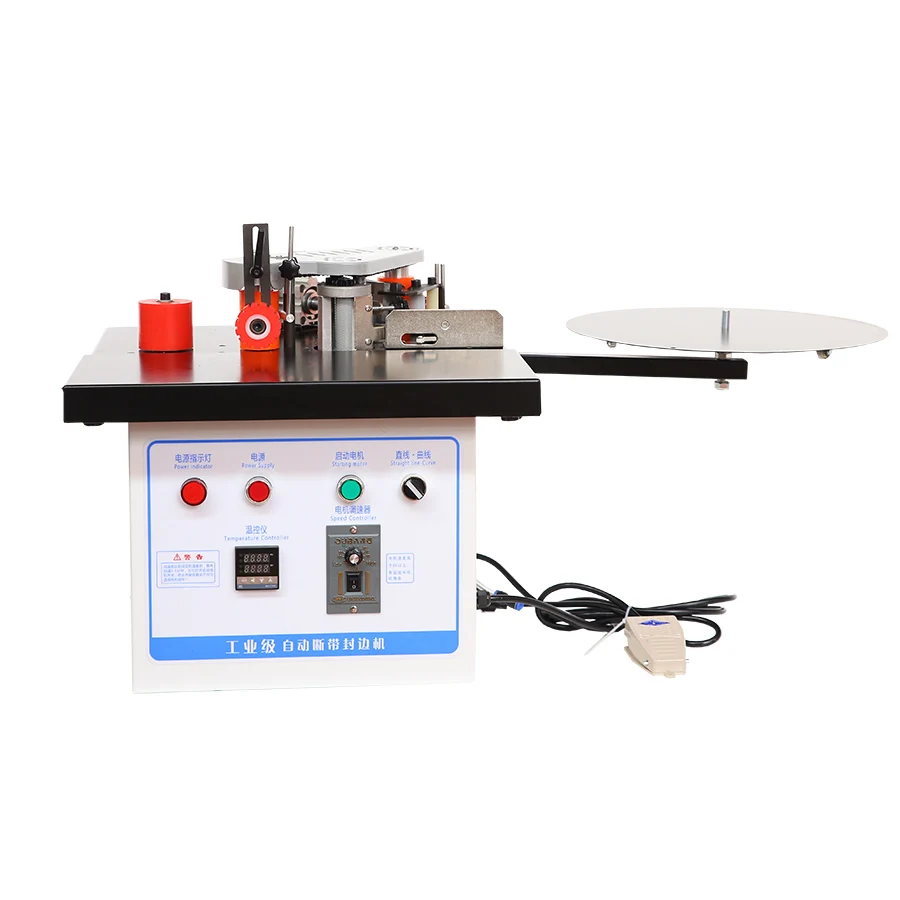
Mini Edge Bander for Curve Panel – Specifications
ZDSF50+ Mini Edge Banding Machine, 220V, 1.2 kW, 10-60mm Panel Range —...
View Details<p>Supplied with full electrical schematic and voltage confirmation documentation so you can verify 220V compatibility with your local supply before the machine ships.</p>
<p>Supplied with full electrical schematic and voltage confirmation documentation so you can verify 220V compatibility with your local supply before the machine ships.</p>
Quality Assured
Multi-stage QC inspection
Custom Config
Voltage, logo, language
Global Shipping
100+ countries served
After-Sales Support
Remote & spare parts
Voltage-First Configuration — every ZDSF50 parameter is locked to your workshop's power supply and material profile before a build begins, avoiding the dead-on-arrival scenarios that plague generic orders.
| Parameter | Value |
|---|---|
| Model | ZDSF50 |
| Product Type | Mini Edge Banding Machine |
| Rated Power | 1.2 kW |
| Voltage & Frequency | 220V |
| Control System | Manual / Foot switch operation |
| Overall Dimensions (L×W×H) | 54 × 54 × 56 cm |
| Net Weight | 26 kg |
| Edge Banding Speed | 0–6 m/min |
| Strip Thickness Range | 0.5–1.5 mm |
| Sheet Thickness Range | 10–60 mm |
| Glue Pot Capacity | 1000 ml |
| Glue Heating Time | 5–10 min |
| Gluing Method | Double-sided gluing for straight, curved and shaped edges |
| Rated Air Pressure | 0.4–0.6 MPa |
| Edge Strip Transport | Adjustable bayonet for strip height |
| Belt Breaking | Pneumatic control with travel switch and foot switch |
| Pressure Rollers | Adjustable rubber rollers to board thickness |
| Assembly State | Fully assembled |
| Warranty | 1 year |
| Standards | CE, ISO 9001 |
| Application | Material or Output |
|---|---|
| Custom cabinet door edge finishing | PVC edge banding on MDF and particleboard panels |
| Small-batch shaped panel processing | Curved and contoured plywood and solid wood edges |
| Joinery workshop prototyping | Mixed straight and curved profiles on 10–60 mm sheets |
| Secondary banding for sample rooms | One-off or short-run panel pieces with 0.5–1.5 mm strips |
Confirming your local voltage and frequency against the machine's electrical design prevents costly commissioning failures that no warranty covers.
I once watched a workshop owner in Southeast Asia plug in a newly delivered bander, only to trip the breaker instantly — the machine was wired for 380V three-phase while his shop ran on 220V single-phase. The ZDSF50 mini edge banding machine is configured for 220V operation, but frequency matters just as much as voltage. A 60 Hz supply driving a 50 Hz motor will overheat within hours, degrading the glue pot heater and pressure roller motor prematurely [NEED_CITE: voltage and frequency standards by export market]. Technical buyers comparing models should request an electrical schematic that confirms both parameters match their site before placing any order.
When evaluating mini edge banding machine specifications, the 0–6 m/min feed speed tells you exactly where this model fits in your production hierarchy. This is a hand-fed unit designed for precision work on individual panels, not continuous line throughput. A joinery workshop processing twenty to forty shaped cabinet doors per day will find this speed range comfortable, allowing the operator to guide each panel carefully around curves. Facilities running hundreds of identical panels daily should consider stepping up to an automated through-feed model instead.
The 1000 ml glue pot on the ZDSF50 determines how long you can run before reloading adhesive, and the 5–10 minute heating time sets your morning start-up routine. For a small workshop running two or three short batches per shift, this capacity is adequate without wasting adhesive to overnight degradation. Double-sided gluing ensures the PVC strip bonds to both the panel edge and the strip backing, which is critical when working curved profiles where single-sided application leaves visible gaps [NEED_CITE: adhesive bonding mechanics on curved wood panel edges]. Production managers planning shift schedules should factor the heating window into their first-piece timeline.
The 10–60 mm sheet thickness range covers standard MDF, plywood, particleboard and solid wood panels used in custom furniture, but every technical buyer should verify their thickest and thinnest workpieces fall within this window. Panels below 10 mm may slip under the pressure rollers, while boards exceeding 60 mm will not clear the feed path. The pneumatic belt breaking system requires a sustained 0.4–06 MPa air supply to function correctly; the travel switch handles automatic cutting on straight edges while the foot switch gives manual control on curves. If your workshop compressor cannot maintain this pressure range, the strip will not shear cleanly and operators will spend extra time trimming by hand.
The ZDSF50 mini edge banding machine specifications reveal a unit built for flexibility over volume. The adjustable bayonet for strip height lets operators align the edge band precisely to panels of varying thickness, reducing the need for secondary trimming. Rubber pressure rollers that adjust to board thickness ensure consistent contact across the glue line, which directly affects bond strength on porous substrates like particleboard. The pneumatic belt breaking with both travel switch and foot switch means a single operator can switch between straight kitchen cabinet sides and curved wardrobe doors without reconfiguring the machine — a practical advantage in job-shop environments where the next panel is never the same as the last [NEED_CITE: pneumatic edge trimming in small-scale woodworking operations].
Workshops that order edge banders without matching specifications to their actual materials discover problems only after installation. A machine rated for thinner strips will jam when fed 1.5 mm PVC, damaging the feed mechanism and producing uneven glue lines that fail during assembly. Insufficient air pressure leads to ragged strip breaks that require manual cleanup, negating the efficiency gain of mechanized banding in the first place. I have seen joinery shops lose entire production days chasing adhesive failures that traced back to a glue pot temperature mismatch with their specific PVC formulation [NEED_CITE: PVC edge banding adhesion failures related to substrate moisture]. Every parameter on the specification sheet deserves a cross-check against your real production inputs.
In-house manufacturing with patented cutting mechanisms means the ZDSF50 tolerance claims are verifiable on your own materials, not taken from a brochure. The full product family from entry-level to full-function allows a workshop to scale throughput without changing suppliers or retraining operators on a different control philosophy. Voltage, language and specification customization are handled as standard order parameters, not special requests that add weeks to lead time. Four-stage quality control with pre-shipment verification ensures the unit you receive has been tested under load, not just powered on for a photograph. Engineer-led configuration recommendations arrive within a formal quotation so that every specification decision is documented before metal is cut.
When requesting a formal quotation, provide your exact panel materials with thickness ranges, the PVC or veneer strip specifications you intend to use, and your local voltage and frequency. Include your daily panel volume and the proportion of curved versus straight work so the engineer can confirm the 0–6 m/min feed speed aligns with your output targets. If your workshop operates compressors on a shared line, note the available air pressure at the point of connection.
Q: Can the ZDSF50 be reconfigured for voltage systems other than 220V? A: The standard configuration is 220V, but the manufacturer supports voltage customization from 110V to 440V as a standard order option. Before confirming your order, supply your site voltage, frequency and phase so the electrical schematic can be adapted. This ensures the motor, glue pot heater and control circuit are all rated for your local supply conditions.
Q: What daily panel throughput is realistic at 0–6 m/min feed speed? A: This speed range suits low-volume precision work where an operator hand-feeds each panel. Workshops processing twenty to forty panels per day with mixed profiles typically find this comfortable. If your daily volume consistently exceeds this range with repetitive straight panels, an automated through-feed bander with higher feed rates would be a more appropriate next step.
Q: How do I verify my materials fit the 10–60 mm sheet and 0.5–1.5 mm strip range? A: Measure your thickest and thinnest panels with calipers and check that both fall within the stated window. For edge strips, confirm thickness with the supplier's data sheet. Panels or strips outside these ranges can cause feed jams, poor glue transfer or pressure roller misalignment, so requesting a factory test on your actual samples is the most reliable verification method.
Q: What compressor capacity sustains the 0.4–0.6 MPa air requirement? A: The pneumatic belt breaking system needs a stable supply within this pressure range. A compressor rated for general workshop use typically meets this demand, but you must verify pressure at the machine connection point, not just at the compressor outlet. Shared air lines with other pneumatic tools can cause pressure drops that lead to incomplete strip cuts.
Q: When should I use the travel switch versus the foot switch for belt breaking? A: The travel switch provides automatic strip cutting on straight edges, letting the operator focus on guiding the panel evenly. For curved and shaped profiles, the foot switch gives manual control so the operator can time the cut precisely at the endpoint. This dual system eliminates the need to reconfigure the machine between straight and curved jobs.
20+ Years Experience
Trusted by 100+ countries worldwide
Full OEM/ODM
Custom logo, voltage & panels
Lifetime After-Sales
12-month warranty + spare parts
25-45 Day Lead Time
Flexible MOQ, on-time delivery
Fill in your requirements and our team will respond with a formal quotation within 24 hours. We speak English and Spanish.
Response within 24 hours on business days
Or WhatsApp us for instant reply
Serving 100+ countries globally
ZDSF50+ Mini Edge Banding Machine, 220V, 1.2 kW, 10-60mm Panel Range —...
View DetailsProducts Description Automatic MY07C Veneer Splicing Wood PVC Edge Banding Machine CE...
View DetailsZDSF190 Automatic Curved and Straight Edge Banding Machine, 4kW, 0–14 m/min feed...
View DetailsProducts Description woodworking Through Feed wood board scm edge bander 7 functions...
View DetailsOur global sales team is ready to assist. Get a formal quotation, technical specs, and OEM/ODM options within 24 hours.