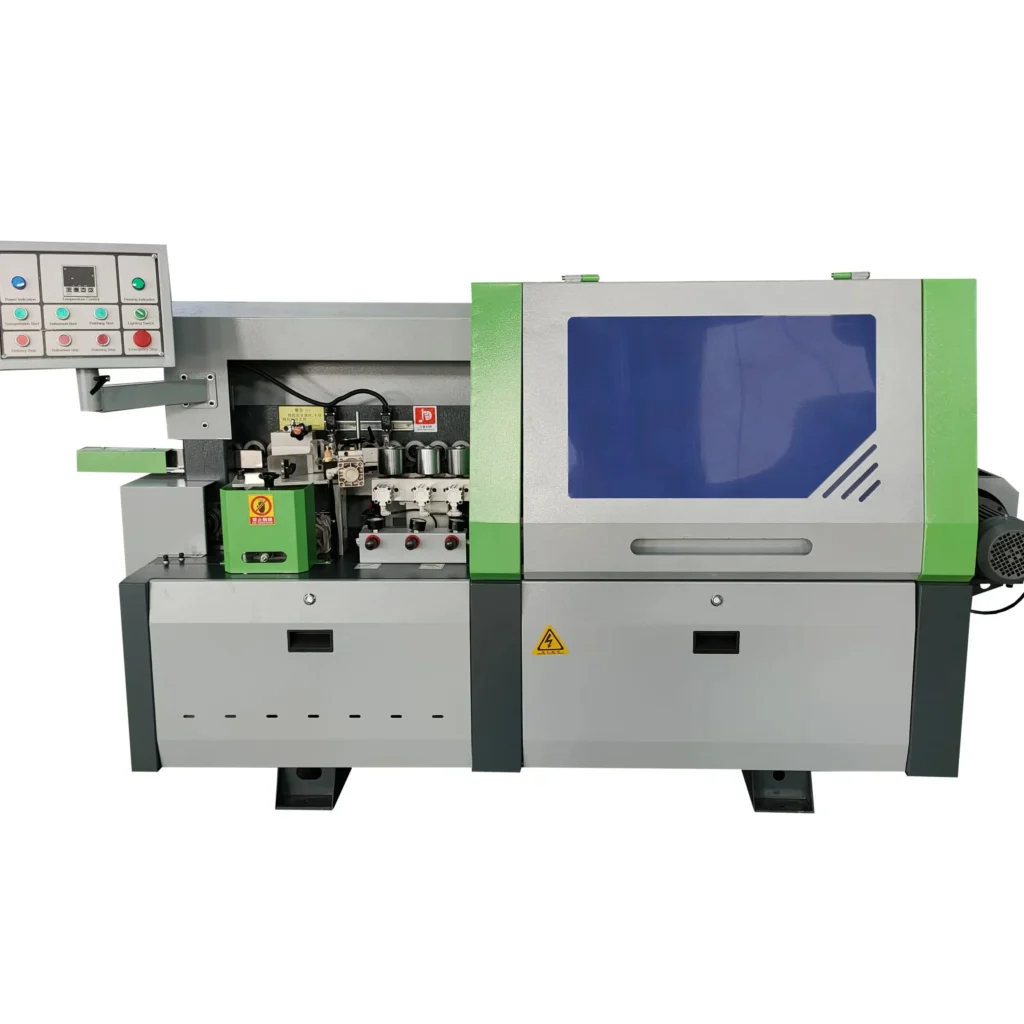
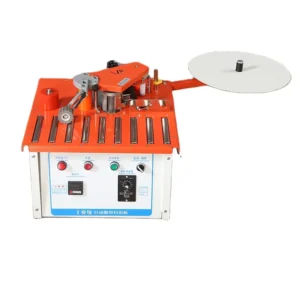
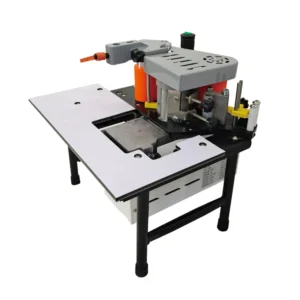
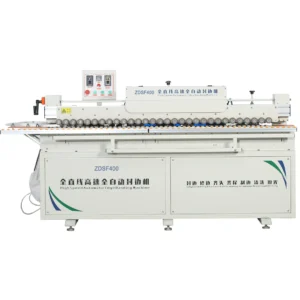
Voltage-Verified Configuration — every ZDSF515 semi-automatic edge bander leaves the factory with confirmed electrical parameters matched to your local grid, eliminating on-site power failures.
Technical Specifications
| Parameter |
Value |
| Model |
ZDSF515 |
| Product Type |
Semi-Automatic Edge Banding Machine |
| Main Functions |
Gluing, Fine Trimming, Scraping, Buffing |
| Rated Power |
4 kW |
| Voltage & Frequency |
380V / 3-phase (frequency to be confirmed for local grid) |
| Working Pressure |
0.65 MPa |
| Conveyor Belt Speed |
0–16 m/min |
| Min. Panel Width |
60 mm |
| Min. Panel Length |
150 mm |
| Panel Thickness Range |
10–60 mm |
| Edge Thickness Range |
0.4–3 mm |
| Overall Dimensions (L×W×H) |
2480 × 700 × 1400 mm |
| Net Weight |
600 kg |
| Warranty |
One year |
Application Suitability
| Application |
Material or Output |
| Custom cabinet door edging |
MDF and particleboard panels with PVC banding |
| Small-batch furniture production |
Plywood and blockboard with veneer edge strips |
| Joinery workshop straight-edge banding |
Solid wood panels up to 60 mm thickness |
| Shelving and carcass panel finishing |
Melamine-faced chipboard with 0.4–3 mm edging |
Why Semi-Automatic Edge Banding Machine Specifications Must Include Your Local Voltage
A 380V machine arriving at a 415V or 220V workshop is a 600 kg paperweight until the electrical infrastructure is rebuilt.
I learned this the hard way when a semi-automatic edge bander shipped to the Middle East sat idle for three weeks because the frequency was 60 Hz and the machine was wired for 50 Hz. The buyer had to reconfigure the entire workshop distribution board before the conveyor motor would even start. That delay cost more than the shipping itself [NEED_CITE: voltage and frequency standards by export market]. When comparing any semi-automatic edge banding machine, the electrical specification is the first parameter to verify — not the last.

Feed Speed Range and Workshop Throughput Alignment
The ZDSF515 covers a conveyor belt speed from 0 to 16 m/min, giving operators fine control over feed rate. For a joinery shop running mixed panel sizes with frequent changeovers, the lower end of that range allows careful monitoring of glue application and edge alignment. When batch sizes grow and the same panel dimension repeats, pushing toward the upper feed range keeps the semi-automatic edge banding machine specifications aligned with daily output targets without sacrificing edge adhesion quality.
Four-Station Function Set Within a Compact Frame
Gluing, fine trimming, scraping, and buffing are integrated into a single 2480 mm frame. A workshop that previously relied on separate manual trimming and scraping stations can consolidate those steps into one pass. The fine trimming station removes excess edge material flush with the panel surface, the scraper cleans the residual adhesive line, and the buffing wheel delivers the final surface finish — all before the panel reaches the off-feed table.
Panel Thickness Range and Small-Part Capability
The 10–60 mm panel thickness range covers everything from thin MDF shelving to thick solid-wood worktops. Combined with the 60 × 150 mm minimum panel dimensions, the machine handles small drawer sides and narrow stile components that larger automatic banders cannot feed reliably. This makes it suitable for custom furniture makers whose cut lists change from one job to the next [NEED_CITE: typical panel dimension requirements in custom cabinet manufacturing].
How Trim Stations and Edge Thickness Define Output Quality
The edge thickness range of 0.4–3 mm spans thin PVC foil through standard PVC and up to solid wood veneer strips. Each trim station plays a distinct role: fine trimming establishes the flush edge profile, scraping removes the micro-ridge left by the trimmer, and buffing polishes the transition between edge and face. When processing high-gloss PVC on MDF, all three finishing stations are necessary to prevent a visible glue line that would fail a customer inspection. The working pressure of 0.65 MPa ensures consistent pressure roller contact across varying edge thicknesses, which directly affects adhesive transfer uniformity.
The Cost of Skipping Specification Verification Before Shipment
A machine specified without confirming local voltage and frequency arrives as dead weight. A control panel printed in a language the operator cannot read stalls commissioning while translated overlays are sourced locally. An edge bander selected on throughput claims alone — without matching conveyor speed and panel thickness range to actual daily cut lists — either sits underutilized or runs beyond its design capacity, accelerating wear on the trimming cutters and pressure rollers [NEED_CITE: common causes of premature wear in entry-level edge banding equipment]. These are not hypothetical failures; they appear repeatedly in post-delivery support tickets.
Why Source This Machine Through a Specification-First Process
In-house manufacturing means the voltage, frequency, and control panel language are confirmed on the production drawing — not patched after arrival. The four-stage quality control process includes a pre-shipment electrical test under the exact voltage and frequency specified on the purchase order. Patented cutting mechanisms in the trimming stations hold tolerance that can be verified on your own panel stock before the machine is crated. Engineer-led configuration ensures the ZDSF515 is matched to your actual panel range and daily volume rather than oversold into a production role it was never designed for.
Documentation & Verification
- Machine specification sheet with confirmed 380V / 3-phase electrical parameters
- Electrical schematic matching the quoted voltage and frequency for your grid
- Factory test record on your specified panel thickness and edge material
- Operation and maintenance manual in your operator's agreed language
- Spare parts list with trimming cutter and pressure roller consumable codes
- Packing photographs showing crating and container loading arrangement
Installation, Commissioning & Support
- Requires a dedicated 3-phase circuit rated for 4 kW at the confirmed voltage and frequency
- Overall footprint of 2480 × 700 mm fits standard workshop aisles with off-feed clearance
- Arrives fully assembled; requires leveling and conveyor belt tension check on site
- First-run calibration of pressure rollers against your 0.4–3 mm edge material thickness
- Operator training covers feed speed adjustment across the 0–16 m/min range
- Trimming cutter replacement intervals depend on edge material hardness and daily run hours
What to Include in Your Inquiry
Provide the panel materials you process most frequently, along with typical thickness and edge banding specifications. Confirm your workshop's available voltage, phase, and frequency so the electrical configuration is locked before production. If you run small-part work near the 60 × 150 mm minimum, note that so the in-feed table setup can be adjusted accordingly.
Frequently Asked Questions
Q: How can I verify the ZDSF515 edge banding tolerance before committing to purchase?
A: Request a factory test record processed on your own panel stock, specifying the exact MDF or plywood thickness and edge material you use daily. The test should document edge-to-face flush measurement after trimming, scraping, and buffing. Sample processing tests can be arranged before shipment so results are confirmed on your actual material rather than generic test panels.
Q: What happens if my local power supply differs from 380V at 50 Hz?
A: The motor winding, control transformer, and heating elements must all match your local voltage and frequency. If your grid supplies 415V or 220V, the machine is configured at the factory for that exact input. Shipping a unit without confirmed electrical parameters risks motor burnout or failure to start, requiring costly on-site rewiring and extended downtime.
Q: How do I match the 0–16 m/min feed speed to my daily panel volume?
A: Calculate your average panels per shift and the conveyor time per panel at different feed speeds. A joinery workshop with mixed sizes and frequent changeovers typically runs at the lower to middle range. If your cut list repeats the same panel dimensions in batches, the upper range becomes practical, provided trimming quality is verified at that speed.
Q: Can the control panel be supplied in my operator's language?
A: Yes, multilingual control panels are available as part of the standard configuration process. Specify the required language during the quotation stage so the correct label set and interface firmware are installed before dispatch. This prevents commissioning delays caused by operators unable to read speed settings or fault codes on the day the machine is powered on.
Q: When should a workshop move from this semi-automatic model to a fully automatic edge bander?
A: The transition point typically arrives when daily volume demands continuous feeding with pre-milling and corner rounding stations that semi-automatic frames do not carry. If your operators spend significant time manually loading each panel and throughput plateaus despite running at the upper conveyor speed, a full-automatic configuration with return conveyor becomes the practical next step.