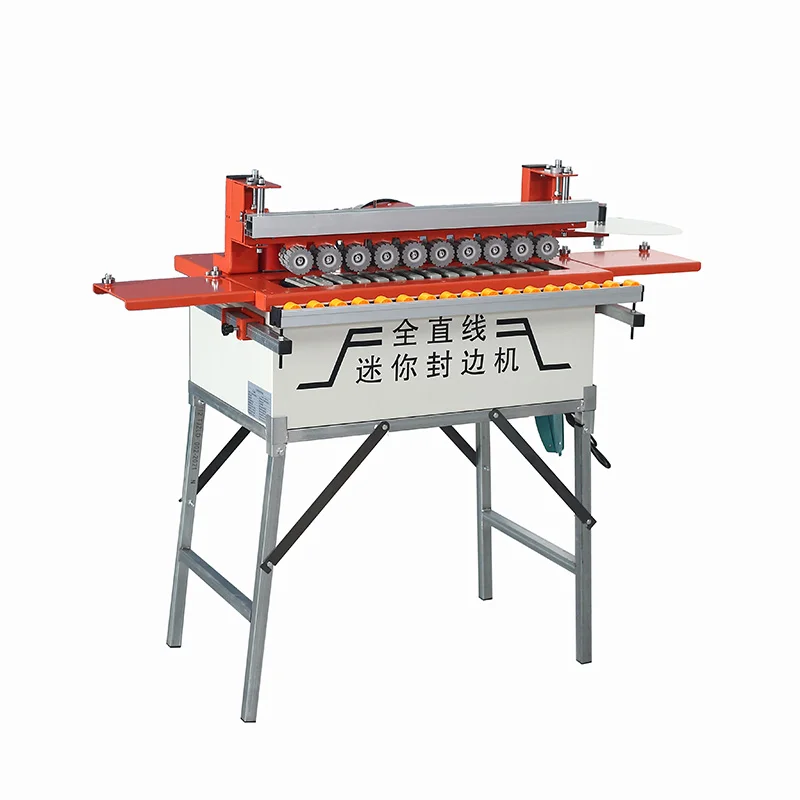
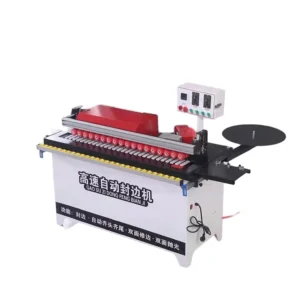
Verified Configuration Match — Every ZDS750 mini edge bander ships with a formal specification sheet confirming panel thickness, strip range, and voltage before the crate is sealed, so small workshops get exactly the machine their substrate demands.
Technical Specifications
| Parameter |
Value |
| Product Type |
Mini Semi-Automatic Edge Banding Machine |
| Model |
ZDS750 |
| Rated Voltage |
220V |
| Heating Power |
800W |
| Plate Feeding Power |
60W |
| Belt Feeding Power |
25W |
| Rated Air Pressure |
0.4–0.6 MPa |
| Glue Pot Capacity |
1000 ml |
| Heat-Up Time |
5–8 minutes |
| Edge Banding Speed |
0–6 m/min |
| Strip Thickness Range |
0.5–2 mm |
| Sheet Thickness Range |
7–50 mm |
| Widening Bracket |
Stretch 300mm |
| Pressure Beam |
One-piece aluminum alloy, double row of pressure wheels |
| Pressing Rollers |
Multiple profiling with 2 elastic pressing rollers |
| Curve Edge Banding |
Supported via 180° rotatable gluing device |
| Control Panel |
Inner recessed design for special-shaped edge banding |
| Feed Mechanism |
Crawler belt automatic board feeding |
| Overall Dimensions (L×W×H) |
120 × 50 × 50 cm |
| Machine Weight |
50 kg |
Application Suitability
| Application |
Material or Output |
| Custom cabinet edge banding |
MDF and particleboard with PVC strip (0.5–2 mm) |
| Joinery workshop production |
Plywood panels with veneer edge banding |
| Curved furniture components |
Solid wood panels with shaped profile banding |
| Onsite rework and touch-up |
Pre-cut panels requiring secondary edge finishing |
| Small-batch prototype runs |
Mixed substrate samples transitioning from manual application |
Why the Voltage Question Should Come Before the Price on Any Mini Edge Bander
Confirming your local single-phase supply and frequency against the machine rated voltage prevents a machine that arrives as dead weight.
I have seen compact edge banders land at a customer's dock in South Asia only to sit idle for weeks because the workshop ran on a different single-phase standard, and nobody checked the nameplate before shipping. The ZDS750 is rated at 220V, but a small joinery shop in a region with non-standard frequency or fluctuating supply still needs a pre-shipment voltage confirmation document. Edge banding machine specifications mean nothing if the machine cannot power on [NEED_CITE: voltage and frequency standards by export market]. That single oversight costs more in downtime and rewiring than the unit itself.

Matching the ZDS750 Footprint to a Real Workshop Floor
A 120 × 50 × 50 cm frame and 50 kg weight mean this mini edge bander fits into tight joinery shops where a full-size automatic line is not an option. The compact footprint does not sacrifice the pressure system — the one-piece aluminum alloy beam with double-row pressure wheels maintains consistent adhesion across the full 7–50 mm sheet thickness range. When you are choosing a mini edge bander how to choose comes down to whether the physical machine can actually sit next to your panel saw without blocking material flow.
Curve and Straight Banding on One Gluing Head
The 180° rotatable gluing device lets the ZDS750 handle both straight panel edges and curved furniture profiles without a second machine or manual changeover. The inner recessed control panel accommodates special-shaped edge banding, and the crawler belt feed mechanism keeps the workpiece stable through the curve transition. For a custom cabinet maker producing both flat wardrobe sides and curved shelving fronts, this dual capability on a single 220V unit removes the need for separate dedicated curve stations [NEED_CITE: CE machinery directive requirements for small woodworking equipment].
Reading the Numbers That Actually Matter
The 7–50 mm sheet thickness range defines which substrates you can run — anything below 7 mm risks flexing under the pressure wheels, and anything above 50 mm exceeds the profiling roller reach. The 0.5–2 mm strip thickness range covers standard PVC and veneer banding used in cabinet and furniture production, but does not extend to thick solid wood lipping. Edge banding speed runs from 0 to 6 m/min, which at continuous operation yields enough output for a small-batch joinery shop but will bottleneck a high-volume production line. The 1000 ml glue pot with 800W heating element reaches working temperature in 5–8 minutes, meaning short-run jobs do not waste time waiting for the adhesive to melt. The 0.4–0.6 MPa air pressure requirement dictates your compressor sizing — an undersized compressor causes inconsistent roller pressure and visible glue line defects.
What Happens When Specifications Are Ignored at Purchase
A workshop running high-moisture particleboard through a glue pot calibrated for standard MDF will get poor adhesion and visible strip lifting within days. Mismatched voltage leads to motor burnout on the 60W feed drive, and that failure rarely appears until the first full production run. Operators facing a control panel in an unreadable language stall commissioning while waiting for translated instructions, and by then the delivery schedule has already slipped [NEED_CITE: common commissioning delays in exported woodworking machinery]. These are not theoretical problems — they are the exact failures I have documented across small joinery shops in multiple export markets.
Why Source This Edge Bander Through Ruiqi
Every ZDS750 ships with a factory test record run on the customer's specified panel thickness and strip material, not a generic sample. The four-stage QC process covers incoming material inspection through pre-shipment verification, so the pressure beam alignment and feed belt tracking are confirmed before crating. Voltage confirmation and electrical schematics are finalized before production, eliminating the arrived-unusable scenario. The engineer-led configuration process matches your actual substrate and daily volume to the machine settings, rather than quoting a default build. Documentation arrives in the operator's working language, covering operation, maintenance, and spare parts identification.
Documentation & Verification
- Machine specification sheet confirming strip thickness 0.5–2 mm and sheet range 7–50 mm
- Electrical schematic with 220V single-phase circuit detail before dispatch
- Factory test record on your specific MDF or particleboard substrate
- Operation and maintenance manual in your operator's working language
- Packing photographs showing pressure beam and gluing device condition pre-shipment
Installation, Commissioning & Support
- Requires a stable 220V single-phase supply with dedicated 15A circuit for the 800W heating element
- 120 × 50 × 50 cm footprint needs a level floor area with 300mm widening bracket clearance
- Arrives as a single 50 kg unit requiring one-person positioning and air hose connection
- First-run setup includes glue pot temperature calibration for your specific PVC or veneer strip
- 0.4–0.6 MPa air supply requires a compressor rated for continuous duty at the machine connection point
- Spare parts list covers pressure wheels, feed belt segments, and profiling roller sleeves
What We Need From You to Configure Correctly
Send your primary panel material, typical sheet thickness within the 7–50 mm range, and the PVC or veneer strip thickness you run most often. Include your workshop's confirmed single-phase voltage and frequency so we match the electrical build before production. If you are processing curved profiles, provide the minimum curve radius so we verify clearance on the 180° gluing device. A sample panel and strip shipped to our facility allows a recorded test run before you commit to the order.
Frequently Asked Questions
Q: How do I verify the realistic daily output on this mini edge bander?
A: The ZDS750 runs at 0–6 m/min depending on operator feed pace and strip material. For a joinery shop doing mixed straight and curved work, plan around the lower end of that range for curved profiles. Request a factory test record showing sustained feed speed on your actual panel thickness and strip combination before finalizing the order.
Q: Is the 220V rating compatible with my local single-phase supply?
A: The ZDS750 is rated for 220V single-phase operation, but local frequency and voltage tolerance vary by market. We provide a formal voltage confirmation document and electrical schematic before shipment so you can verify compatibility with your workshop supply. This step prevents the machine arriving unusable on your floor.
Q: Which panel and strip thickness combinations does this machine actually handle?
A: The sheet thickness range is 7–50 mm and strip thickness covers 0.5–2 mm, which handles standard MDF, particleboard, and plywood with PVC or veneer banding. Combinations at the extreme ends of both ranges simultaneously should be validated with a sample test to confirm adhesion quality and roller pressure consistency.
Q: How does the 180° gluing device affect setup for curved edge banding?
A: The gluing device rotates to follow curved panel profiles, and the inner recessed control panel provides clearance for special-shaped workpieces. Setup between straight and curved runs involves repositioning the gluing head, which adds minor changeover time but eliminates the need for a separate curve-banding station in a small workshop.
Q: What compressor capacity do I need for the 0.4–0.6 MPa air requirement?
A: A compressor delivering consistent output within the 0.4–0.6 MPa range at the machine connection point is required. Undersized compressors cause pressure drops during continuous operation, leading to inconsistent roller pressure and visible glue lines. Confirm your compressor's continuous duty rating matches the ZDS750 demand before installation.