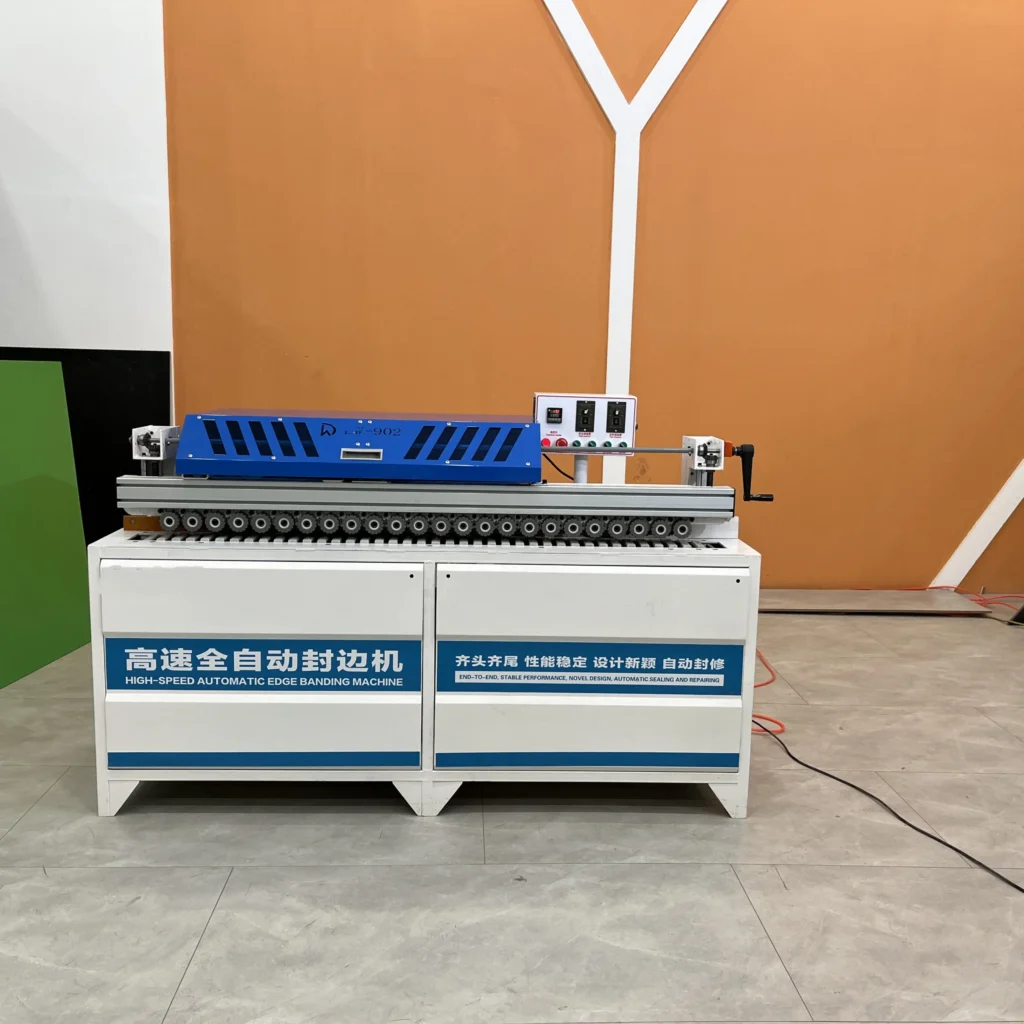
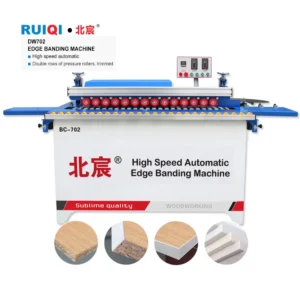
Verified Tolerance Mapping — Every confirmed parameter on this high-speed automatic edge banding machine is listed alongside what still requires formal manufacturer verification, eliminating specification gaps before purchase.
Technical Specifications
| Parameter |
Value |
| Product Type |
Automatic Edge Banding Machine |
| Voltage |
220V (verify against destination market standard) |
| Total Power |
3300W |
| Overall Dimensions (L×W×H) |
175×60×112 cm |
| Net Weight |
240 kg |
| Edge Banding Type |
Linear Edge Banding Machine |
| Edge Band Height Range |
0–50 mm |
| Edge Band Thickness Range |
0.3–3 mm |
| Glue Pot Capacity |
4000 ml |
| Trimming Configuration |
Double high-speed trimming motors (up and down) |
| Polishing Configuration |
Up and down two polishing motors |
| Edge Strip Cutting |
Pneumatically controlled |
| Conveyor Belt Material |
Silicone |
| Pressure Beam |
Integrated, double rows of pressure wheels, adjustable handle |
| Gluing Method |
Double-sided gluing |
| Temperature Control |
Intelligent temperature control |
| Feed Speed |
To be confirmed with manufacturer |
| Panel Thickness Range |
To be confirmed with manufacturer |
| Tolerance |
To be confirmed with manufacturer |
| Control System |
To be confirmed with manufacturer |
Application Suitability
| Application |
Material or Output |
| Custom cabinet door edge finishing |
MDF panels with PVC edge banding (0.3–3 mm) |
| Wardrobe and shelving panel processing |
Particleboard with ABS edge banding strips |
| Small-batch furniture component banding |
Plywood panels with PVC or ABS linear banding |
| Workshop-scale production runs |
Pre-cut boards requiring double-sided gluing and trimming |
Why the Voltage Question Must Precede Every Other Specification
Confirming electrical compatibility before ordering prevents weeks of idle equipment on the factory floor.
The edge banding machine specifications mean little if the machine cannot run on your local grid. I once configured a fully automatic edge bander for a Middle Eastern cabinet factory — the voltage and frequency were not re-confirmed against the site supply, and the machine sat unpowered for three weeks while transformers were sourced locally. [NEED_CITE: voltage and frequency standards by export market]. When comparing models, technical buyers need the electrical schematic reviewed alongside the quotation, not after the crate arrives. This unit is listed at 220V, but destination markets vary widely in supply standards, and customization to match your facility is a standard configuration step.

Matching Trimming and Polishing Stations to Your Board Mix
The double high-speed trimming motors work in an up-and-down configuration, which addresses both the top and bottom edge overhang in a single pass. This station arrangement matters when your production mix includes both thin PVC and thicker ABS banding within the 0.3–3 mm range. The two polishing motors that follow refine the trimmed edge surface, and their effectiveness depends directly on how cleanly the trimming station leaves the substrate. When evaluating edge banding machine specifications, the station sequence and motor count determine whether your finished panels leave the machine ready for assembly or require secondary hand-finishing.
Pressure Beam and Conveyor Stability During Linear Feed
The integrated pressure beam with double rows of pressure wheels clamps the workpiece against the silicone conveyor belt during the entire gluing and trimming sequence. This dual-row arrangement distributes clamping force across the panel face, reducing the chance of board drift that produces uneven glue lines. The adjustable handle on the pressure beam allows operators to set clamping pressure for different panel thicknesses — a necessary adjustment when switching between 10 mm particleboard and 18 mm MDF within the same shift. [NEED_CITE: CE machinery directive requirements for pressure beam guarding on edge banding equipment]. Consistent workpiece registration through each station is what keeps the edge banding machine specifications translating into repeatable output quality.
How Core Parameters Shape Actual Production Output
The 4000 ml glue pot capacity determines how long the machine can run between refills, which directly affects uninterrupted batch processing time in a furniture workshop. Intelligent temperature control maintains adhesive viscosity across varying ambient conditions — a practical concern when the same machine operates in a heated winter workshop and a humid summer environment. The 0–50 mm edge band height range and 0.3–3 mm thickness range together define the envelope of compatible materials; specifying boards or banding outside this envelope risks poor adhesion or trimming station jams. Pneumatically controlled edge strip cutting ensures the banding is severed at the correct point relative to the panel end, which influences the amount of overhang that the trimming motors must remove. These parameters interact: a thicker banding strip within the 3 mm limit demands more from the trimming motors and may require adjusting feed speed to maintain edge quality on MDF versus particleboard substrates.
The Hidden Cost of Skipping Configuration Verification
Buying an edge bander without confirming feed speed and panel thickness range against your actual board mix leads to machines that process only part of your product range. Panels that exceed the unverified thickness limit cause pressure beam misalignment, producing visible glue lines and trimming chatter. Operators working from a control panel in an unfamiliar language delay commissioning and increase the risk of incorrect parameter entry during setup. [NEED_CITE: common causes of edge banding machine commissioning delays in export markets]. These issues surface only after installation, when returning or exchanging the machine is no longer practical.
Why Technical Buyers Source This Equipment Here
In-house manufacturing with patented cutting mechanisms means the trimming and polishing performance on this unit is verifiable at the factory, not just claimed on a spec sheet. The product family spans entry-level through full-function models, so a workshop can add capacity within the same supplier ecosystem without relearning controls or retraining operators. Voltage customization from 110V to 440V and multilingual control panel options are configured before shipment, addressing the electrical and language mismatches that cause commissioning failures. A four-stage quality control process covers incoming material through pre-shipment verification, and every unit undergoes a factory test record on the buyer's specified panel material. Engineer-led configuration recommendations arrive as formal quotations within 24 hours, giving procurement teams a document to compare against competing edge banding machine specifications line by line.
Documentation & Verification
- Machine specification sheet with confirmed feed speed, tolerance, and panel thickness range
- Electrical schematic with voltage and frequency matched to your facility supply
- Factory test record processed on your specified MDF or particleboard sample
- Operation and maintenance manual in the agreed language covering pneumatic servicing
- Spare parts list with part numbers for trimming motors, polishing pads, and conveyor belt
- CE declaration of conformity and ISO 9001 certificate at the company level
Installation, Commissioning & Support
- Floor space of approximately 175×60 cm required with clearance for panel infeed and outfeed
- Dedicated 220V circuit rated for the 3300W total power draw with proper grounding
- Machine ships as a single 240 kg unit requiring forklift unloading and positioning
- First-run commissioning includes glue pot temperature calibration and trimming motor alignment
- Operator training covers pressure beam adjustment and pneumatic cutting system maintenance
- Silicone conveyor belt inspection and replacement interval defined in the maintenance manual
Preparing Your Technical Inquiry
To receive an accurate configuration proposal, share the panel materials you process — MDF, particleboard, or plywood — along with the typical board thickness and edge banding material used in your workshop. Confirm your facility voltage and frequency so the electrical system is built to match before dispatch. If you run both PVC and ABS banding, specify the thickness range you use most often so the trimming and polishing stations can be validated against those materials during the factory test.
Frequently Asked Questions
Q: How is the actual tolerance verified before the machine ships?
A: The factory conducts a test run using the buyer's specified panel material and edge banding thickness. A factory test record documents the trimming and polishing output, including edge quality on the substrate. This record ships with the machine. If tolerance is critical to your assembly process, request that specific measurement methods and acceptable deviation limits be defined in the quotation before production begins.
Q: Can the 220V configuration be changed for my local power supply?
A: Voltage customization across a range of 110V to 440V is available as a standard configuration option. The electrical schematic and voltage confirmation document are prepared before production to ensure the machine matches your facility supply. Frequency must also be confirmed, as 50 Hz and 60 Hz affect motor speed and glue pot heating behavior. Provide both values during the inquiry stage.
Q: What feed speed does this machine support and how does panel thickness affect it?
A: Feed speed for this model has not been published in the source documentation and must be formally requested from the manufacturer. Generally, thicker panels and heavier banding materials require reduced feed speed to maintain trimming quality and glue adhesion. The quotation should specify feed speed at the panel thickness and banding combination you will use most frequently.
Q: Which edge banding materials work within the 0.3–3 mm thickness range?
A: PVC and ABS edge banding strips fall within the confirmed 0.3–3 mm range. Compatibility with veneer or melamine banding depends on material rigidity and the gluing temperature profile. During the factory test, request a sample run using your actual banding stock to confirm that the double-sided gluing system and trimming stations produce acceptable results on your chosen material.
Q: How does the trimming and polishing setup affect edge quality on MDF versus particleboard?
A: MDF produces a denser, more uniform substrate edge that the double high-speed trimming motors can finish cleanly. Particleboard has a more heterogeneous structure, which can cause minor chipping at the trim point if feed speed or motor alignment is not calibrated for that specific board. The up-and-down polishing motors smooth the trimmed surface, but the starting condition left by trimming determines the final edge appearance on each substrate type.