Other Woodworking Machinery
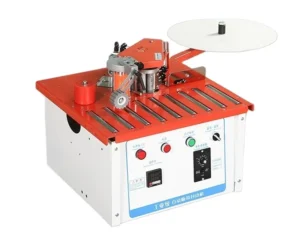
FX-20 Small Mini Edge Banding Machine Specifications
FX-20 Small Mini Edge Banding Machine, 2500W, 0.3–3mm Edge Thickness, 220V/380V —...
View Details<p><strong>Industrial Dust Collector, Bag Filter, Two-Stage Separation</strong> — engineered for CNC routers, sanders, and panel saws in woodworking environments. Large particles are diverted into a hopper while fine dust is captured on filter bags, with airflow distributed evenly via guide pipes across filtration units. Multi-region plug options and customizable control panel languages support direct integration into diverse workshop setups.</p> <ul> <li>Compatible with MDF, plywood, particleboard, and solid wood dust</li> <li>Mobile bag inlet with guide pipe system for flexible duct routing</li> </ul> <p>Specification sheets, electrical schematics, and factory test records are provided before shipment for full technical verification.</p>
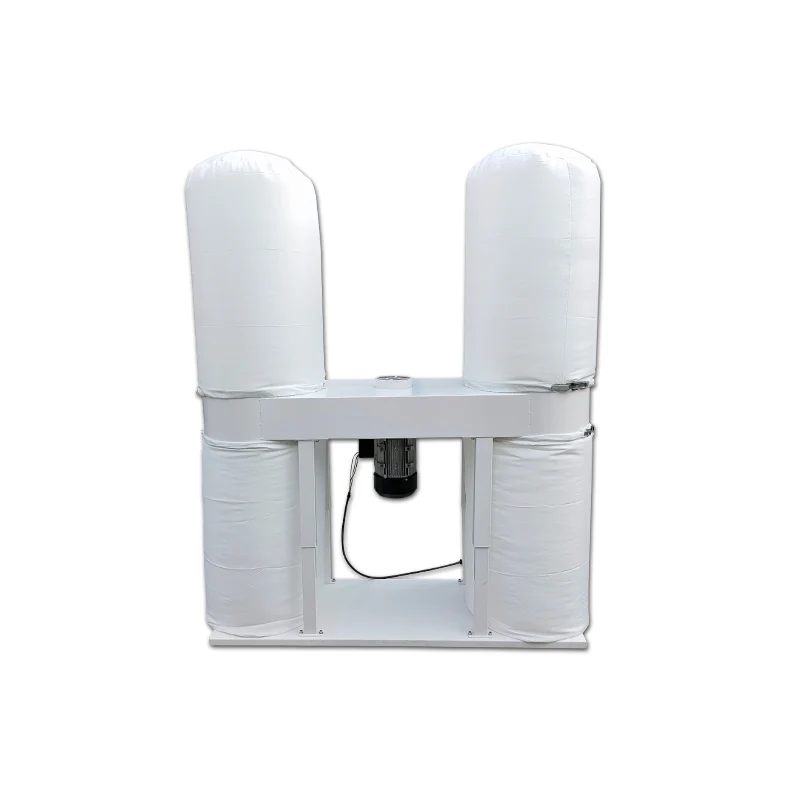
<p><strong>Industrial Dust Collector, Bag Filter, Two-Stage Separation</strong> — engineered for CNC routers, sanders, and panel saws in woodworking environments. Large particles are diverted into a hopper while fine dust is captured on filter bags, with airflow distributed evenly via guide pipes across filtration units. Multi-region plug options and customizable control panel languages support direct integration into diverse workshop setups.</p> <ul> <li>Compatible with MDF, plywood, particleboard, and solid wood dust</li> <li>Mobile bag inlet with guide pipe system for flexible duct routing</li> </ul> <p>Specification sheets, electrical schematics, and factory test records are provided before shipment for full technical verification.</p>
Quality Assured
Multi-stage QC inspection
Custom Config
Voltage, logo, language
Global Shipping
100+ countries served
After-Sales Support
Remote & spare parts
Customized Voltage and Language — electrical schematics confirmed to your local grid before the dust collector leaves the factory, with control panels in the language your maintenance team actually reads.
| Parameter | Value |
|---|---|
| Product Type | Industrial Dust Collector |
| Filtration Method | Bag filter with diversion device for large particle separation |
| Dust Separation Stages | Large particles fall into dust hopper via diversion; fine dust adsorbed on filter bags |
| Airflow Distribution | Guide pipe directs dust gas into individual filtration units evenly |
| Compatible Equipment | CNC router, sander, panel saw, and other woodworking machines |
| Dust Extraction Port | Mobile bag inlet with guide pipe system |
| Voltage & Frequency | Multiple plug options available (EU, USA, AU, UK) |
| Language Options | Control panel in Chinese, English, Spanish, or other languages upon customization |
| Airflow Capacity | Not stated in source (basis to be confirmed) |
| Motor / Fan Power | Not stated in source (basis to be confirmed) |
| Filter Bag Material | Not stated in source (basis to be confirmed) |
| Noise Level | Not stated in source (basis to be confirmed) |
| Overall Dimensions | Not stated in source (basis to be confirmed) |
| Packaging | Wooden box |
| Application | Material or Output |
|---|---|
| CNC routing dust extraction | MDF, particleboard, and plywood fine dust from nested-based panel cutting |
| Panel saw collection | Chipboard and melamine-faced board sawdust with larger edge trim particles |
| Sander and wide-belt operations | Fine wood flour from surface finishing on solid wood and veneer panels |
| Multi-machine workshop systems | Centralized extraction across mixed woodworking stations in custom furniture factories |
| Joinery workshop scale-up | Dust management when transitioning from manual hand tools to mechanized processing |
A dust collector rated for cubic meters per hour means nothing unless you know which machines are running at the same time.
I spent years on workshop floors in Shandong watching extraction systems fail not because the fan was weak, but because the ducting and port configuration could not handle simultaneous demand. A CNC router and a wide-belt sander pulling dust at the same time generate a combined volume that single-port collectors cannot manage. The dust collector specifications you compare on paper rarely account for simultaneous operation, static pressure loss across duct runs, or the difference between MDF fine flour and solid wood coarse chips. I have seen workshop floors shut down for days because the extraction system was undersized from the start, not because the motor burned out but because the filter bags choked under load. [NEED_CITE: dust extraction sizing standards for multi-machine woodworking environments]
The bag filter with diversion device handles two distinct particle categories in sequence. Large chips from panel saws and CNC router spoilboard cuts drop into the dust hopper before they ever reach the filter media, which means the bags spend their service life capturing fine particulate only. This separation matters in a workshop cutting MDF and particleboard, where the fine flour fraction can coat filter surfaces rapidly. When the dust collector specifications list only a single-stage filter, you should expect more frequent bag cleaning cycles and shorter intervals between replacements.
The guide pipe system channels incoming dust-laden air into individual filtration units so that no single bag receives a disproportionate load. Uneven airflow distribution is a common reason why some bags wear out while others remain nearly clean, forcing premature full-set replacements. In a production layout where a sliding table saw, a CNC router, and a sander all connect to one collector, this balancing function keeps the system running through a full shift. The dust collector specifications should be reviewed against your duct layout to confirm that port sizing matches the guide pipe inlet configuration. [NEED_CITE: static pressure balancing in multi-port dust collection systems]
The diversion device and bag filter combination tells you the separation stages, but the real selection criteria come from the parameters you still need to confirm. Motor and fan power determine whether the system can overcome static pressure across long duct runs. Airflow capacity in cubic meters per hour must exceed the sum of all simultaneously active machine ports plus a margin for duct losses. Filter bag material should be matched to the dust type — MDF flour behaves differently from solid wood chips on fabric surfaces. Noise level becomes a factor when the collector sits inside the workshop rather than in a separate mechanical room. These dust collector specifications form the basis of a configuration that survives real production conditions.
Piecemeal equipment purchases create gaps that only appear during production. A dust collector specified for a single CNC router will fail when a sander and panel saw are added to the same extraction trunk without recalculating total demand. Filter bags designed for coarse solid wood chips will blind quickly under MDF flour loading, shutting down the system mid-shift. Voltage mismatches between the collector motor and the workshop supply can prevent commissioning entirely, leaving the machine idle while panels accumulate dust on every surface. [NEED_CITE: consequences of undersized dust collection in woodworking plants]
In-house manufacturing means the dust collector specifications can be adjusted to your workshop layout rather than forcing you into a fixed catalog model. The patented mechanisms and precision-ground components in our woodworking machinery extend to how extraction systems integrate with our CNC routers and panel saws. Voltage configuration from 110V to 440V and control panels in your operator's language are confirmed before production starts, not discovered at commissioning. Four-stage quality control with pre-shipment verification catches airflow and electrical issues before the unit leaves the factory. Engineer-led configuration recommendations arrive as a formal quotation within 24 hours, so your procurement timeline stays on track.
To configure a dust collector that matches your actual workshop, we need to know how many machines connect and which ones run simultaneously. Provide the make and model of each CNC router, panel saw, and sander, along with duct run distances and port diameters. Confirm your local voltage, frequency, and the control panel language your maintenance team reads. If you are planning a phased rollout, tell us which machines come online first so the collector can be sized for future expansion.
Q: How do I match dust collector airflow capacity to my connected woodworking machines? A: Add the extraction demand of every CNC router, sander, and panel saw that operates at the same time, then include a margin for static pressure loss across your duct runs. The dust collector specifications must exceed this total. We confirm airflow capacity and port configuration against your machine lineup before issuing the formal quotation, so the system is never sized on a single-machine assumption.
Q: What voltage and frequency options are available for different export markets? A: Multiple plug configurations are available including EU, USA, AU, and UK standards. Voltage and frequency must be confirmed at the quotation stage so the motor, control panel, and electrical schematic match your local supply. An electrical schematic with your exact voltage is included in the documentation package before shipment to prevent commissioning failures.
Q: How do I choose the right filter bag material for my dust type? A: MDF and particleboard produce fine flour that coats standard bags quickly, while solid wood generates coarser chips that fall through more easily. Filter bag material selection depends on the dominant substrate in your workshop. We confirm the material during the engineer-led configuration phase and list it in the spare parts documentation so replacements match the original specification.
Q: Can the control panel language be customized for our operators? A: The control panel is available in Chinese, English, Spanish, or other languages upon request. This is confirmed during the specification review stage, not after shipment. The operation and maintenance manual is also produced in the agreed language, covering bag replacement schedules, hopper emptying procedures, and fault diagnostics your team can act on directly.
20+ Years Experience
Trusted by 100+ countries worldwide
Full OEM/ODM
Custom logo, voltage & panels
Lifetime After-Sales
12-month warranty + spare parts
25-45 Day Lead Time
Flexible MOQ, on-time delivery
Fill in your requirements and our team will respond with a formal quotation within 24 hours. We speak English and Spanish.
Response within 24 hours on business days
Or WhatsApp us for instant reply
Serving 100+ countries globally
FX-20 Small Mini Edge Banding Machine, 2500W, 0.3–3mm Edge Thickness, 220V/380V —...
View DetailsProduct Description ModelZDS-468JThe main functionPre-milling. Gluing. End trimming. Rough trimming. Fine trimming....
View DetailsZDSF50 Mini Edge Banding Machine, 220V, 1.2 kW, 10–60 mm Panel Range...
View DetailsDW400 Automatic Edge Bander with 3800W total power, 0.3–3MM edge thickness range...
View DetailsOur global sales team is ready to assist. Get a formal quotation, technical specs, and OEM/ODM options within 24 hours.