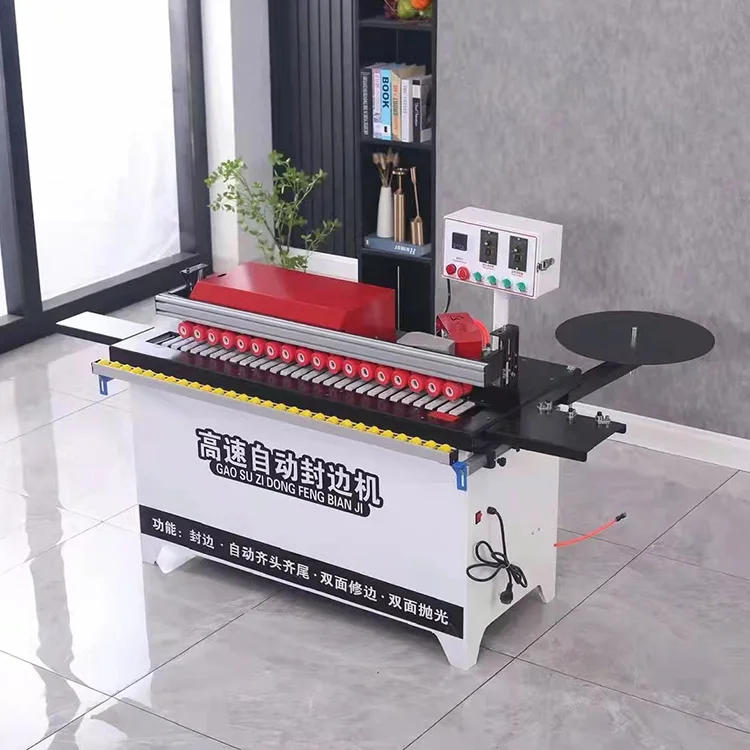
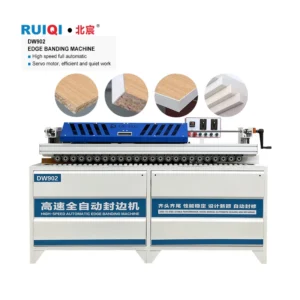
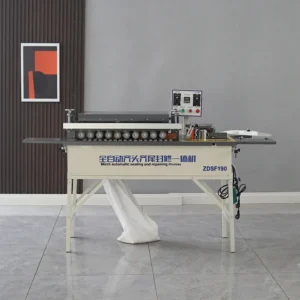
Verified Tolerance Control — every trimming and polishing parameter on this compact automatic edge bander is measurable at the bench before dispatch.
Technical Specifications
| Parameter |
Value |
| Product Type |
Automatic Edge Bander |
| Function |
Automatic plate feeding, end cutting, upper and lower polishing, head and tail trimming |
| Edge Type |
Straight line |
| Rated Voltage |
220V (configurable from 110V to 440V) |
| Rated Power |
4 kW |
| Trimming Power |
800 W × 2 |
| Polishing Power |
180 W × 2 |
| Suction Power |
1200 W |
| Heating Power |
1000 W |
| Feed Speed |
0–10 m/min |
| Conveyor Belt Speed |
0–10 m/min |
| Strip Thickness Range |
0.5–2.5 mm |
| Sheet Thickness Range |
10–50 mm |
| Glue Pot Capacity |
4000 ml |
| Rated Air Pressure |
0.4–0.6 MPa |
| Overall Dimensions |
130 × 65 × 75 cm |
| Machine Weight |
150 kg |
| Control Panel |
Digital display of glue pot temperature, independent switch |
| Pressure Beam |
One-piece, double rows of pressure wheels |
| Conveyor Belt Material |
Silicone |
| Belt Breaking Method |
Pneumatically controlled |
| Trimming Motors |
Double high-speed, up and down |
| Polishing Motors |
Up and down |
| Dust Collector |
Integrated |
Application Suitability
| Application |
Material or Output |
| Custom cabinet door edge banding |
MDF and particleboard with PVC edge strips |
| Plywood shelving edge finishing |
Plywood panels with veneer or PVC banding |
| Small-batch furniture panel sealing |
Solid wood panels and composite substrates up to 50 mm thick |
| Workshop straight-line edge processing |
PVC and veneer strips from 0.5 mm to 2.5 mm |
Why the Voltage Question Should Come Before the Price
Confirm your workshop's rated voltage and frequency before evaluating any automatic edge banding machine specifications.
I once watched a 150 kg edge bander sit in a crate in a humid warehouse for three weeks because the destination workshop ran on 220V/60Hz while the motor was wired for a different standard. The operator had already cleared floor space, hired the electrician, and scheduled the first production run — all before anyone opened the electrical schematic. Mismatches like this do not show up on a spec comparison sheet until the breaker trips on first power-up [NEED_CITE: voltage and frequency standards by export market].

Mapping Feed Speed to Substrate Behavior
The 0–10 m/min feed speed range on this automatic edge bander matters less as a top number and more as a controllable band. MDF at 18 mm density absorbs heat differently from 25 mm particleboard, and the glue must reach bonding temperature before the strip passes the first pressure wheel. A silicone conveyor belt grips without marring pre-finished surfaces, while the one-piece pressure beam with double rows of wheels keeps the panel flat against the reference fence throughout the trimming zone.
Glue Pot Capacity and Production Duty Cycle
A 4000 ml glue pot reduces refill interruptions during longer runs. The digital temperature display lets the operator watch the heating curve rather than guessing by adhesive viscosity. For workshops running mixed PVC and veneer strips, being able to set and hold a specific pot temperature across the 0.5–2.5 mm strip range prevents the cold-glue delamination that typically surfaces only after the panels reach the assembly bench.
Trimming and Polishing Station Configuration
The double high-speed trimming motors handle up-and-down trimming in a single pass, while dedicated up-and-down polishing motors follow to remove residual adhesive flash. With 800 W per trimming motor and 180 W per polishing motor, the station arrangement suits straight-line work on panels between 10 mm and 50 mm thick. The pneumatically controlled belt breaker cuts the strip cleanly at panel end without manual intervention, keeping the operator's hands clear of the feed zone [NEED_CITE: edge banding trim quality standards for panel furniture].
What Happens When Specifications Are Ignored at Order Stage
Buying an edge bander on feed speed alone, without confirming the sheet thickness range against your actual panel mix, leads to pressure beam adjustments that never quite seat. Panels thicker than 50 mm will not pass under the beam; strips thinner than 0.5 mm can slip through the feed rollers without positive grip. I have seen workshops force a machine rated for light PVC work into continuous veneer runs, then wonder why the glue line shows porosity under raking light.
Why Buyers Spec Through This Page
This automatic edge banding machine is built around in-house manufactured components with a four-stage quality control protocol covering incoming material, in-process assembly, finished product inspection, and pre-shipment verification. Voltage customization from 110V to 440V is confirmed at quotation stage, not after the crate is nailed shut. Every parameter on this sheet can be cross-checked against a factory test record run on your own panel samples before the machine leaves the assembly floor.
Documentation & Verification
- Machine specification sheet confirming all trimming and polishing motor ratings
- Electrical schematic with voltage and frequency matched to destination market
- Factory test record run on buyer-supplied panel and strip samples
- Operation and maintenance manual in the operator's working language
- Spare parts list with identified wear items for the first year of service
- Pre-shipment verification photographs of the assembled unit under power
Installation, Commissioning & Support
- 130 × 65 × 75 cm footprint fits standard workshop doorways without crane access
- Dedicated 4 kW circuit required; confirm breaker rating against local code
- Pneumatic belt breaker needs 0.4–0.6 MPa clean air supply at the machine inlet
- Digital glue pot temperature display calibrated during on-site commissioning
- Silicone conveyor belt tension checked and adjusted during first production run
- Integrated dust collector ducted to workshop extraction or standalone bag unit
Before You Request a Quote
Send your typical panel material, thickness range, and the edge strip types you run most often. Include your workshop's confirmed voltage, frequency, and available air pressure so the electrical and pneumatic configuration can be locked before production starts. If you run panels outside the 10–50 mm range or need a control panel in a specific language, flag this at inquiry stage so the configuration proposal covers it from the outset.
Frequently Asked Questions
Q: How do I verify feed speed against my panel material and assembly tolerances?
A: Request a factory test record where the machine runs your actual panel substrate and edge strip at the feed speed you plan to use in production. The test confirms that trimming and polishing stations produce an edge that meets your downstream assembly standards without visible glue lines or strip lift.
Q: What documentation ensures the machine matches my local power supply?
A: You receive an electrical schematic and voltage confirmation document before shipment, showing the exact motor wiring, breaker rating, and frequency setting. Voltage is configurable from 110V to 440V, and the configuration is locked at quotation stage based on your workshop's confirmed supply [NEED_CITE: CE machinery directive requirements for industrial equipment].
Q: How does the 4000 ml glue pot capacity affect continuous production?
A: A larger pot means fewer refill pauses during a production run. The digital temperature display lets the operator monitor heating in real time, maintaining consistent glue viscosity across the full 0.5–2.5 mm strip thickness range without cold spots that cause delamination.
Q: Can this machine handle both MDF and plywood with the same setup?
A: The 10–50 mm sheet thickness range and adjustable feed speed cover both substrates, but glue temperature and feed rate typically need adjustment between MDF and plywood runs. The independent control switches and digital display let operators store and recall settings for each material.
Q: What language options are available for the control panel?
A: The control panel language is specified at order stage to match your operator's working language. This prevents commissioning delays where the operator cannot read temperature settings or fault codes on the digital display during first startup.