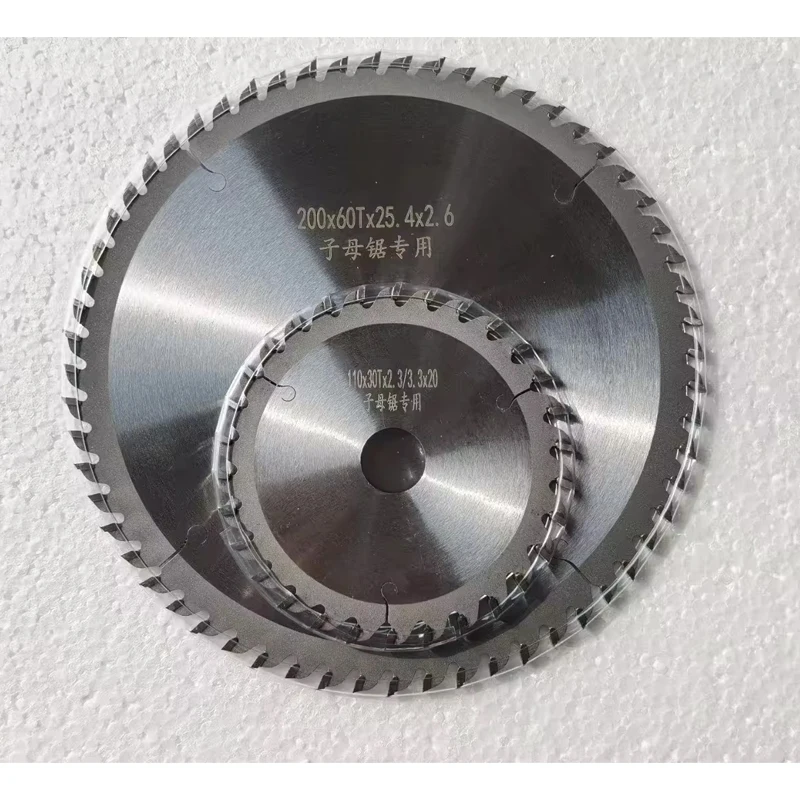
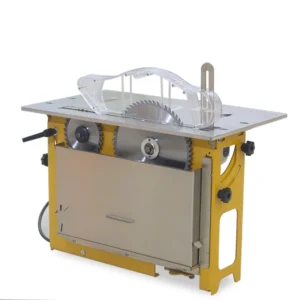
Precision-Matched Spindle Fit — every dust free mother saw blade is cross-referenced against your sliding table saw's arbor size and rated RPM before quotation, eliminating the burn-mark failures I once watched shut down a European panel plant for three days.
Technical Specifications
| Parameter |
Value |
| Product Type |
Dust Free Saw Blade |
| Blade Design |
Mother saw blade with integrated dust-free cutting mechanism |
| Application |
Panel sizing and cutting on sliding table saws or panel saws |
| Compatible Materials |
MDF, particleboard, plywood, solid wood panels (basis not stated in source — confirm material and thickness range) |
| Diameter |
To be confirmed against machine model |
| Tooth Configuration |
To be confirmed based on substrate type |
| Arbor Size |
To be confirmed against spindle bore |
| Maximum RPM |
To be confirmed against machine motor output |
| Maximum Cutting Depth |
To be confirmed against machine model |
| Standards |
CE, ISO 9001 |
Application Suitability
| Application |
Material or Output |
| Daily panel sizing in custom furniture factories |
MDF and particleboard sheets cut to cabinet dimensions |
| Clean-edge cutting for cabinet making workshops |
Plywood and melamine-faced boards requiring minimal edge banding rework |
| Dust-reduced cutting stations in joinery workshops |
Solid wood panels and composite boards in enclosed or semi-enclosed workspaces |
| Batch sizing in panel processing plants |
Mixed substrate runs across MDF, particleboard, and plywood |
Why RPM Mismatch Destroys Cut Quality Before You Notice
The blade and the motor must agree on speed before the first sheet is fed.
I shipped a dust-free mother saw blade set to a European panel plant years ago without confirming the spindle RPM spec against their local motor. The motor ran noticeably slower than the blade's rated speed. Burn marks appeared across every melamine cut face. Production halted for days while we sourced and air-freighted the correct ratio. That failure was entirely preventable — it required nothing more than checking the dust free mother saw blade specifications against the machine's motor plate before dispatch [NEED_CITE: voltage and frequency standards by export market]. Buyers who skip this step discover the problem only after panels fail assembly downstream.

Tooth Geometry and Substrate Pairing
Selecting the correct tooth configuration is where most blade failures originate. MDF demands a different tooth count and rake angle than particleboard, and plywood behaves differently again under the same cutting edge. A dust free mother saw blade configured for one substrate will chatter, deflect, or leave visible scoring lines when pushed through another. Matching tooth geometry to your primary material eliminates the majority of cut-edge deviation before it reaches the edge banding station.
Arbor Tolerance and Spindle Alignment
The arbor bore must seat on the spindle with minimal runout. Even a slight mismatch introduces lateral vibration that widens the kerf and degrades the cut face. On sliding table saws running continuous panel sizing shifts, this vibration compounds across hundreds of cuts. Verifying arbor size against the machine's spindle specification — not just the blade catalog — prevents the gradual drift that only shows up when cabinet carcasses fail to square during assembly [NEED_CITE: CE machinery directive requirements for industrial equipment].
Reading the Specification Sheet Against Your Machine
The four numbers that determine whether a blade will perform are diameter, arbor bore, tooth count, and maximum RPM. Diameter governs cutting depth and must clear the machine's maximum panel thickness. Arbor bore must match the spindle to within manufacturer tolerance. Tooth count determines feed rate capability and edge finish on your specific substrate. Maximum RPM must exceed the machine's spindle speed under load, not just at idle. A blade rated below the motor's output will deflect under cutting pressure, producing the tapered cuts that cause downstream assembly rejection. The dust free mother saw blade specifications sheet should be read alongside the sliding table saw's electrical schematic, not in isolation.
The Cost of Skipping the Voltage and RPM Conversation
When a blade arrives rated for a spindle speed your motor cannot reach, every cut runs below the designed cutting velocity. The result is not immediately obvious — panels still separate, edges look acceptable under workshop lighting. But the kerf widens slightly, scoring blades wear faster, and melamine faces begin to chip at the exit point. By the time the pattern is recognized, hundreds of panels may have passed through downstream edge banding and boring stations with cumulative tolerance stack-up [NEED_CITE: tolerance accumulation in panel processing assemblies]. The rework cost far exceeds the time required to confirm motor plate data at the quotation stage.
Why Procurement Verification Matters Here
Every dust free mother saw blade quotation is built on confirmed machine data — arbor size, spindle RPM, and panel thickness range are locked before production begins. Blade diameter and tooth geometry are selected against your specific substrate mix, not assigned from a default catalog row. Pre-shipment testing includes cut samples on your material at your confirmed thickness. Factory documentation travels with the blade, including the electrical schematic cross-reference and maintenance schedule in your operator's language. The specification confirmation process is engineer-led, with a formal quotation typically returned within one working day of receiving complete machine data.
Documentation & Verification
- Machine specification sheet confirming blade diameter, arbor bore, and RPM compatibility with your saw model
- Factory test record showing cut quality on your specific substrate type and panel thickness
- Electrical schematic cross-referencing blade RPM rating against your motor plate data
- Operation and maintenance manual covering blade change procedure in the agreed language
- Spare parts list identifying replacement blade SKUs and recommended reorder intervals
Installation, Commissioning & Support
- Arbor bore verification against spindle size before first mount to confirm runout within tolerance
- RPM confirmation using tachometer on your motor under load, not idle speed reading
- Initial test cuts on your substrate at production feed rate to verify edge quality baseline
- Blade change procedure training covering dust extraction port alignment and guard repositioning
- Wear inspection schedule tied to cut quality checkpoints on your specific panel material
What We Need to Configure Your Blade
Provide your sliding table saw or panel saw model, motor plate RPM rating, and spindle arbor diameter. Share the primary substrate types and thickness range you run in daily production. Confirm your local voltage and frequency so we cross-reference motor output against blade rating. If you operate multiple saw models, list each — blade specifications are machine-specific, not workshop-generic.
Frequently Asked Questions
Q: How do I confirm blade diameter and arbor size match my sliding table saw?
A: Check your machine's specification sheet for spindle arbor diameter and maximum blade diameter clearance. Cross-reference these against the dust free mother saw blade specifications before ordering. If the original manual is unavailable, measure the spindle directly with calipers and confirm the maximum diameter that clears the blade guard and dust extraction housing.
Q: Which tooth configuration works best for MDF versus particleboard?
A: MDF generally requires higher tooth count with a triple-chip grind to manage the fine fiber structure without tear-out. Particleboard performs better with alternating top-bevel teeth that shear through the resin-bonded chips cleanly. The correct configuration depends on your specific board density and feed speed, confirmed through test cuts before production commitment.
Q: What happens if my machine RPM does not match the blade rating?
A: Running a blade below its rated RPM causes deflection under cutting pressure, widening the kerf and producing tapered cuts that fail at assembly. Running above rated RPM risks tooth fracture. Confirm your motor's loaded RPM — not the nameplate no-load value — against the blade specification before commissioning.
Q: How does the dust-free design affect my machine's extraction port setup?
A: The integrated dust-free mechanism channels particulate toward the machine's existing extraction port. Confirm that your dust collector maintains adequate static pressure at the port connection point. Undersized extraction systems may require ducting adjustments to handle the redirected airflow pattern from the dust-free blade housing.
Q: When should I replace the mother saw blade?
A: Monitor cut edge quality on your primary substrate at regular intervals. Visible chipping on melamine faces, increased cutting resistance, or burn marks on solid wood indicate tooth wear beyond acceptable limits. Replacement intervals depend on daily cut volume, substrate abrasiveness, and feed rate — track these against your spare parts reorder schedule.