Wood Saw Machines
Wood Panel Cutting Sliding Table Saw – Specifications
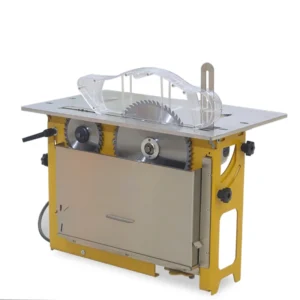
Dust Free Double Saw Wood Panel Cutting Machine, 6.2 kW Total Power,...
View Details<p><strong>ZDSDW3000 Oblique Straight Edge Banding Machine, 8-group bevel pressing, pre-milling station</strong> — configured for technical buyers verifying feed parameters and station setup against substrate mix and throughput needs.</p> <ul> <li>Digital pressure beam adjustment suits varied panel thicknesses</li> <li>30°–90° bevel angle supports both oblique and straight banding profiles</li> <li>Dual-motor polishing with large-diameter dust extraction ensures clean finish</li> </ul> <p>Backed by engineer-led configuration within 24 hours, four-stage QC with pre-shipment verification, and voltage customization from 110V to 440V.</p>
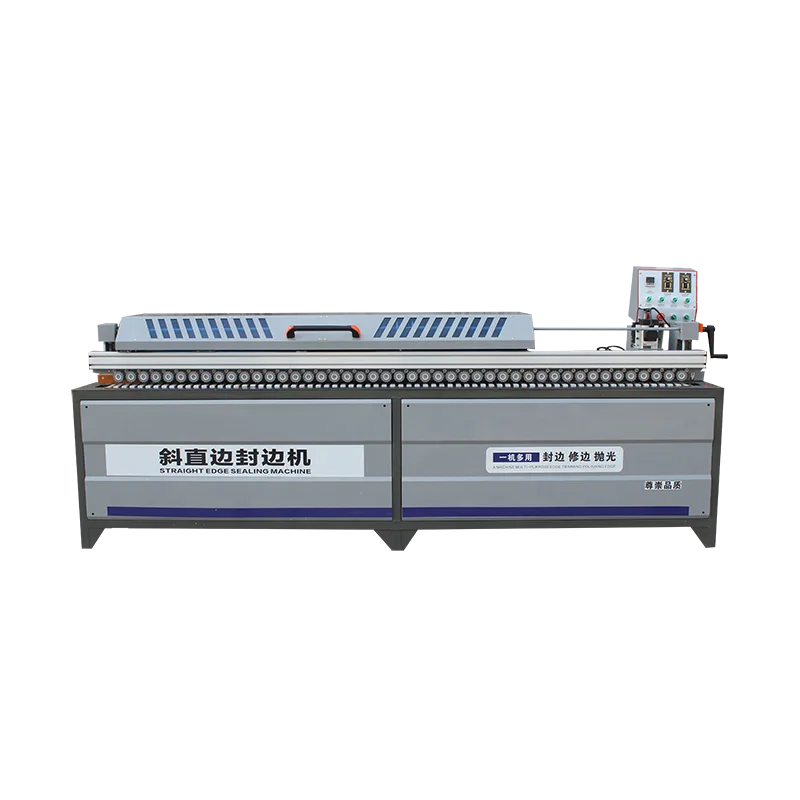
<p><strong>ZDSDW3000 Oblique Straight Edge Banding Machine, 8-group bevel pressing, pre-milling station</strong> — configured for technical buyers verifying feed parameters and station setup against substrate mix and throughput needs.</p> <ul> <li>Digital pressure beam adjustment suits varied panel thicknesses</li> <li>30°–90° bevel angle supports both oblique and straight banding profiles</li> <li>Dual-motor polishing with large-diameter dust extraction ensures clean finish</li> </ul> <p>Backed by engineer-led configuration within 24 hours, four-stage QC with pre-shipment verification, and voltage customization from 110V to 440V.</p>
Quality Assured
Multi-stage QC inspection
Custom Config
Voltage, logo, language
Global Shipping
100+ countries served
After-Sales Support
Remote & spare parts
Engineer-Led Configuration — Every ZDSDW3000 quotation includes confirmed voltage, panel thickness compatibility, and substrate-specific feed parameters before production begins.
| Parameter | Value |
|---|---|
| Model | ZDSDW3000 |
| Product Type | Oblique Straight Edge Banding Machine |
| Function Stations | Gluing, Fine Trimming, Rough Trimming, End Trimming, Scraping, Buffing |
| Pre-milling | Included, upstream of gluing station |
| Bevel Pressing | 8 groups, adjustable 30° to 90° |
| Pressure Beam Adjustment | Digital display height setting |
| Gluing Device | Integrated, ensures tight edge band to board contact |
| Polishing | Dual motors, upper and lower |
| Dust Extraction | Large-diameter suction tube |
| Overall Dimensions (L×W×H) | 2990 × 650 × 1300 mm |
| Rated Power | To be confirmed at quotation |
| Voltage & Frequency | Configurable 110V–440V, confirm local supply |
| Feed Speed | To be confirmed based on substrate and panel mix |
| Panel Thickness Range | To be confirmed per configuration |
| Tolerance | To be verified during factory test on buyer's substrate |
| Control System | Confirm PLC / relay / inverter configuration at inquiry |
| Application | Material or Output |
|---|---|
| Custom cabinet door edge finishing | MDF and plywood with PVC or veneer banding |
| Wardrobe and shelving panel edging | Particleboard with melamine or ABS edge band |
| Oblique profile furniture components | Solid wood panels requiring 30°–90° bevel edge finish |
| Retail fixture and shopfitting panels | Mixed substrate runs with frequent thickness changes |
| Joinery workshop short-run production | Small batches on plywood, MDF, and blockboard |
Assuming a default electrical configuration is the most common reason edge banders arrive on site and cannot be powered up.
I spent years on the assembly floor before moving into machine configuration for buyers. One pattern keeps repeating: a buyer receives a quotation with a price and a model number, but the voltage and frequency were never matched to the local grid. The machine lands at the workshop, the electrician opens the panel, and the inverter is rated for 380V 50Hz while the facility runs on 220V 60Hz. Commissioning stalls before the first panel is fed [NEED_CITE: voltage and frequency standards by export market]. When selecting a ZDSDW3000 oblique straight edge banding machine, the electrical schematic and voltage confirmation must be settled before the order enters production.
The ZDSDW3000 carries eight pressing groups with angles adjustable from 30 to 90 degrees. This range covers both standard straight-edge work and oblique profiles common in contemporary cabinet and furniture design. Each pressing group applies consistent contact pressure along the band-to-panel joint, which is critical when switching between thin PVC and thicker veneer materials within the same production shift.
The digital display for pressure beam height adjustment removes the trial-and-error step that slows down changeovers. When a workshop runs 16 mm particleboard in the morning and 25 mm MDF in the afternoon, the operator sets the beam height from the display rather than adjusting by hand and test-feeding scrap pieces. This specification directly affects edge banding consistency across a mixed-substrate schedule and is worth confirming against the actual panel thickness range you plan to process [NEED_CITE: CE machinery directive requirements for panel processing equipment].
The pre-milling motor upstream of the gluing station squares the panel edge before adhesive application. On particleboard with uneven saw cuts, this step removes the fractured fiber layer and creates a flat bonding surface. Downstream, the six trimming stations — gluing, fine trimming, rough trimming, end trimming, scraping, and buffing — each address a specific stage of edge finish. The tolerance you achieve at the trimming stage determines whether panels assemble flush in the carcass or show visible step-offs at the joints. When evaluating ZDSDW3000 edge banding machine specifications, ask for a factory test record on your own substrate to verify the actual finish rather than relying on catalog claims.
A configuration that runs flawlessly on medium-density MDF may stall or chip edge banding on high-density particleboard at the same feed speed. I have seen workshops purchase an edge bander rated for a certain throughput, only to discover that their specific board stock forces the feed rate down to maintain acceptable edge quality. The result is actual output well below the quoted figure. Before committing to any oblique straight edge banding machine, request a sample processing test using the exact substrate density and edge band material you run daily [NEED_CITE: substrate density impact on edge banding feed speed].
The ZDSDW3000 is built on an in-house manufacturing process with patented cutting mechanisms and verified tolerance checkpoints. Every unit passes through four-stage quality control covering incoming material, in-process inspection, finished product review, and pre-shipment verification. Voltage, control language, and specification customization are handled as standard steps in the quotation, not as afterthoughts. The full product family — from entry-level to full-function pre-milling configurations — means a workshop can scale its edge banding capacity without switching suppliers. Each machine ships with an operation manual in the agreed language, matched electrical documentation, and a factory test record specific to the buyer's panel mix.
Share your primary panel materials, thickness range, and the edge band types you use most frequently. Include your local voltage and frequency so the electrical configuration is confirmed before production. If you run oblique profiles, specify the bevel angles required so the pressing groups are preset at the factory.
Q: What panel thickness range and feed speed does the ZDSDW3000 support? A: The panel thickness range and feed speed depend on the specific configuration and your substrate density. Request a machine specification sheet with confirmed figures matched to your board stock. A factory test on your actual material verifies both parameters before you commit to an order.
Q: How is voltage confirmed before the machine ships? A: Your local voltage and frequency are documented in the electrical schematic during the quotation stage. The control panel, motors, and inverter are configured to match. A voltage confirmation document is included in the shipping documentation package.
Q: What trimming tolerance can I expect on my panels? A: Tolerance is verified during a factory test using your substrate and edge band material. The pre-milling station and six trimming functions work together to produce the final edge quality. Request the test record with measured results before shipment.
Q: Which stations are essential versus optional for my application? A: Pre-milling and bevel pressing are essential for panel edge flatness and oblique profile work. Polishing and scraping determine final surface finish. Your substrate mix and quality standard determine which stations your production requires.
Q: How should I plan dust extraction and air supply for this machine? A: The ZDSDW3000 uses a large-diameter suction tube for dust collection. Confirm the duct diameter and airflow requirement against your workshop's existing extraction system. Air supply specifications are included in the machine documentation for your facility planning.
20+ Years Experience
Trusted by 100+ countries worldwide
Full OEM/ODM
Custom logo, voltage & panels
Lifetime After-Sales
12-month warranty + spare parts
25-45 Day Lead Time
Flexible MOQ, on-time delivery
Fill in your requirements and our team will respond with a formal quotation within 24 hours. We speak English and Spanish.
Response within 24 hours on business days
Or WhatsApp us for instant reply
Serving 100+ countries globally
Dust Free Double Saw Wood Panel Cutting Machine, 6.2 kW Total Power,...
View DetailsEngineer-led configuration confirmed with a formal specification sheet and pre-shipment test record...
View DetailsDW985 Automatic Edge Banding Machine, 380V, 16-Station, 8-12 m/min — fully assembled...
View DetailsZDS802 Automatic Edge Banding Machine, 220V, 0-10 m/min feed speed, 10-50mm panel...
View DetailsOur global sales team is ready to assist. Get a formal quotation, technical specs, and OEM/ODM options within 24 hours.