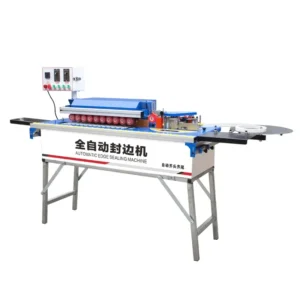
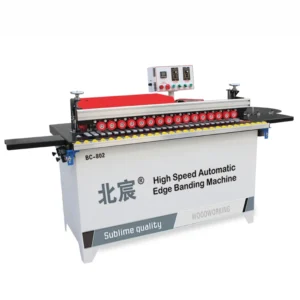
Edge banding machine
Automatic Edge Banding Machine Specifications | DW802
DW802 Automatic Edge Banding Machine, 4200W Total Power, 0.3–3mm Edge Thickness, 220V/380V...
View Details<p><strong>Manual Edge Banding Machine</strong>, 1000W, 0.3–3mm edge thickness, curved and straight dual-mode — handles MDF, particleboard, plywood and solid wood panels down to 25cm length with a 1000ml glue pot and 20W dedicated heating element. Voltage confirmed at 220V or 380V before shipment, with control panel language matched to operator requirement.</p> <ul> <li>Compact 22kg benchtop unit for small-batch edge sealing and on-site furniture repair</li> <li>Air source 0.5–0.8MPa required; plug options EU, USA, AU, UK</li> </ul> <p>Engineer-led configuration with formal quotation within 24 hours, four-stage QC including pre-shipment verification, and sample processing available on your own substrate before ordering.</p>

<p><strong>Manual Edge Banding Machine</strong>, 1000W, 0.3–3mm edge thickness, curved and straight dual-mode — handles MDF, particleboard, plywood and solid wood panels down to 25cm length with a 1000ml glue pot and 20W dedicated heating element. Voltage confirmed at 220V or 380V before shipment, with control panel language matched to operator requirement.</p> <ul> <li>Compact 22kg benchtop unit for small-batch edge sealing and on-site furniture repair</li> <li>Air source 0.5–0.8MPa required; plug options EU, USA, AU, UK</li> </ul> <p>Engineer-led configuration with formal quotation within 24 hours, four-stage QC including pre-shipment verification, and sample processing available on your own substrate before ordering.</p>
Quality Assured
Multi-stage QC inspection
Custom Config
Voltage, logo, language
Global Shipping
100+ countries served
After-Sales Support
Remote & spare parts
Voltage-confirmed benchtop edge banding — Every ST-50 manual edge bander ships with a factory test record matching your facility's exact voltage and frequency, eliminating the three-week downtime I once watched a customer endure when a machine arrived wired for the wrong supply.
| Parameter | Value |
|---|---|
| Product Type | Manual Edge Banding Machine |
| Total Power | 1000W |
| Voltage | 220V / 380V / customization |
| Edge Banding Mode | Curved and straight |
| Edge Banding Height | 0–50 mm |
| Edge Banding Thickness | 0.3–3 mm |
| Minimum Sheet Length | 25 cm |
| Minimum Sheet Width | 3 cm |
| Glue Pot Capacity | 1000 ml |
| Edge Heating Power | 20W |
| Air Source Pressure | 0.5–0.8 MPa |
| Product Size | 50 × 50 × 47 cm |
| Product Weight | 22 kg |
| Control Panel Language | Chinese, English, Spanish, French (customizable) |
| Plug Options | EU, USA, AU, UK |
| Application | Material or Output |
|---|---|
| Cabinet door curved edge sealing | MDF and plywood with PVC or veneer banding |
| Small-batch furniture panel edging | Particleboard and ecological board up to 50 mm height |
| On-site furniture repair and re-edge | Solid wood panels with melamine or wood veneer strips |
| Joinery workshop prototype runs | Mixed substrates requiring quick changeover between curved and straight profiles |
Confirming voltage and frequency before production prevents a machine from sitting idle for weeks on your shop floor.
I learned this the hard way. A small curved-and-straight manual edge bander was dispatched to a customer whose workshop ran on single-phase supply. The machine was wired for a configuration that did not match. The operator plugged it in and nothing happened. That workshop lost nearly three weeks waiting for electrical retrofitting while orders piled up. When you evaluate manual edge banding machine specifications, voltage compatibility is not a footnote — it is the first parameter to lock down [NEED_CITE: voltage and frequency standards by export market].
This unit handles both curved and straight edge profiles on a single benchtop platform. For cabinet makers producing radius-corner doors or rounded shelving, the curved mode lets the operator guide the panel along the glue roller by hand, maintaining consistent contact on radii that automated feeders cannot track. Straight mode suits standard rectangular panels where the operator pushes the workpiece along the fence. Switching between modes does not require tooling changes, which matters in a small workshop running mixed batches throughout the day.
The 1000 ml glue pot paired with a dedicated 20W edge heating element keeps adhesive at working temperature across the banding zone. A smaller pot would require frequent refills during longer runs, while a larger one wastes adhesive when you are only edging a handful of panels. The thermal mass here suits the manual edge banding machine specifications range — short to medium batches where the operator pauses between pieces to align the next strip [NEED_CITE: hot-melt adhesive open time and pot temperature stability].
The 0–50 mm edge banding height range covers the majority of board stock used in custom furniture — from 3 mm thin plywood up through 50 mm thick solid wood panels. Pair this with the 0.3–3 mm banding thickness window and you can run PVC, melamine, and natural veneer strips without swapping consumables. The minimum sheet dimensions of 25 cm length and 3 cm width mean small offcuts and narrow frame components can be edged without building custom jigs. For a joinery shop moving from hand-applied iron-on banding to a mechanized process, this working envelope removes most of the common excuses to skip the machine on "small pieces."
When a machine arrives with a control panel the operator cannot read, commissioning stalls. Buttons get pressed in the wrong sequence, glue temperature settings drift, and the first batch of panels comes off with visible glue lines or incomplete adhesion. Then the real cost appears: rework on finished goods, customer complaints on edge quality, and days lost while translated manuals are sourced. I have seen small workshops abandon a perfectly functional manual edge bander simply because the interface language and electrical supply were never confirmed at the order stage [NEED_CITE: CE machinery directive requirements for industrial equipment].
In-house manufacturing with patented cutting mechanisms means tolerance claims are verifiable on your own substrate, not just stated on a brochure. Voltage from 220V to 380V and beyond is confirmed before the machine enters production, so the unit that arrives matches your facility's electrical infrastructure. Control panel language and plug type are specified at order — EU, USA, AU, or UK — and documented in the packing record. A four-stage QC process covers incoming material through pre-shipment verification, with a factory test run recorded on panel stock matching your thickness range. Engineer-led configuration recommendations arrive within 24 hours of inquiry, so you are not guessing which options suit your workflow.
Provide your panel material types and the thickness range you run most often, along with the edge banding material — PVC, veneer, or melamine — and its width. State your facility voltage and frequency so the electrical configuration is locked before production begins. Specify the control panel language your operators need and the plug standard for your region.
Q: How do I verify edge banding tolerance on curved versus straight profiles? A: Request a sample processing test using your own panel material and banding stock. The factory runs curved and straight pieces on the ST-50 and ships them to you for measurement. Check adhesion strength, glue line visibility, and trim flush on both profile types before confirming your order. This is the only way to validate the manual edge banding machine specifications against your actual quality standard.
Q: What voltage and frequency confirmation is needed for different export markets? A: Provide your facility's exact voltage and frequency — for example 220V/50Hz or 110V/60Hz — at inquiry stage. The factory configures the motor and heating circuit accordingly and documents the wiring in the electrical schematic. A pre-shipment test runs the machine at your specified voltage to confirm the 1000W total power circuit performs correctly before packing.
Q: How do the minimum sheet dimensions affect jig design for small components? A: The 25 cm minimum length and 3 cm minimum width mean most small furniture components can be edged freehand. For pieces near the lower limit, a simple wooden fence clamped to the bench provides lateral support. No custom jig tooling is required within the stated minimum dimensions, keeping setup time short for mixed-batch workshop environments.
Q: What air compressor capacity does this machine require? A: The pneumatic system needs 0.5–0.8 MPa supply pressure for trim and feed functions. A standard workshop compressor rated at the upper end of that range with adequate tank volume will maintain stable pressure through repeated cycles. Undersized compressors cause pressure drops that lead to inconsistent trim depth on thicker banding materials.
20+ Years Experience
Trusted by 100+ countries worldwide
Full OEM/ODM
Custom logo, voltage & panels
Lifetime After-Sales
12-month warranty + spare parts
25-45 Day Lead Time
Flexible MOQ, on-time delivery
Fill in your requirements and our team will respond with a formal quotation within 24 hours. We speak English and Spanish.
Response within 24 hours on business days
Or WhatsApp us for instant reply
Serving 100+ countries globally
DW802 Automatic Edge Banding Machine, 4200W Total Power, 0.3–3mm Edge Thickness, 220V/380V...
View DetailsProducts DescriptionBeichen DW102 edge banding machine with auto gluing and trimming buffing...
View DetailsProducts Description DW802 Automatic Edge banding machine with gluing.trimming.end cutting and buffing...
View DetailsProducts Description DW802 Automatic Edge banding machine with gluing.trimming.end cutting and buffing...
View DetailsOur global sales team is ready to assist. Get a formal quotation, technical specs, and OEM/ODM options within 24 hours.