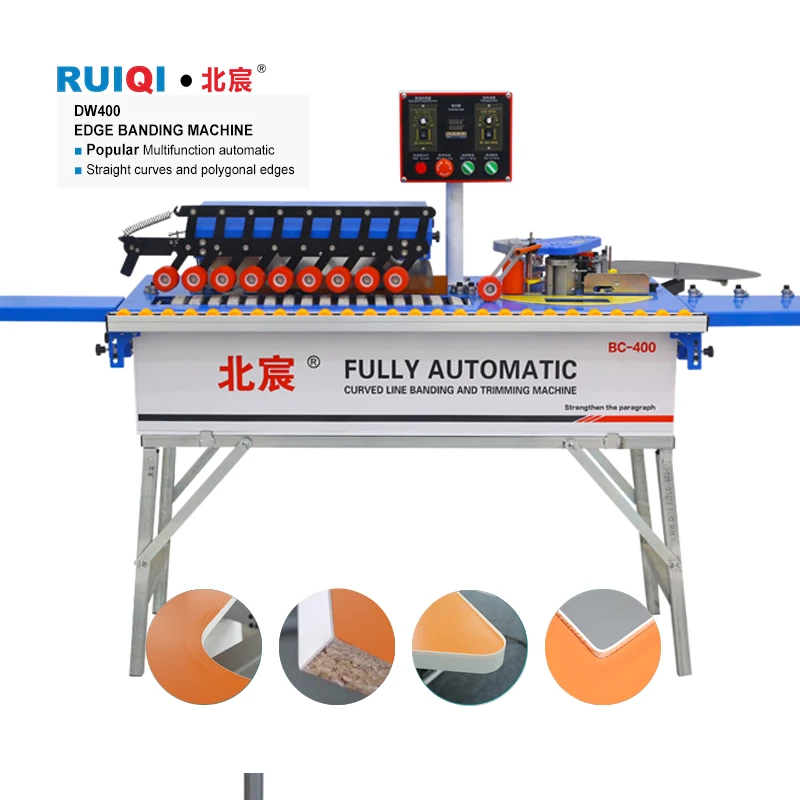
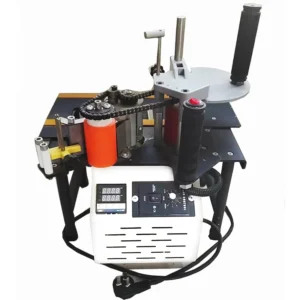
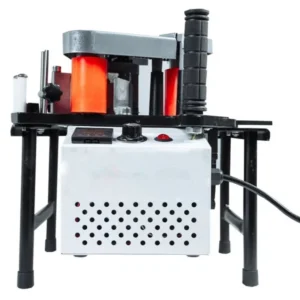
Voltage-First Configuration — the DW400 Edge Banding Machine ships with confirmed 220V or 380V winding and matched plug type before production begins, eliminating thermal overload failures on the shop floor.
Technical Specifications
| Parameter |
Value |
| Model |
DW400 |
| Product Type |
Edge Banding Machine |
| Total Power |
3800W |
| Voltage Options |
220V / 380V / customization |
| Control System |
Manual operation with operation panel |
| Overall Dimensions (L×W×H) |
116×47×69 cm |
| Net Weight |
70 kg |
| Minimum Sheet Length |
25 cm |
| Minimum Sheet Width |
10 cm |
| Edge Banding Height |
0–50 mm |
| Edge Banding Thickness |
0.3–3 mm |
| Edge Feed Power |
20W |
| Transmission Power |
60W |
| Trimming Power |
650W×2 |
| Polishing Power |
180W×2 |
| Vacuum Power |
1200W |
| Air Source Pressure |
0.5–0.8 MPa |
| Glue Pot Capacity |
1000 ml |
| Standard Functions |
Straight edge banding, trimming, polishing |
| Language Options |
Chinese and English standard; other languages customizable |
| Plug Options |
EU, USA, AU, UK |
Application Suitability
| Application |
Material or Output |
| Cabinet door and carcass panel edging |
MDF and particleboard with PVC or melamine strip |
| Furniture workshop straight-edge finishing |
Plywood and blockboard with veneer banding |
| Secondary or backup banding station |
Polymer door components and small-format panels |
| Low-to-medium volume joinery production |
Wood panels requiring straight-edge adhesive bonding |
Why the Voltage Question Should Come Before the Price on an Edge Banding Machine
Confirming electrical compatibility at the quotation stage prevents weeks of idle production after delivery.
I spent my early years in testing and QC back at the plant, and one shipment still stays with me. A straight edge bander went to a cabinet maker in Surabaya — the workshop ran on 415V/60Hz, but the motor had been wound for 380V/50Hz. Every time the operator pushed past idle speed, the thermal overload tripped. The factory waited twenty days for a VFD retrofit while the entire panel line sat silent [NEED_CITE: voltage and frequency standards by export market]. The DW400 Edge Banding Machine specifications address this directly: voltage is configurable between 220V and 380V, with plug types covering EU, USA, AU, and UK standards, all confirmed in writing before the machine enters production.

Station-Level Power Allocation for Process Control
The DW400 separates power delivery across each workstation rather than running everything from a single oversized motor. Trimming stations draw 650W each through independent motors, so one trimming head can be adjusted or serviced without affecting the polishing stage downstream. Polishing motors at 180W each provide enough torque for buffing PVC and veneer without scorching heat-sensitive melamine surfaces. This station-level breakdown gives operators direct control over which Edge Banding Machine specifications matter most for a given material run.
Glue Pot and Air Supply Requirements
Consistent adhesive application depends on two variables working together: glue pot volume and regulated air pressure. The 1000 ml pot holds enough adhesive for extended straight-edge runs without frequent refills, and the 0.5–0.8 MPa air source requirement ensures the glue roller maintains even contact pressure across the banding strip [NEED_CITE: adhesive application standards for wood panel edging]. If your workshop compressor runs below this range, the glue transfer becomes uneven, leaving visible starved spots along the bond line.
How Trimming and Banding Thickness Shape Final Edge Quality
The trimming power of 650W×2 directly influences how cleanly the machine cuts excess banding material flush with the panel face. At the full 3 mm thickness limit, trimming motors must shear through stiff PVC without chattering, which demands sufficient wattage at each head. The 0.3–3 mm banding thickness range covers the three most common strip materials — thin melamine for cabinet interiors, mid-range PVC for doors and drawer fronts, and veneer for visible furniture faces. Edge Banding Machine specifications around trimming power and banding range determine whether the finished edge goes straight to assembly or requires hand cleanup.
The Hidden Cost of Skipping Electrical Verification
When a machine arrives with the wrong motor winding, the consequences extend beyond a tripped breaker. Operators attempt repeated restarts, each one stressing the insulation further until the winding shorts internally [NEED_CITE: motor failure modes from voltage mismatch]. The downtime compounds — production schedules slip, upstream panel saws stack cut parts with no downstream station to receive them, and the furniture factory absorbs labor costs for workers standing idle. Requesting a written voltage confirmation document before shipment takes minutes but prevents this entire cascade.
Why Technical Buyers Source This Model Here
In-house manufacturing with patented cutting mechanisms means the DW400 is built on the same floor where it is tested, not assembled from third-party subcontracts. The four-stage QC process covers incoming material inspection through pre-shipment verification, so the unit you receive has been run under power before crating. Voltage, language, and plug customization are handled as standard line items rather than special engineering requests. An engineer-led configuration review produces a formal quotation within 24 hours, including the electrical schematic matched to your facility's supply [NEED_CITE: pre-shipment testing protocols for exported woodworking machinery]. Factory visits are welcomed for buyers who want to witness the machine running their own panel stock.
Documentation & Verification
- CE declaration of conformity for the DW400 edge banding unit
- Machine specification sheet with confirmed voltage and frequency for your facility
- Electrical schematic matching your local supply before production release
- Factory test record run on your specified panel thickness and banding material
- Operation and maintenance manual in your chosen language at time of order
- Spare parts list identifying wear items and recommended replacement intervals
Installation, Commissioning & Support
- Requires a dedicated circuit matching the confirmed 220V or 380V supply with proper grounding for the 3800W total load
- Compact 116×47×69 cm footprint fits standard workshop aisles; ensure 70 kg floor loading capacity
- Arrives fully assembled — connect power, air supply at 0.5–0.8 MPa, and perform first-article test
- Glue pot requires initial heat-up cycle before first run; confirm temperature range for your adhesive type
- Trimming and polishing stations need alignment verification after transport using the supplied manual
- Keep spare trimming cutters and polishing pads from the included parts list for routine replacement
Preparing Your Inquiry
To receive an accurate configuration proposal, share your workshop's exact voltage and frequency at the main distribution panel, the panel materials and thicknesses you process most often, and the edge banding strip materials you intend to use. If your operators require a control panel language beyond Chinese or English, specify this in your initial message so the correct interface is installed before dispatch.
Frequently Asked Questions
Q: How do I confirm voltage, frequency, and plug type match my workshop before ordering?
A: Provide your facility's measured voltage and frequency at the main panel, not the nameplate rating of existing equipment. The DW400 supports 220V and 380V configurations with EU, USA, AU, and UK plug options. A written voltage confirmation document is issued with the quotation, and the electrical schematic is reviewed against your supply before the machine enters production.
Q: What panel thickness and feed speed does the DW400 support for my substrate?
A: The machine handles edge banding heights from 0 to 50 mm and accepts minimum sheet dimensions of 25 cm length by 10 cm width. Specific panel thickness range and feed speed values are confirmed during the engineer configuration review based on your substrate type. Request the machine specification sheet with verified values matched to your material before committing to the order.
Q: How do I select the right banding thickness for MDF versus particleboard versus plywood?
A: Thin melamine strips at 0.3–0.5 mm suit cabinet interior panels on particleboard where edges are less visible. PVC in the 0.8–2 mm range works well on MDF doors and drawer fronts requiring impact resistance. Veneer strips up to 3 mm are used on plywood and blockboard for furniture-grade visible edges. The DW400 covers the full 0.3–3 mm range across all three material families.
Q: What tolerance can I expect on trimmed edges and how is it verified?
A: Trimming quality depends on the dual 650W motors, cutter condition, and banding material stiffness. Verification occurs during the pre-shipment test where the machine runs your specified panel and banding combination. The factory test record documents the trimmed edge result before dispatch, so you review actual output rather than a general tolerance claim.
Q: How does the DW400 integrate with upstream panel saws and downstream boring machines?
A: The compact 116×47×69 cm footprint and 70 kg weight allow placement in a small workshop line between a panel saw and a boring station. Ensure your upstream saw cuts panels to the minimum 25 cm length the DW400 accepts, and plan material flow so banded panels move directly to assembly or boring without intermediate stacking that could damage fresh adhesive bonds.