

Rotary vs Water Ring Vacuum Pump for CNC Router: Which to Choose as a China Manufacturer?
Most woodworking operators assume rotary vacuum pumps are always the more cost-effective pick for CNC routers, but this only holds true for specific production scenarios that align with their operational strengths. Choosing the wrong pump type for your setup can add 15-25% to annual equipment maintenance costs, eroding profit margins that are already tight for mid-sized production lines.
The correct pump choice directly ties to three core variables: your daily operating hours, the dust level of your processed materials, and the local climate of your production facility. There is no universal "better" option, only the option that matches your unique operational parameters to minimize total long-term cost.
We have supported over 200 global woodworking buyers in matching vacuum pumps to their CNC router lines over the past 20 years, and we consistently see mismatched pumps account for more than 30% of avoidable after-sales support requests for core CNC equipment [NEED_CITE: Vacuum pump mismatches cause 30% of avoidable after-sales issues for CNC router systems]. This is not a problem of low-quality parts, but a problem of misaligned selection that even experienced production managers often overlook.
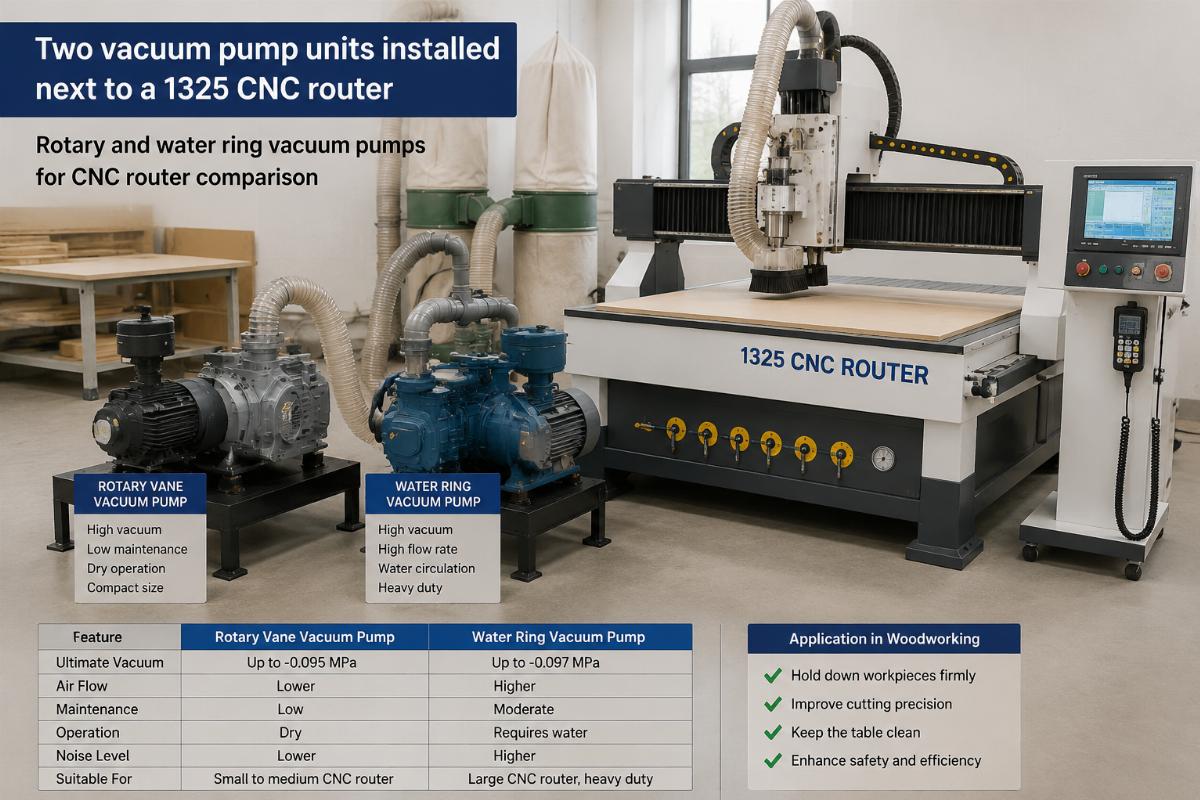
With that context, let’s break down how to pick the right unit for your operation.
What core differences set these two pumps apart for CNC use?
| The key gap between rotary and water ring vacuum pumps is not maximum suction pressure, but long-term stability and operational overhead. Most buyers fixate on suction ratings when comparing units, ignoring the factors that actually drive recurring costs over the 5+ year lifespan of a CNC router. | Evaluation Factor | Common Misaligned Practice | Recommended Matching Practice |
|---|---|---|---|
| Long-term operational cost | Prioritize lower upfront purchase price over 3-year total cost calculation | Map cost across purchase, maintenance, energy use and part replacement for your expected operating hours | |
| Suction performance | Assume higher peak suction equals better holding power for plate cutting | Prioritize sustained suction stability over 8+ hour continuous run times | |
| Environmental tolerance | Judge pump suitability based solely on brand marketing claims | Cross-reference pump specs with your facility’s temperature range and existing dust filtration setup |
We worked with a Southeast Asian panel furniture factory that runs 1325 CNC routers for MDF cutting 16 hours per day, 6 days per week, and after they switched from water ring pumps to matched rotary units, they reduced water replacement and anti-freeze maintenance frequency by 80% [NEED_CITE: Rotary pumps cut water-related maintenance by 80% for 16-hour daily woodworking operations]. The savings on labor and consumables alone paid back the higher upfront cost of the rotary units in 7 months.
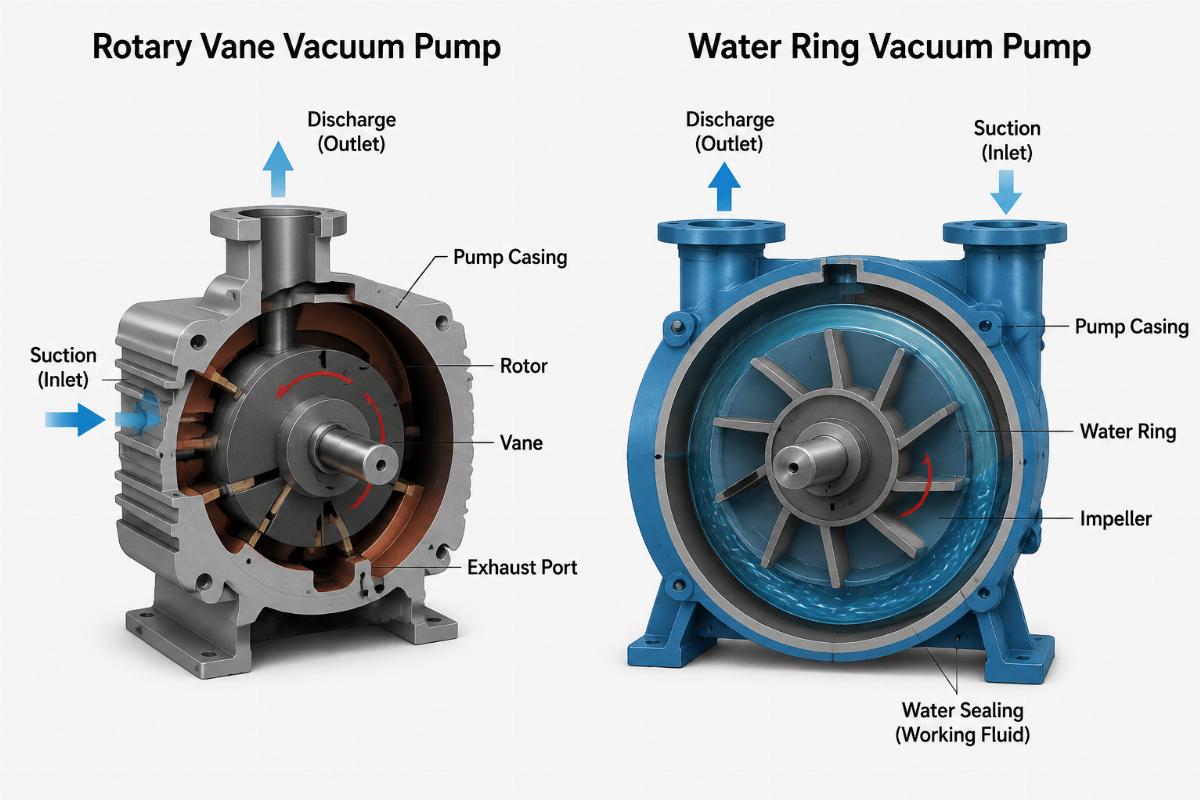
- Core Spec Alignment – Ignore peak suction ratings listed on product sheets, and instead ask suppliers for 12-hour continuous suction test data for each pump model.
- Operational Overhead Audit – Calculate how much time your team spends on weekly pump maintenance, including water top-offs, filter changes and part inspections, to quantify hidden labor costs.
- Dust Capacity Check – Confirm the pump’s tolerance for wood dust carried in the air stream, especially if you process particleboard or MDF regularly.
How do your production parameters drive the right pump pick?
| Rotary pumps deliver net cost savings only when your line runs more than 10 hours per day on a consistent basis. For smaller, lower-utilization operations, the 40% higher upfront cost of rotary units will never be offset by energy savings over the pump’s usable life. | Production Parameter | Common Selection Mistake | Correct Matching Rule |
|---|---|---|---|
| Daily operating hours | Buy rotary pumps for all lines regardless of run time | Choose rotary for >10 hour daily runs, water ring for <6 hour daily runs | |
| Upfront budget | Overspend on premium pump specs that exceed your line’s requirements | Match pump suction capacity exactly to the working area of your CNC router | |
| Local climate | Assume water ring pumps only work in cold regions | Prioritize water ring units for high-dust operations even in warm, dry climates |
A small custom furniture workshop in the Middle East operating in a 40+ degree Celsius dry climate uses water ring pumps for two cabinet door engraving lines, and paid 30% less upfront for units with identical suction ratings to comparable rotary pumps [NEED_CITE: Water ring pumps cost 30% less upfront than matching suction rotary pumps for woodworking CNC]. Their low 5-hour daily run time means there is no financial case for switching to rotary units, even with the region’s low humidity.

- Operating Hour Tally – Log actual daily run times for your CNC lines over a 2-week period to get an accurate baseline, rather than using projected production targets.
- Dust System Review – If you do not have a full pre-collection dust filtration system on your CNC line, default to water ring pumps for their 3x higher dust tolerance.
- Climate Adaptation – Adjust your pump mix based on regional conditions, as a European wood machinery distributor did when they matched 40 pump units to local climates for bulk CNC orders and cut customer after-sales complaints by 22%.
What common selection mistakes should you avoid?
| Blindly over-specifying suction power and ignoring after-sales support for accessories are the two costliest errors buyers make. Both of these mistakes can double your long-term maintenance costs for vacuum pump systems, even if you pick the correct pump type for your operation. | Risk Factor | Costly Avoidable Mistake | Low-Risk Best Practice |
|---|---|---|---|
| Spec matching | Purchase pumps with 2x higher suction than your CNC router’s working area needs | Align pump suction capacity directly to the table size of your existing or new CNC unit | |
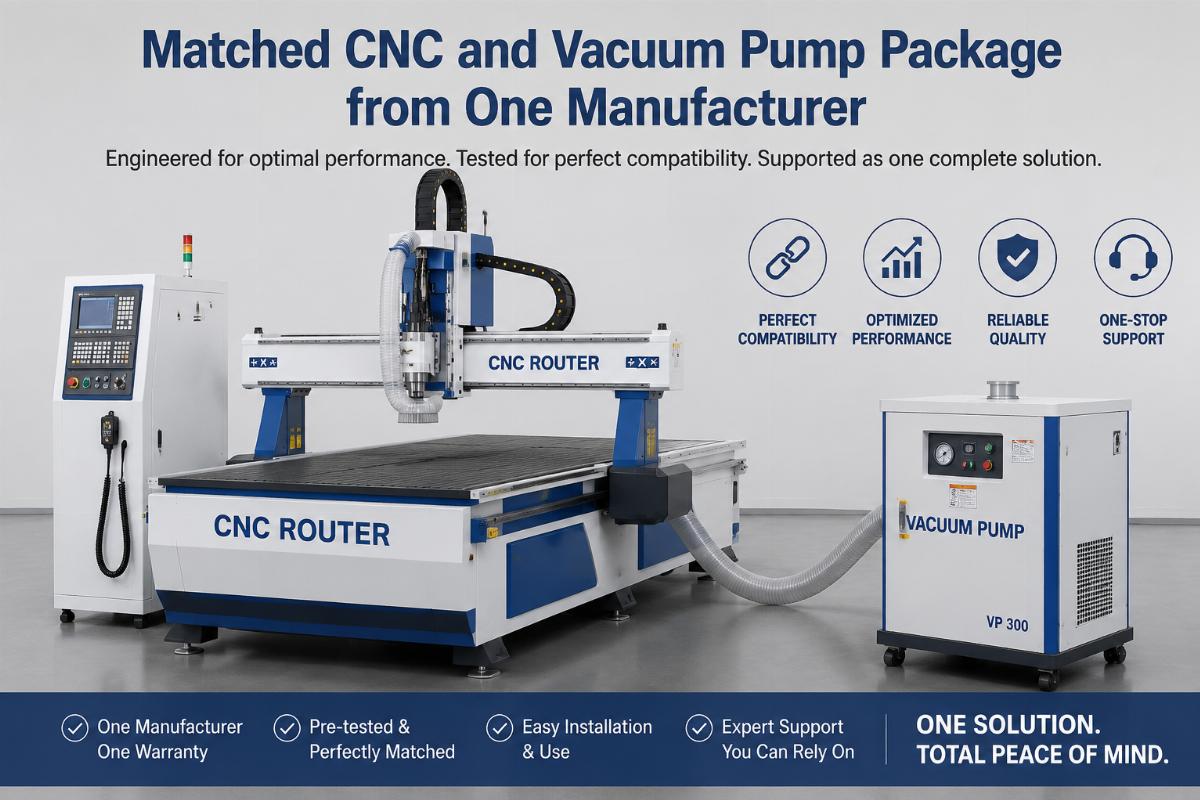
| After-sales support | Buy pumps from separate third-party suppliers independent of your CNC vendor | Source matched pumps from the same supplier that provides your core CNC equipment | |
| Long-term planning | Choose pumps based solely on the lowest available unit price | Calculate full lifecycle cost across 3 years of operation to compare total expenditure |
We have seen multiple small workshop buyers purchase over-sized high-suction pumps for standard 1325 CNC routers, only to find that the excess suction leads to unnecessary energy consumption and faster wear on internal components with no practical benefit to cutting quality.
- Suction Calibration – Cross-check your pump’s rated suction against your CNC router’s table surface area to confirm you are not overpaying for unused capacity.
- Single Supplier Sourcing – Get your vacuum pump as part of a full CNC accessory package from the same manufacturer that builds your core machine to avoid compatibility gaps.
- Warranty Confirmation – Verify that pump units are covered under the same warranty terms as your CNC router, rather than having separate, disjointed support terms.
Conclusion
The best vacuum pump for your CNC router is never the one with the highest marketing claims, but the one that aligns exactly with your daily operations and local conditions. There is no one-size-fits-all solution, and prioritizing either upfront cost or long-term energy savings in isolation will lead to unnecessary expenditure over time. By mapping your operating hours, dust load and climate to the core strengths of each pump type, you can cut avoidable maintenance costs without sacrificing production stability. For buyers sourcing from China, working with a full-service woodworking machinery manufacturer that provides pre-matched pump options and unified support eliminates most of the guesswork from the selection process.

Leave a Reply