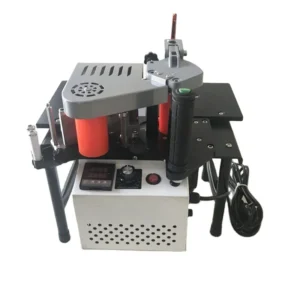
Voltage-configurable build — electrical schematics and frequency confirmed against your local supply before the machine leaves the factory, preventing unusable arrivals.
Technical Specifications
| Parameter |
Value |
| Product Type |
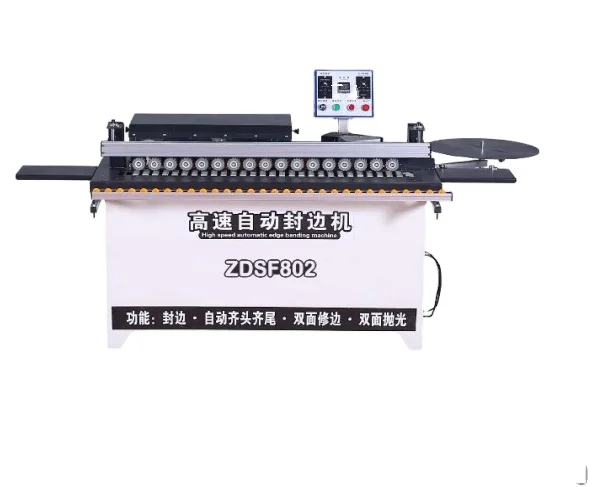
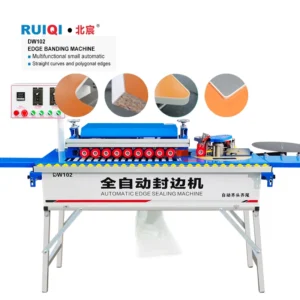
Automatic Edge Banding Machine |
| Function Stations |
Automatic plate feeding, end cutting, upper and lower polishing, automatic head and tail trimming |
| Edge Type |
Straight line |
| Rated Voltage |
220V (frequency and phase to confirm at order) |
| Strip Thickness Range |
0.5–2.5 mm |
| Sheet Thickness Range |
10–50 mm |
| Trimming Power |
800W × 2 |
| Polishing Power |
180W × 2 |
| Suction Power |
1200W |
| Rated Power |
4kW |
| Rated Air Pressure |
0.4–0.6 MPa |
| Feed Speed |
0–10 m/min |
| Glue Pot Capacity |
4000 ml |
| Glue Pot Heating Power |
1000W |
| Pressure Beam |
One-piece beam with double rows of pressure wheels |
| Conveyor Belt Material |
Silicone |
| Support Table |
Extendable fluent strips |
| Overall Dimensions (L×W×H) |
130 × 65 × 75 cm |
| Machine Weight |
150 kg |
Application Suitability
| Application |
Material or Output |
| Custom cabinet door edging |
MDF and particleboard with PVC straight banding |
| Wardrobe side panel finishing |
Plywood panels with veneer edge banding |
| Small-batch furniture production |
Solid wood panels requiring glue-line trimming |
| Shelving and carcass edging |
Moisture-resistant board with 0.5–2.5 mm strips |
Why the Voltage Question Must Precede the Purchase
An automatic edge banding machine specifications sheet that omits frequency and phase confirmation risks delivering a unit that cannot run on your workshop's power supply.
I once saw a joinery shop receive a 220V unit wired for 60Hz, only to discover the local grid ran 50Hz — the glue pot never reached stable temperature and the feed motor stalled under load. Two weeks of downtime before an electrician could retrofit the controls. When comparing automatic edge banding machine specifications across suppliers, voltage alone is insufficient; the frequency, phase, and plug standard must be locked in writing before production begins [NEED_CITE: voltage and frequency standards by export market].

Matching Feed Speed to Your Workshop Rhythm
The 0–10 m/min variable feed range serves a deliberate purpose in a small to mid-size shop environment. Lower feed speeds allow operators to monitor glue application and trimming quality when running unfamiliar substrates for the first time. Higher feed settings become viable once the banding material, glue temperature, and pressure wheel tension have been dialled in for a given panel type. This flexibility means the machine does not force a fixed production tempo that may exceed what a single-operator workflow can sustain.
The Pressure Beam Design That Protects Panel Surfaces
A one-piece pressure beam paired with double rows of silicone pressure wheels distributes force evenly across the panel face. This arrangement prevents the localized scarring that segmented beams sometimes leave on high-gloss melamine or delicate veneer surfaces. When you run 10 mm thin stock alongside 50 mm thick shelving boards, consistent down-pressure without surface damage becomes the difference between a sellable product and a rework pile. The silicone belt underneath further cushions panels during transit through each station.
How Trimming and Polishing Stations Define Edge Quality
Two 800W trimming motors handle head and tail cuts as well as flush trimming in a single pass. The independent upper and lower polishing wheels at 180W each remove residual adhesive and smooth the banding edge to a finish ready for assembly or packaging. For workshops producing cabinet components that will be joined with dowels or confirmat screws, edge quality at this stage directly affects how panels seat during assembly. A rough trim leaves visible gaps at joints that no amount of clamping can close [NEED_CITE: tolerance requirements for dowel and confirmat assembly in panel furniture].
When Entry-Level Meets Production Volume It Was Not Built For
Some workshops purchase a compact bander rated for intermittent use, then push it through eight-hour continuous runs processing full sheets of moisture-resistant board. The glue pot cycles beyond its designed recovery time, adhesive viscosity drops, and bond strength becomes unpredictable. Panels pass initial inspection but delaminate during shipping or after installation. Selecting a machine means matching not just the panel thickness range and strip width, but also the realistic daily volume and substrate density to the unit's thermal and mechanical capacity [NEED_CITE: thermal recovery limits in compact edge bander glue pots].
What This Configuration Provides at Its Price Point
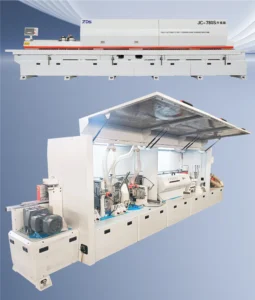
In-house manufacturing with patented cutting mechanisms ensures the trimming stations operate within verifiable tolerances rather than claimed figures that only surface during assembly. The full product family — from this entry-level model to full-function pre-milling configurations — means a workshop can scale throughput by moving to a higher-tier unit from the same supplier without retraining operators on a different control philosophy. Voltage, control panel language, and specification adjustments are handled as standard configuration items rather than special requests. Four-stage quality control with pre-shipment verification means each station is tested against your specified panel material before the crate is sealed.
Documentation & Verification
- Machine specification sheet with confirmed tolerance values against your panel type
- Electrical schematic documenting voltage, frequency, and plug configuration for your facility
- Factory test record showing trim and polish results on your actual board material
- Operation and maintenance manual delivered in your operator's working language
- Spare parts list identifying consumables with reorder part numbers
Installation, Commissioning & Support
- Confirm a dedicated 220V circuit rated above the 4kW draw before delivery day
- Allow clearance around the 130 × 65 cm footprint for panel infeed and offfeed access
- Extendable support table must be levelled to the conveyor height during first setup
- Glue pot requires 5–10 minutes of heating before first banding run each shift
- Silicone conveyor belt tension checked after initial 40 hours of operation
- Pneumatic belt-breaking system needs clean dry air supply at 0.4–0.6 MPa
Before You Request a Quote
Share the exact panel substrates you process — MDF, standard particleboard, moisture-resistant board, or plywood — along with the banding material type and thickness you intend to run. Provide your workshop's confirmed voltage, frequency, and phase so the electrical configuration matches your supply from day one. If you operate downstream assembly stations with tight dowel tolerances, specify the edge quality standard your joinery requires so the trimming and polishing parameters can be set before dispatch.
Frequently Asked Questions
Q: How do I verify the trimming tolerance before committing to an order?
A: Request a factory test record using your specified panel material and edge banding type. The test documents trim finish and edge squareness measured on sample panels that ship with the machine. If your assembly method demands sub-millimetre joint fit, provide a sample panel to the factory so the trimming stations can be adjusted and verified against your actual production stock.
Q: What voltage and frequency configurations are available for this unit?
A: The standard rated voltage is 220V, but frequency and phase must be confirmed to match your local electrical supply. Some markets operate 50Hz single-phase while others require 60Hz. Provide your facility's electrical specifications at inquiry stage so the motor windings, glue pot heating element, and control transformer are all configured correctly before assembly.
Q: How does the 10–50 mm panel thickness range affect material selection?
A: This range covers most furniture-grade MDF, particleboard, plywood, and solid wood panels used in cabinet and shelving production. Boards thinner than 10 mm may not engage the pressure beam reliably, while stock exceeding 50 mm requires verifying that the trimming motors can handle the edge density. Confirm your thickest and thinnest panel with the factory during configuration.
Q: How do I decide between this entry-level model and a higher-specification unit?
A: Compare your daily panel volume and substrate mix against each model's thermal capacity and station count. If you run primarily straight PVC banding on standard particleboard at moderate volumes, this configuration covers trimming and polishing adequately. Workshops processing high-pressure laminates or requiring pre-milling for board edge preparation should evaluate full-function models in the same product family.
Q: What feed speed works best for different edge banding materials?
A: Thinner PVC strips around 0.5 mm typically run well at moderate feed speeds where glue transfer remains consistent. Veneer banding near 2.5 mm often benefits from a slower feed rate to allow adequate adhesive penetration and pressure wheel contact time. Begin each new material at a reduced speed and adjust upward once edge quality and bond strength are confirmed stable.