
Other Woodworking Machinery
ZDSF50 Portable Edge Banding Machine | Specifications Guide
ZDSF50 Mini Edge Banding Machine, 1.2 kW, 220V, 0–6 m/min Feed Speed...
View Details<p><strong>Portable Edge Banding Machine, 220V 4200W, Double-Sided Gluing</strong> — engineered for consistent edge adhesion on MDF, particleboard, plywood, and solid wood panels in compact workshop environments.</p> <ul> <li><strong>4000 ml glue pot</strong> with intelligent temperature control and pneumatically controlled strip cutting for clean transitions</li> <li>Dual high-speed trimming motors (up/down) and two polishing motors deliver finished edges across 0.5–2.5 mm band thickness</li> <li>Integrated pressure beam with adjustable handle and silicone conveyor with double-row pressure wheels ensure stable linear feed</li> </ul> <p>Specification-driven selection starts with verified voltage, panel range, and feed speed — request the full configuration sheet matched to your production requirements before commitment.</p>
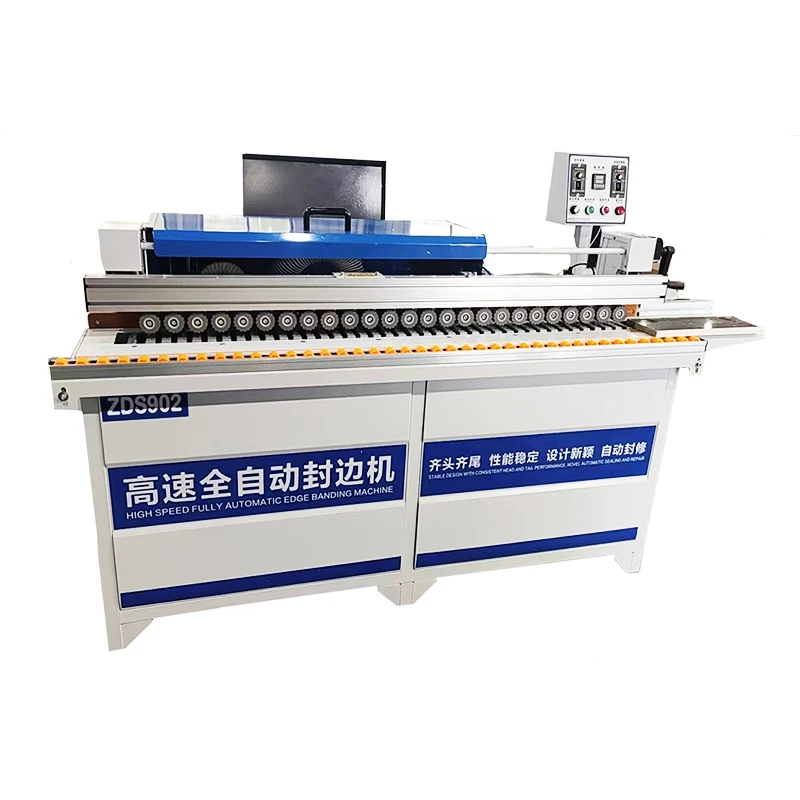
<p><strong>Portable Edge Banding Machine, 220V 4200W, Double-Sided Gluing</strong> — engineered for consistent edge adhesion on MDF, particleboard, plywood, and solid wood panels in compact workshop environments.</p> <ul> <li><strong>4000 ml glue pot</strong> with intelligent temperature control and pneumatically controlled strip cutting for clean transitions</li> <li>Dual high-speed trimming motors (up/down) and two polishing motors deliver finished edges across 0.5–2.5 mm band thickness</li> <li>Integrated pressure beam with adjustable handle and silicone conveyor with double-row pressure wheels ensure stable linear feed</li> </ul> <p>Specification-driven selection starts with verified voltage, panel range, and feed speed — request the full configuration sheet matched to your production requirements before commitment.</p>
Quality Assured
Multi-stage QC inspection
Custom Config
Voltage, logo, language
Global Shipping
100+ countries served
After-Sales Support
Remote & spare parts
Verified Configuration Before Dispatch — this portable edge bander ships only after voltage, frequency, and plug standard are confirmed against your workshop's actual power supply, preventing the three-week transformer delays I have seen stall production lines.
| Parameter | Value |
|---|---|
| Product Type | Portable Edge Banding Machine |
| Voltage | 220V (confirm local frequency before order) |
| Total Power | 4200W |
| Overall Dimensions (L×W×H) | 207×60×122 cm |
| Net Weight | 245 kg |
| Edge Banding Type | Linear Edge Banding Machine |
| Edge Band Height Range | 0–35 mm |
| Edge Band Thickness Range | 0.5–2.5 mm |
| Glue Pot Capacity | 4000 ml |
| Gluing System | Double-sided gluing with intelligent temperature control |
| Pressure Beam | Integrated, adjustable handle for board height |
| Conveyor Belt | Silicone material, double rows of pressure wheels |
| Edge Strip Cutting | Pneumatically controlled |
| Trimming | Double high-speed trimming motors, up and down |
| Polishing | Up and down two polishing motors |
| Key Features | Independent operating platform, high-speed sealing and repair capability |
| Warranty | 1 year |
| Delivery Time | 25–30 days (basis to be confirmed depending on configuration and order quantity) |
| Application | Material or Output |
|---|---|
| Custom furniture workshop edge finishing | MDF and particleboard with PVC edge banding |
| Cabinet door and carcass production | Plywood panels with veneer or PVC strips |
| Small joinery shop linear edge banding | Solid wood panels with 0.5–2.5 mm banding |
| On-site furniture installation repair | Pre-cut panels requiring portable edge sealing |
| Prototyping and low-volume batch work | Mixed substrate runs with frequent material changeover |
A 4200W machine wired for the wrong frequency will trip your breaker on first startup or burn out the glue pot heater within days.
I once shipped a portable edge bander to a workshop in Mexico without double-checking their local supply. The factory ran on 220V/60Hz, but the machine left our floor configured for 380V/50Hz. The customer uncrated it, plugged it in, and the main breaker tripped immediately. They spent three weeks sourcing a step-up transformer while their production sat idle. That failure was entirely on us. Since then, I treat portable edge banding machine specifications as incomplete until the buyer's voltage, frequency, and plug type are documented on the order [NEED_CITE: voltage and frequency standards by export market]. This unit is listed at 220V, but 220V at 50Hz behaves very differently from 220V at 60Hz — motor speeds shift, heater elements draw different current, and pneumatic solenoids can chatter. Confirming these details before production starts is not paperwork; it is the difference between a machine that runs on day one and one that sits under a tarp.
Single-side gluing applies adhesive only to the edge band, relying on residual heat to bond against the panel edge. On MDF and particleboard, the porous surface absorbs glue moisture before it can form a proper film, leaving visible starved joints. This portable edge banding machine uses a double-sided gluing system with a 4000 ml glue pot that coats both the panel edge and the banding strip simultaneously. The result is a thicker adhesive film at the joint line, which compensates for substrate absorption and produces a more consistent bond across mixed material runs.
Manual edge trimming introduces variation that shows up immediately under LED cabinet lighting. This unit addresses that with a pneumatically controlled edge strip cutting device that severs the banding at panel ends with consistent force and timing. The double high-speed trimming motors then remove top and bottom overhang in a single pass. Because the trimming heads are independently mounted above and below the panel, the operator does not need to flip or re-feed the workpiece. For a small workshop producing cabinet doors, this means the edge leaves the machine ready for hinge boring without a secondary hand-trimming station [NEED_CITE: edge quality requirements for visible cabinet components].
The edge band thickness range of 0.5–2.5 mm covers both thin PVC for carcass work and thicker veneer strips for visible door edges, but running 2.5 mm material demands that the trimming motors have enough cutting depth to remove the full overhang cleanly. The 0–35 mm band height range accommodates standard panel thicknesses, though panels approaching 35 mm require the integrated pressure beam to be raised via its adjustable handle to maintain even feed pressure. The silicone conveyor belt with double rows of pressure wheels grips the panel surface without marking it — important when running pre-finished plywood where steel wheels would leave visible tracks. The intelligent temperature control on the glue pot matters when switching between PVC and veneer, as each material requires a different glue temperature to achieve proper wetting without scorching [NEED_CITE: adhesive temperature ranges for PVC versus wood veneer edge banding].
When a workshop orders a portable edge bander without confirming panel thickness compatibility, the pressure beam may not open far enough for their standard stock, forcing operators to force-feed panels and damage the conveyor belt. When feed speed is assumed rather than verified, throughput expectations collapse — operators push the machine beyond its design capacity and glue adhesion fails on fast-moving panels. When tolerance is never requested in writing, assembly problems surface only after dozens of carcasses have been cut and drilled, at which point the edge band gap is visible on every installed cabinet door [NEED_CITE: downstream assembly failures from edge banding tolerance drift]. These are not hypothetical; they are the exact calls I receive from buyers who chose a machine based on a listing title rather than a confirmed specification sheet.
This portable edge banding machine comes from a facility with 20 years of woodworking machinery manufacturing and in-house precision grinding, meaning the trimming motor mounts and pressure beam components are machined on-site rather than outsourced. The four-stage quality control process — incoming material, in-process, finished product, and pre-shipment verification — applies to every unit before it crated. Voltage, control panel language, and plug configuration are treated as standard customization items, not special requests. Engineer-led configuration recommendations are provided within 24 hours of receiving your panel dimensions, edge band material type, and local power supply details. The full product family ranges from entry-level to full-function models, so a workshop can add capacity later without switching suppliers.
Before we prepare a quotation, share your standard panel thickness range, the edge banding materials you run most often (PVC, veneer, or both), and your workshop voltage and frequency as measured at the machine location. If you are integrating this portable edge bander into an existing line, let us know the upstream panel saw model and downstream boring equipment so we can verify feed height and throughput compatibility. If you want to see the machine run your actual material before committing, we can arrange a sample processing test at the factory.
Q: How do I verify voltage and frequency compatibility before ordering? A: Send us your local supply voltage, frequency in Hz, and plug type. We cross-reference against the machine's 220V configuration and confirm in writing whether the unit ships ready for your grid or requires a specific transformer. This verification is documented on the order before production begins.
Q: What panel thickness range does this machine support? A: The edge band height range is 0–35 mm, which covers most standard furniture panel thicknesses. However, the exact maximum panel thickness for stable feed depends on pressure beam clearance and conveyor grip. Request a confirmed panel thickness specification sheet matched to your material before ordering.
Q: How does double-sided gluing differ from single-side for different banding materials? A: Double-sided gluing coats both the panel edge and the banding strip, producing a thicker adhesive film. On porous substrates like MDF, this prevents glue starvation. On non-porous PVC, it improves initial tack. Single-side systems work adequately on thin veneer with dense substrates but struggle with mixed material runs.
Q: What spare parts and consumables should I plan for after installation? A: The main consumables are trimming blades, polishing wheels, and glue pot heating elements. A spare parts list with part numbers is included in the documentation package. We recommend ordering a first set of consumables with the machine so you have replacements on hand before the originals wear through normal use.
Q: Is this unit classified as manual or automatic? A: The listing title references "manual" while the specification table references "high-speed fully automatic." This classification affects expected throughput and operator involvement. Request a confirmed configuration description that clarifies which control and feed system applies to the exact unit you are ordering.
20+ Years Experience
Trusted by 100+ countries worldwide
Full OEM/ODM
Custom logo, voltage & panels
Lifetime After-Sales
12-month warranty + spare parts
25-45 Day Lead Time
Flexible MOQ, on-time delivery
Fill in your requirements and our team will respond with a formal quotation within 24 hours. We speak English and Spanish.
Response within 24 hours on business days
Or WhatsApp us for instant reply
Serving 100+ countries globally
ZDSF50 Mini Edge Banding Machine, 1.2 kW, 220V, 0–6 m/min Feed Speed...
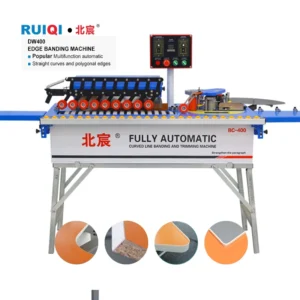
View DetailsDW400 Edge Banding Machine, 3800W Total Power, 0.3–3mm Banding Thickness, 220V/380V —...
View DetailsRecord ID: 10158
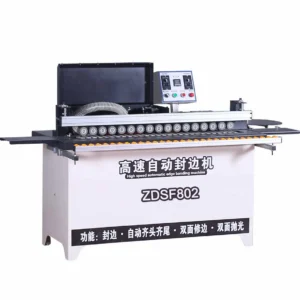
View DetailsZDS802 Automatic Edge Banding Machine, 4 kW Rated Power, 0–10 m/min Feed...
View DetailsOur global sales team is ready to assist. Get a formal quotation, technical specs, and OEM/ODM options within 24 hours.