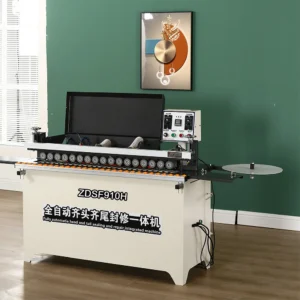
Verified Tolerance on Record — every published parameter for the ZDS702 portable edge banding machine specifications is backed by a factory test sheet you can request before shipment.
Technical Specifications
| Parameter |
Value |
| Model |
ZDS702 |
| Product Type |
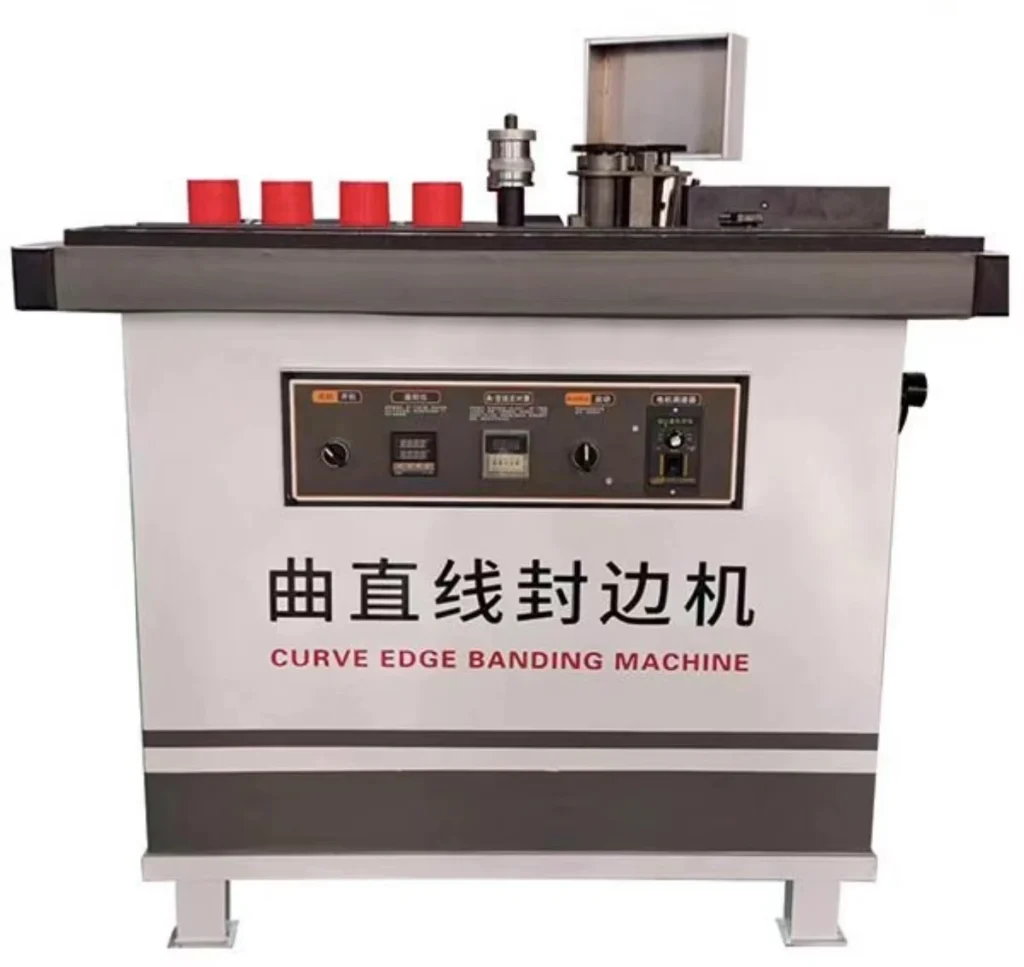
Portable Curved and Straight Edge Banding Machine |
| Rated Voltage |
220V |
| Rated Power |
1.4kW |
| Trimming Height Range |
10–50mm |
| Rated Air Pressure |
0.6–0.8 MPa |
| Glue Pot Capacity |
2000ml |
| Function Type |
Curved & Straight dual-purpose |
| Gluing Method |
Double sides gluing |
| Belt Breaking |
Automatic breaking belt |
| Time Memory Function |
Yes |
| Compatible Edge Banding Materials |
PVC, Wood Veneer, Melamine, Plastic |
| Overall Dimensions |
100 × 75 × 95 cm |
| Machine Weight |
120 kg |
Application Suitability
| Application |
Material or Output |
| Custom cabinet door edge finishing |
MDF and plywood panels with PVC or melamine banding |
| Small-batch curved furniture components |
Solid wood and particleboard with wood veneer edges |
| On-site joinery and fit-out work |
Plywood and blockboard with plastic or PVC banding |
| Prototype and sample production runs |
Mixed substrates requiring quick straight-to-curved changeover |
Why the Voltage Question Should Come Before the Price on Portable Edge Banding Machine Specifications
A 220V machine wired for the wrong frequency will burn its motor within the first week — and no warranty covers that.
I have watched workshops take delivery of portable banders only to discover the local supply runs at a different frequency than what the motor nameplate states. The unit powers on, but the glue roller speed drifts and the feed motor overheats within days. Checking portable edge banding machine specifications against your local electrical standard is a five-minute task that prevents a weeks-long return process [NEED_CITE: voltage and frequency standards by export market].

Matching the Trimming Height to Your Panel Stack
The ZDS702 covers a trimming height range from 10mm to 50mm, which spans most panel thicknesses a small workshop encounters. If your typical stock sits around 18mm particleboard for cabinet carcases, you are working near the lower third of that range where the trimming cutter engages cleanly. Running 50mm solid wood panels at the upper limit means the feed rate must drop to keep edge quality consistent — a trade-off the portable edge banding machine specifications sheet does not always highlight but every operator learns quickly.
Curved and Straight in One Setup
Switching between curved and straight edges on the ZDS702 does not require a separate machine or a full tooling swap. The double-sided gluing method applies adhesive to both the panel edge and the banding strip simultaneously, which matters most on curved profiles where single-side gluing leaves starved spots at the radius. Automatic belt breaking stops the strip at the end of each pass so the operator is not fighting overshot material on tight curves.
Reading the Numbers That Actually Matter
The 1.4kW rated power tells you the machine runs on a standard single-phase workshop circuit without requiring a dedicated three-phase drop. The 0.6–0.8 MPa air pressure requirement means a small piston compressor with a 50-liter tank can keep up, but anything smaller will cause pressure dips that show up as uneven pressure roller contact on the banding [NEED_CITE: compressor sizing guidelines for pneumatic woodworking tools]. The 2000ml glue pot gives roughly one full shift of intermittent use before a refill is needed, depending on banding width and glue viscosity at your workshop temperature.
What Happens When You Skip the Specification Check
I once helped a custom cabinet maker who bought a portable bander based on a photo and a price. His PVC edge banding was 0.8mm thicker than the machine's feed gap was set for, and every panel came off with visible glue squeeze-out along the top edge. He spent more time scraping dried adhesive than he would have spent reading the portable edge banding machine specifications and requesting a sample test on his own material [NEED_CITE: edge banding thickness tolerance standards for PVC and veneer].
What You Get When You Source Here
The ZDS702 ships with a factory test record run on your specified panel thickness and edge material, not a generic benchmark. Voltage confirmation is documented on the electrical schematic before the machine leaves the floor, so there is no guesswork at commissioning. The operation manual is provided in the language your operator reads, and the spare parts list references every wear component by part number so reorders do not require a round of email exchanges. Engineer-led configuration review is included within the quotation stage, meaning the portable edge banding machine specifications you ordered are the ones that arrive.
Documentation & Verification
- CE declaration of conformity covering the ZDS702 portable bander
- Factory test record on your panel thickness and edge material before dispatch
- Electrical schematic with 220V voltage confirmation for your local supply
- Operation and maintenance manual in your operator's agreed language
- Spare parts list with numbered wear components for the ZDS702
Installation, Commissioning & Support
- Requires a level floor area of roughly 100 × 75 cm with clearance for panel feed on both sides
- Connect to a dedicated 220V single-phase circuit rated above the 1.4kW draw to avoid voltage sag
- Arrives as a single 120kg unit — two people and a pallet jack handle positioning
- First run includes glue temperature calibration and pressure roller adjustment for your banding thickness
- Daily maintenance covers glue pot cleaning and air filter drainage at the 0.6–0.8 MPa regulator
Before You Request a Quote
Send the panel substrate type, thickness range, and the edge banding material you run most often so the configuration matches your actual workload. Confirm your local voltage and frequency so the electrical package is built correctly before production starts. If you are comparing portable edge banding machine specifications across multiple suppliers, ask for a sample processing test on your own panel stock — that is the fastest way to see which machine handles your material.
Frequently Asked Questions
Q: How do I verify the 10–50mm trimming height covers my panel and edge banding combination?
A: Measure your thickest panel plus the banding overhang on each side. If that total stays within the 10–50mm trimming height window, the cutter will engage properly. Request a sample processing test using your actual panel stock and edge material to confirm clean trimming before committing to an order.
Q: Is the 220V rating confirmed for single-phase supply in my market?
A: The ZDS702 is configured for 220V single-phase operation, but frequency varies by region. Confirm your local Hz rating during the quotation stage so the motor and transformer are matched correctly. An electrical schematic with voltage confirmation is provided before shipment.
Q: What compressor size does the 0.6–0.8 MPa air requirement actually need?
A: A compressor delivering consistent pressure within the 0.6–0.8 MPa range with a tank large enough to prevent pressure drops during continuous cycling is required. Undersized compressors cause uneven pressure roller contact, which shows up as loose spots on the banding, especially on curved profiles.
Q: Does switching between curved and straight edges require tooling changes?
A: The dual-purpose design allows curved and straight edge banding without a full tooling swap. The operator adjusts the guide fence and pressure roller positions between modes. Setup time depends on operator familiarity, and the time memory function stores recent parameters to speed up changeovers.
Q: Can I send my own panel stock for a sample processing test before ordering?
A: Yes, you can ship representative panel samples with your preferred edge banding material for a factory test. The test record documents trimming quality, glue adhesion, and edge finish on your specific substrate, giving you verifiable results rather than relying on generic demonstration panels.