
Wood Based Panels Machinery
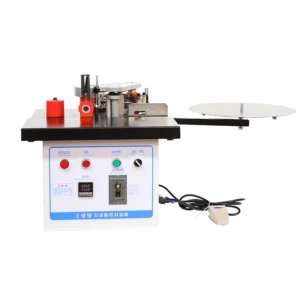
DW102 Edge Banding Machine | Specifications
Backed by four-stage QC with pre-shipment test records and electrical schematics provided...
View Details<p>Factory test records provided with your specified edge banding material to verify tolerance before dispatch.</p>
<p>Factory test records provided with your specified edge banding material to verify tolerance before dispatch.</p>
Quality Assured
Multi-stage QC inspection
Custom Config
Voltage, logo, language
Global Shipping
100+ countries served
After-Sales Support
Remote & spare parts
Verified Tolerance Mapping — every ZDSF515 specification is matched to the substrate and edge banding envelope small workshops actually run, so you can confirm the fit before the crate ships.
| Parameter | Value |
|---|---|
| Product Type | Manual Edge Bander |
| Model | ZDSF515 |
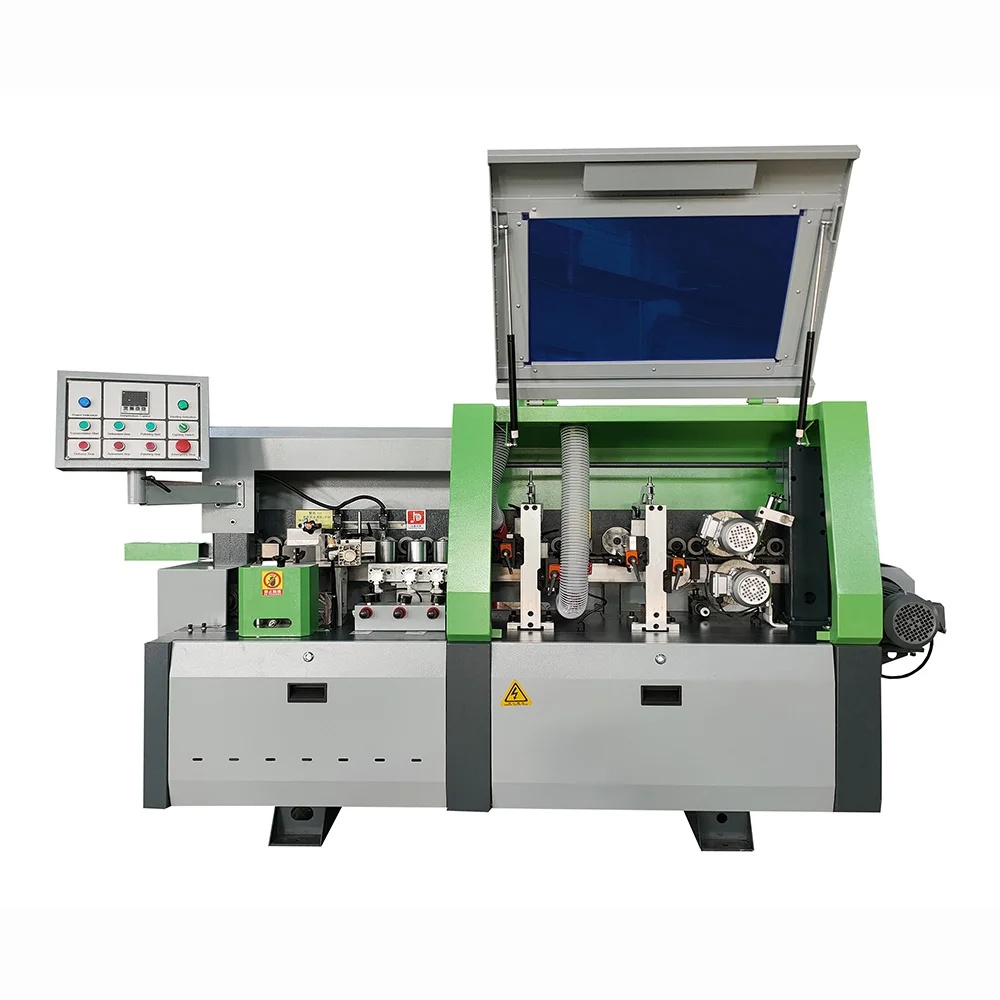
| Main Functions | Gluing, Fine Trimming, Scraping, Buffing |
| Voltage & Power | 380V, 3HP |
| Rated Power | 4KW |
| Working Pressure | 0.65 MPa |
| Conveyor Belt Speed | 0–16 m/min (variable) |
| Min. Panel Width | 60 mm |
| Min. Panel Length | 150 mm |
| Panel Thickness Range | 10–60 mm |
| Edge Thickness Range | 0.4–3 mm |
| Overall Dimensions | 2480 × 700 × 1400 mm |
| Net Weight | 600 kg |
| Assembly State | Partial assembly required; manual and video guidance provided |
| Application | Material or Output |
|---|---|
| Custom cabinet door edge banding | MDF and particleboard with 0.4–1 mm PVC edge |
| Joinery workshop short-run production | Plywood panels 10–40 mm thick with veneer banding up to 3 mm |
| Small furniture startup mixed-panel processing | Solid wood panels and melamine-faced chipboard across the full 10–60 mm thickness range |
| Replacement of hand-held trimming in manual workshops | Transition from manual router trimming to semi-automatic four-station finishing |
Matching conveyor speed to glue curing behaviour is what separates clean edges from rework.
I once watched a small cabinet shop in Dezhou buy a compact bander purely on price, then discover the fixed-speed conveyor pushed PVC edge banding through before the hot melt adhesive had time to wet the substrate properly. The result was visible glue lines on every wardrobe door, and the whole batch had to be stripped and re-run. On machines of this class, the operator needs variable speed control to slow the feed when working with thicker edge materials or colder workshop environments — and the ZDSF515 provides that range from zero up to 16 m/min. Without it, you are relying on ambient conditions staying constant, which they never do [NEED_CITE: hot melt adhesive open time and substrate temperature variables].
The 10–60 mm panel thickness capacity on this manual edge bandander covers the full spectrum a typical joinery workshop encounters — from 10 mm MDF drawer sides up to 60 mm solid wood worktops. The critical detail is that the pressure roller gap and glue roller clearance must track this entire range without manual recalibration between panels. When a workshop regularly switches between 18 mm particleboard for carcasses and 25 mm MDF for painted doors, a machine that requires tooling adjustments at each changeover will stall production flow noticeably.
Most entry-level banders stop at gluing and rough trimming, leaving the operator to scrape and buff by hand — a process that introduces inconsistency across a batch of cabinet fronts. The ZDSF515 packs gluing, fine trimming, scraping, and buffing into a 2480 × 700 × 1400 mm footprint, which means a small workshop can achieve a finished edge without adding a separate scraping station or a hand-polishing step. For a custom furniture maker running short batches with frequent material changeovers, consolidating these stations reduces the cumulative tolerance stack-up that occurs when a panel passes through multiple separate machines [NEED_CITE: cumulative tolerance effects in multi-machine edge finishing sequences].
The working pressure requirement of 0.65 MPa tells you the pneumatic compressor spec before the machine arrives — undersized air supply is one of the most common causes of inconsistent trimming pressure on pneumatic edge banders. The 3HP / 4KW rated power sits within a range that a standard three-phase 380V workshop circuit can support without a dedicated transformer. The 0.4–3 mm edge thickness range means you can run thin PVC for budget cabinet work and thicker veneer banding for premium furniture, but you should verify with the manufacturer that the trimming cutters are configured for the specific edge material you plan to use most. The conveyor belt speed range from zero to 16 m/min is not a throughput figure — it is the variable window an operator uses to match feed rate against glue open time, edge material stiffness, and ambient temperature in the workshop.
A machine quoted without confirming local voltage and frequency arrives as dead weight on the workshop floor. I have seen woodworking equipment from Shandong sit idle for weeks because the buyer specified 380V/50Hz and the destination country ran 440V/60Hz — the motor overheated within the first hour of commissioning. On the ZDSF515, confirming the electrical schematic and motor winding configuration against your local supply is a step that must happen before production begins, not after the crate is opened. The cost of rewinding a motor or sourcing a frequency converter in-country far exceeds the time spent verifying this detail during the quotation stage [NEED_CITE: voltage and frequency standards by export market].
In-house manufacturing with patented cutting mechanisms means the trimming and scraping stations on the ZDSF515 are not generic bolt-on assemblies — they are designed and built to hold verified tolerances on the actual panel materials this machine is rated for. Voltage and language customization is treated as standard configuration, not a special request, so the control panel and electrical documentation arrive in a format your operators can read. The four-stage quality control process includes a pre-shipment test run on your specified panel thickness and edge material, which means you receive a factory test record showing actual edge quality before the machine leaves the floor. Engineer-led configuration recommendations arrive within 24 hours of your inquiry, covering not just the machine itself but the pneumatic supply, electrical circuit, and workshop layout required to run it.
To get a configuration that actually matches your workshop, include the panel materials you run most often — MDF, particleboard, plywood, or solid wood — along with the thickness range and the edge banding type and thickness you use. State your local voltage and frequency so the electrical package is correct from the start. If you are replacing a manual process and moving to semi-automatic banding for the first time, mention your current daily panel volume so the engineer can confirm whether this model fits your throughput or whether a higher-tier machine in the same product family is a better starting point.
Q: What panel thickness and edge banding combinations can the ZDSF515 handle at working speed? A: The machine covers panel thickness from 10 to 60 mm and edge banding from 0.4 to 3 mm, including PVC and veneer materials. The operator adjusts the variable conveyor speed — up to 16 m/min — to match the specific combination, slowing down for thicker edges or colder workshop conditions to ensure proper glue adhesion before trimming.
Q: How do I confirm voltage and frequency compatibility before the ZDSF515 ships? A: Provide your local voltage and frequency during the inquiry stage. The manufacturer supplies an electrical schematic and voltage confirmation document showing the motor winding and control circuit configuration built for your supply. This verification happens before production begins, preventing a machine that cannot run on your workshop power.
Q: What pneumatic supply does my workshop need for this manual edge bander? A: The ZDSF515 requires compressed air at 0.65 MPa working pressure, delivered clean and dry. Your compressor must sustain this pressure continuously during operation, not just at peak. Install a filter-regulator-lubricator unit on the supply line to protect the pneumatic cylinders driving the trimming and scraping stations.
Q: How does the four-station sequence affect the finished edge quality? A: Gluing, fine trimming, scraping, and buffing in one pass eliminates the cumulative tolerance errors that occur when panels move between separate machines. Each station references the same panel edge, so the final buffed surface stays consistent across a batch — important when cabinet doors must match visually and dimensionally for installation.
20+ Years Experience
Trusted by 100+ countries worldwide
Full OEM/ODM
Custom logo, voltage & panels
Lifetime After-Sales
12-month warranty + spare parts
25-45 Day Lead Time
Flexible MOQ, on-time delivery
Fill in your requirements and our team will respond with a formal quotation within 24 hours. We speak English and Spanish.
Response within 24 hours on business days
Or WhatsApp us for instant reply
Serving 100+ countries globally
Backed by four-stage QC with pre-shipment test records and electrical schematics provided...
View DetailsProducts Disply Product Parameters NameZDSF50 Mini Edge Banding MachineRated voltage220vPower1.2KWFunctionDouble side gluing...
View DetailsZDSF910H Fully Automatic Edge Bander, 220V 50Hz, 10-50mm Panel Range, 0.5-2.5mm Strip...
View DetailsProducts Description woodworking Through Feed wood board scm edge bander 7 functions...
View DetailsOur global sales team is ready to assist. Get a formal quotation, technical specs, and OEM/ODM options within 24 hours.