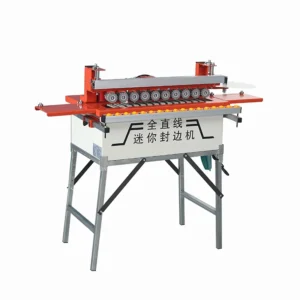
Verified Configuration — The ZDSF210 linear edge bander ships with confirmed voltage matching your workshop supply and an operation manual in your operator's language, so commissioning starts on day one, not week three.
Technical Specifications
| Parameter |
Value |
| Model |
ZDSF210 |
| Product Type |
Automatic Edge Banding Machine |
| Feed Speed |
6 m/min |
| Belt Feed Motor |
25 W |
| Board Feed Motor |
120 W |
| Trimming Motor |
800 W × 2 |
| Heating Motor |
800 W |
| Vacuum Fan |
1200 W |
| Overall Dimensions (L×W×H) |
1500 × 570 × 630 mm |
| Net Weight |
155 kg |
| Glue Capacity |
1000 ml |
| Edge Banding Type |
Linear |
| Guide Rail |
Steel rod |
| Glue Pot |
Front and rear anti-shape profiling glue pot |
| Trimming |
Up/down/left/right profiling trimming |
| Pressing |
Elastic device secondary pressing |
| Dust Collection |
Airtight dust collection and cleaning function |
| Additional Functions |
Flexible edge scraping, glue line cleaning, cross polishing |
| Panel Thickness Range |
(basis to be confirmed) |
| Panel Width Range |
(basis to be confirmed) |
| Voltage & Frequency |
(basis to be confirmed) |
| Control System |
(basis to be confirmed) |
| Tolerance |
(basis to be confirmed) |
| Glue Pot Temperature Range |
(basis to be confirmed) |
| Warranty |
1 Year |
| Core Components Warranty |
1 Year |
| Video Outgoing-Inspection |
Provided |
Application Suitability
| Application |
Material or Output |
| Custom MDF cabinet door edging |
MDF panels with PVC or melamine edge banding |
| Small workshop furniture production |
Particleboard and plywood with straight linear edges |
| Joinery startup scaling from manual banding |
Solid wood panels with veneer strip edging |
| Compact panel processing station |
MDF and particleboard cut-to-size blanks |
Why the Voltage Question Must Come Before the Automatic Edge Banding Machine Specifications
A machine wired for 380V/50Hz that arrives in a 220V/60Hz workshop does not run — it sits crated until a transformer is sourced or the motor is replaced.
I have watched entire commissioning schedules collapse because the voltage confirmation happened after the crate was opened rather than before production started. The ZDSF210 draws meaningful current across its heating element, trimming motors and vacuum fan simultaneously, which means a mismatched supply is not a minor inconvenience — it is a safety and equipment risk [NEED_CITE: voltage and frequency standards by export market]. The automatic edge banding machine specifications on this page list every measurable parameter so you can cross-check against your facility's electrical infrastructure before placing an order. Confirming frequency matters as much as voltage, because a 50 Hz motor running on 60 Hz supply spins faster, alters feed rate behaviour and changes trimming motor torque characteristics in ways that affect edge finish quality.

Motor Configuration and What It Means for Daily Edging Work
The ZDSF210 packs dual 800 W trimming motors that handle up/down and left/right profiling in a single pass. This configuration means contoured cabinet components do not require a second manual trimming step after banding. The automatic edge banding machine specifications document both trimming motors at identical wattage, which indicates balanced cutting force on both the top and bottom edge — a detail that directly affects whether the trimmed edge sits flush or leaves a visible step. An 800 W heating motor drives the glue pot to melt adhesive evenly across the 1000 ml capacity, and consistent glue temperature is what separates a clean bond line from the kind of stringy, visible glue seam I once saw ruin an entire batch of thick veneer panels in a Dubai workshop.
Steel Rod Guide Rail and Feed Consistency
A steel rod guide rail under the feed path is a deliberate choice over roller-based alternatives for a machine in this compact size class. The 120 W board feed motor pushes panels along this rail at 6 m/min, and the rigidity of the steel rod prevents the lateral drift that cheaper rail systems introduce when processing heavier MDF or particleboard blanks. This matters because even slight lateral movement during the banding pass shows up as misalignment at the trimming station, forcing operators to slow the feed rate or accept uneven edges. The frame-type motor base further isolates the feed mechanism from vibration generated by the trimming motors and the 1200 W vacuum fan running in parallel [NEED_CITE: vibration isolation in compact woodworking machinery].
Reading the Specs That Actually Affect Output Quality
The relationship between glue pot temperature range and edge banding material determines whether PVC, melamine or veneer strips bond correctly — each material requires a different melt point, and a profiling glue pot that cannot hold stable temperature produces inconsistent adhesive spread across the panel edge. The front and rear anti-shape profiling glue pot design means the ZDSF210 applies adhesive to shaped panel profiles as well as straight edges, which is relevant when your cabinet doors include routed profiles rather than only flat panels. The secondary elastic pressing device follows immediately behind the glue application zone, applying consistent pressure while the adhesive sets, and this is what prevents the partial-lift failures that typically appear hours after banding when the panel cools. Flexible edge scraping and glue line cleaning stations downstream of the pressing zone remove residual adhesive before it hardens, so the finished panel arrives at your assembly bench ready for hardware installation without additional cleanup. The airtight dust collection system with its 1200 W vacuum fan captures trimmings and sanding residue at the source [NEED_CITE: dust extraction requirements for MDF edge processing], keeping the trimming motors and guide rail free of the fine MDF dust that accelerates bearing wear in any woodworking environment.
The Hidden Cost of Skipping Specification Verification
Buying a compact edge bander without confirming panel thickness range against your actual board stock means discovering the incompatibility only when your first production panel jams the feed path. I have seen workshops purchase entry-level machines rated for thin MDF and then attempt to run 25 mm particleboard shelving through them, overwhelming the trimming motors and producing torn edges that fail downstream assembly checks [NEED_CITE: edge banding tolerance and assembly fit verification]. When the glue pot temperature range is not matched to your chosen banding material, the result is not always immediately visible — veneer strips bonded at too low a temperature can delaminate days later, after the furniture has already been delivered. Confirming these automatic edge banding machine specifications before shipment eliminates the cost of return freight, rework labour and damaged customer relationships.
Why Source This Machine Through This Channel
In-house manufacturing with patented cutting mechanisms means the trimming stations on the ZDSF210 are built and tested under one roof, not assembled from third-party sub-components with mismatched tolerances. Every unit passes through four-stage quality control covering incoming material, in-process assembly, finished product inspection and pre-shipment verification before it is crated. Voltage, control panel language and specification customization are handled as standard configuration steps rather than special requests, so your operator receives documentation they can actually read. An engineer reviews your panel material, edge banding type and production volume before issuing a formal quotation, which means the machine configuration is matched to your workshop rather than pulled from generic stock. Factory visits are welcomed for buyers who want to see the ZDSF210 running their specific material before committing to an order.
Documentation & Verification
- CE declaration of conformity applicable to the ZDSF210 edge banding unit
- Factory test record on your specific panel thickness and banding material before dispatch
- Electrical schematic confirming voltage and frequency match your facility supply
- Operation and maintenance manual provided in your operator's agreed language
- Spare parts list with component identification for trimming motors and glue pot elements
Installation, Commissioning & Support
- 1500 × 570 mm footprint requires a level floor zone with clearance on both feed sides
- Dedicated electrical circuit required to handle combined load of trimming, heating and vacuum motors
- Machine arrives fully assembled at 155 kg — position with pallet jack or forklift
- First-run commissioning includes glue pot temperature calibration for your banding material type
- Operator training covers feed speed adjustment, trimming station alignment and glue line cleaning procedures
- Elastic pressing device tension and scraper blade angles set during initial commissioning visit
What to Include in Your Specification Inquiry
When requesting a configuration proposal for the ZDSF210, provide the exact panel materials you process — MDF, particleboard, plywood or solid wood — along with their typical thickness range and the edge banding material you intend to use. Confirm your workshop voltage and frequency so the electrical system is built to match before production begins. If you run specific cabinet components with routed profiles rather than only flat panels, note that as well, since it affects how the profiling glue pot and trimming stations are configured for your automatic edge banding machine specifications requirements.
Frequently Asked Questions
Q: What panel thickness and width range does the ZDSF210 accept, and how does that map to my board stock?
A: The source does not state confirmed panel thickness or width limits for the ZDSF210. Request the machine specification sheet with these values verified against your actual board stock before ordering. Our engineer will confirm the acceptable range based on the materials and dimensions you provide during the inquiry stage, ensuring your standard panel sizes feed correctly through the steel rod guide rail and trimming stations.
Q: How is the 6 m/min feed speed verified, and what board size and edge material is the basis?
A: The 6 m/min feed speed is the rated value under standard test conditions. Actual throughput varies with panel weight, edge banding thickness and glue type. During pre-shipment testing, we run your specified material combination and document the achieved feed quality in the factory test record, so you know what to expect before the machine reaches your workshop floor.
Q: Which voltage and frequency configurations are available, and how is the correct setting confirmed before shipment?
A: Voltage is configurable from 110V to 440V with frequency set to match your local supply standard. The electrical schematic and voltage confirmation document are prepared during the specification stage and verified during pre-shipment testing. This ensures the heating motor, trimming motors and vacuum fan all operate within rated parameters on your workshop supply.
Q: How do the dual profiling trimming motors handle curved or shaped edges versus straight linear banding?
A: The dual 800 W trimming motors perform up/down/left/right profiling, which means they follow contoured panel edges rather than only trimming straight lines. The front and rear anti-shape profiling glue pot applies adhesive to these same shaped profiles. This combination allows the ZDSF210 to process routed cabinet door edges alongside standard flat panels within the same production run.
Q: What is included in the pre-shipment test record, and can I request a sample run on my own panel material?
A: The pre-shipment test record documents trimming output, edge scraping result, glue line cleanliness and dust extraction performance on tested material. You may send sample panels and edge banding stock for a dedicated processing run before shipment, and the video outgoing-inspection captures the results so you can evaluate banding quality remotely before authorizing dispatch.